SAU welcomes new nursing center

By Heather Clark
Oct. 1 marked the opening of Spring Arbor University’s (SAU) new undergraduate nursing lab.

Oct. 1 marked the opening of Spring Arbor University’s (SAU) new undergraduate nursing lab. On Homecoming Day, President Brent Ellis dedicated the Jaworski Clinical Simulation Center and Physical Therapy & Sports Medicine Service clinic on the other side of M-60.

“We’ve had nursing for a long time, but this is a unique element,” Al Kauffman, chair of the department of nursing, said. “[our previous] nursing program we had was for people who were nurses already. Now you can enter as a non-nurse.”

megan-himebook_9197
Photo by Megan Himebook
According to Kauffman, SAU has offered bachelor’s degree completion programs for those holding associate’s degrees since 2001. A master’s program followed in 2009, but both required a student to have at least an associate’s degree to enter the program.
Kauffman said the process to create the undergraduate program began in 2014. After creating a business plan, deciding on curriculum offerings and planning a budget, the program was required to seek approval from the Michigan Board of Nursing. The program also required approval from the academic and administrative committees at SAU, which it received last year.
Several other departments, especially in the science department, had to redesign their curriculum to be qualified to offer the necessary support knowledge for nursing majors, according to Raymond Jones, director of campus nursing. The increased rigor of the courses is meant to prepare nurses to pass the required certification exams with better scores and more knowledge.
The Michigan Board of Nursing approved the new program on May 5, allowing the university to select classes of 30 students to enter the program until two classes have
been graduated. Those two classes will then be evaluated based on a standardized test, the National Council Licensure Examination.
Jones has been involved in planning not only the educational aspects, but also new facilities that will open for the department. A portion of SAU’s Physical Plant building
has been converted to a simulation center containing lifelike practice mannequins. The center shares space with a physical therapy clinic that will be open to the public and used jointly by SAU’s physical therapy courses and the nursing department for training in therapy and safety practices.
Sophomore Jaydn Fuerst will be one of the department’s entering undergraduates for the class of 2020. She said she is most enthusiastic about the availability of the new programs and the ability to take all of her required classes at one school.
Another student entering the program is Jonathan Matwiejczyk, a 2015 graduate biology major. He said he had been searching for a job when he found out about the available
nursing program.
“I loved the idea of being able to return to Spring Arbor, not only for the community and it already being my home for the last five years, but also I already had great relationships I had cultivated with the professors over the years,” Matwiejczyk said.

megan-himebook_9202
Photo by Megan Himebook
Jessica Khoury, a sophomore transfer from Michigan State University, said she is looking forward to the hands-on clinic.
“It will be a place where mistakes will be made, but better to made in the lab than in the hospital,” Khoury said.
Fuerst also expressed excitement for the clinics. She was able to participate in simulation equipment tests last year when the program was being set up, and practiced with a specially designed mannequin.
“I helped deliver a fake baby,” Fuerst said. “It was pretty awesome.”


Save

“Stranger Things” Review

By Michelle Bennett
Netflix just got a little bit stranger with its new original hit, “Stranger Things.”

Netflix just got a little bit stranger with its new original hit, “Stranger Things.” If there is one thing Netflix knows how to do, it’s originals. With each new release comes the thrill of another well-casted, well-directed, intriguing and entertaining story. It came as no surprise that the company that produced “House of Cards,” “Orange is the New Black” and “Daredevil” released another binge-worthy show to latch onto.


The story centers on the disappearance of a local boy, Will Byers, from the small town of Hawkins, Ind., in 1983. After Will vanished without a trace, his three best friends Mike, Lucas and Dustin are left behind to piece together a puzzle. They find the first piece of the puzzle with the girl called Eleven. Eleven’s past and abilities are the key to Will’s disappearance. While the trio does their best to figure out how Eleven fits in, they lack pieces of the puzzle. Some of these pieces are found with Jonathan, Will’s older brother, and Nancy, Mike’s older sister. This intermingling storyline begins when Nancy’s best friend, Barb, goes missing after a party with Nancy’s boyfriend, Steve. Nancy and Jonathan team up to try to find out what took Will and Barb and how to stop it. The remaining pieces of this puzzle fall to Will’s mom, Joyce, and the town Sheriff, Chief Hopper. They do their best to figure out how the government plays into the disappearance of Joyce’s son and how much harm or good they can do in their search for Will.

While the Duffer brothers, Matt and Ross, are relatively new to the directing world and the Hollywood spotlight, their inexperience is hardly noticeable. The Duffer brothers, with the help of their cinematographers, Tim Ives and Tod Campbell, created the familiarity of a small town with the constant use of bikes as the main form of transportation. The wildfire-like spread of gossip aided in creating this small town where everyone knew everyone and their drama. In an ironic contrast the majority of the main characters are able to keep secrets from each other. This is exactly what made the show so delightfully paradoxical. Despite the compact town and the closeness of the characters, they managed to keep their secrets and plans to themselves.
The acting brought the story to life with formidable talent such as Winona Ryder, who played the panicked and jumpy yet determined Joyce. David Harbour played the uninterested and tragic Chief Hopper whose sense of reason was found in his search for Will and the resolution of the mystery surrounding his disappearance. Young, new talent was found in Millie Bobby Brown, who plays Eleven, who performed with such honesty and passion for her character that the role seemed only natural for her. She played the perfect scared and detached little science experiment that evolved into a little girl who longs for solid friendship and home.
The music lent itself to the nostalgia created by this show. With hits from popular eighties artists like the Clash, Peter Gabriel and Corey Hart, immersion in the world of the eighties
was an easy task.
The setting, plotline, cinematography, music and scene direction mixed to create a combination of X-Files, the Goonies and E.T. The mystery is what grabs audiences but the nostalgia, character development, plotline and constant cliffhangers are what keep fans returning. Audiences are so swept up in whether this boy will be found and with the past of characters like Chief Hopper and Eleven that the ending will come all too quickly. The eerie and ominous conclusion will leave fans waiting for season two due to be released in 2017.

Where the money for the five dedications comes from

Ever wondered why there’s a 30,000 lbs rock at the front front of the school? Or how these donors discovered Spring Arbor when some of them are not alumni? President Brent Ellis explains the stories behind each facility.

Kayla Williamson | Editor-in-Chief

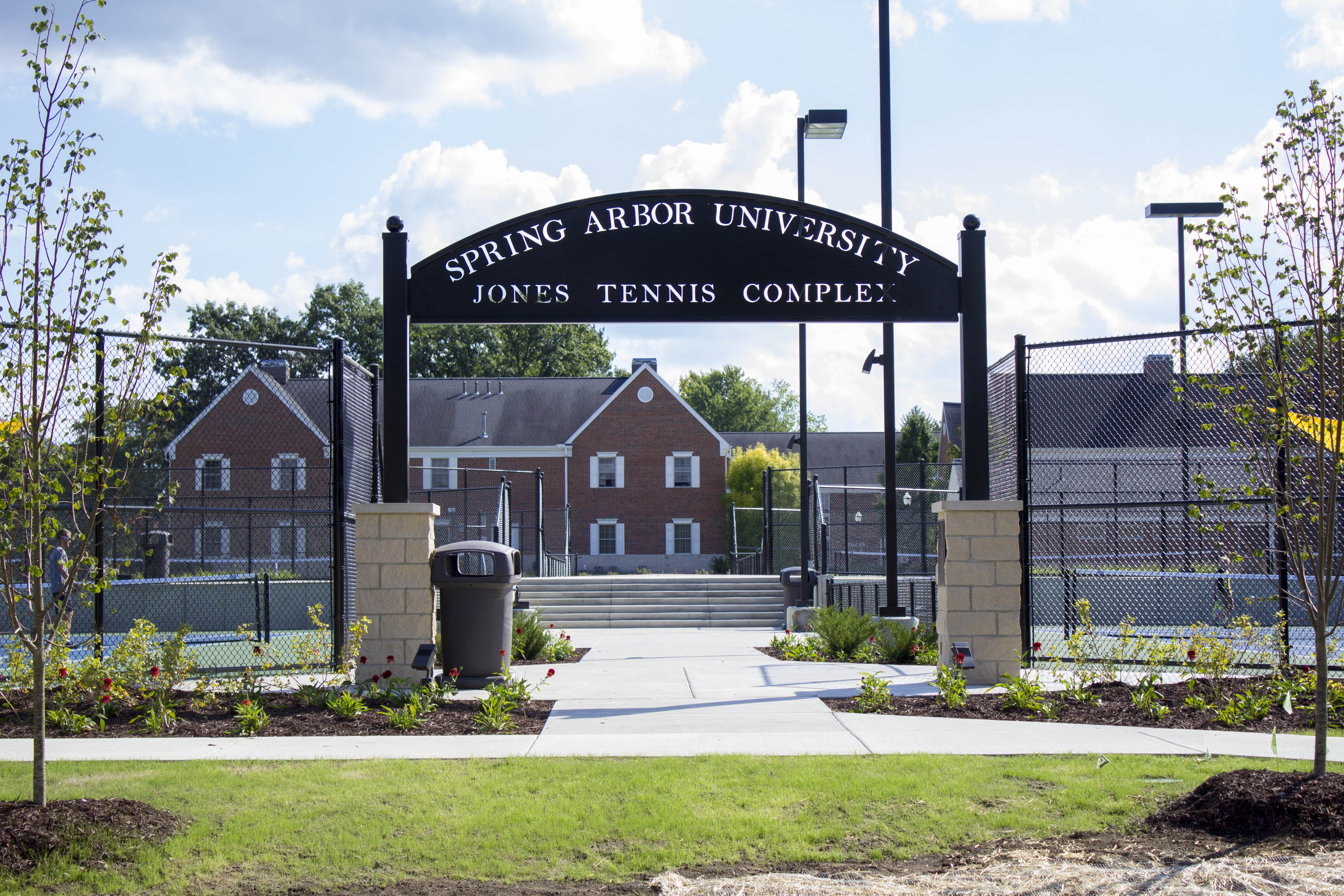
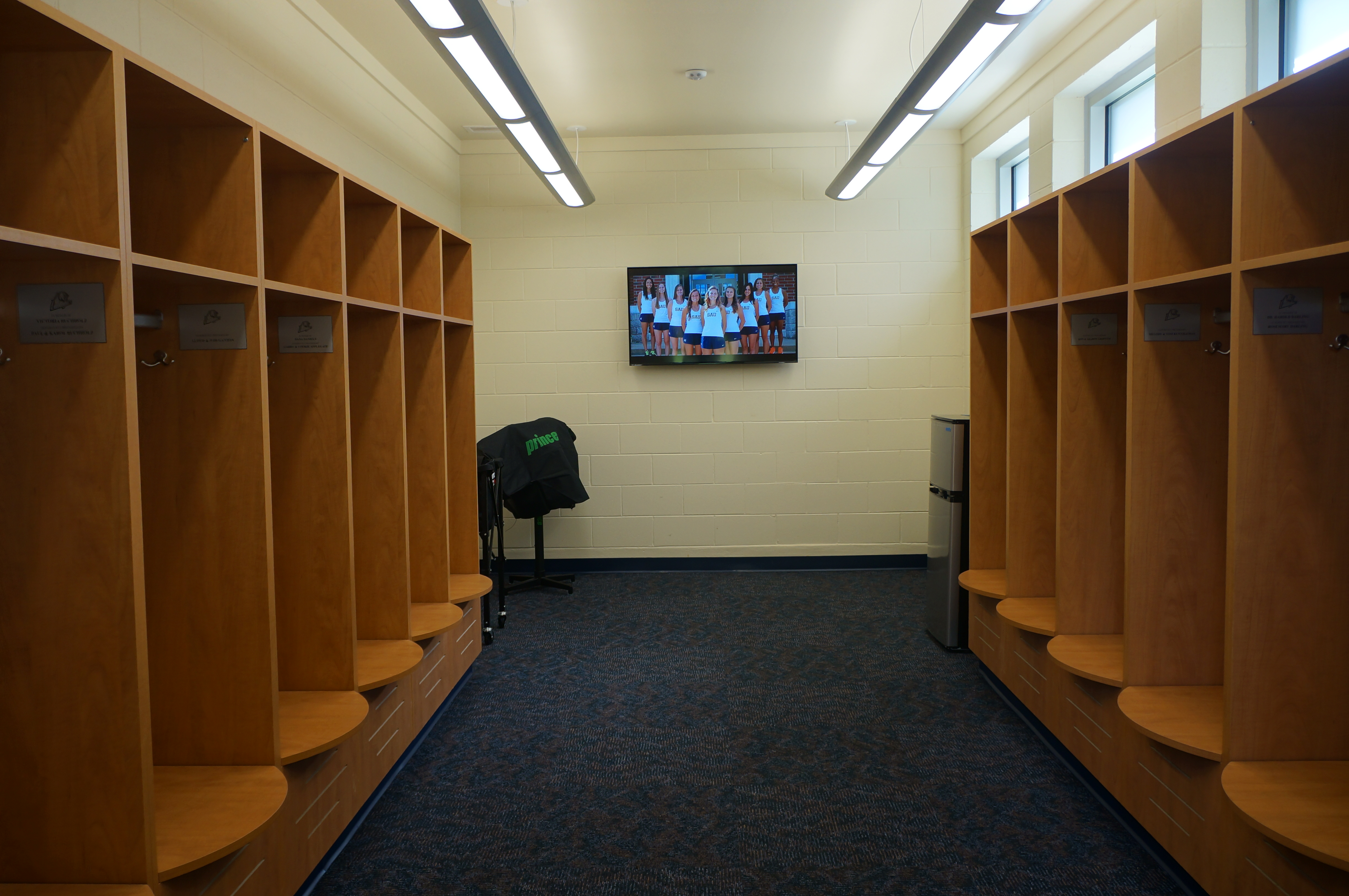
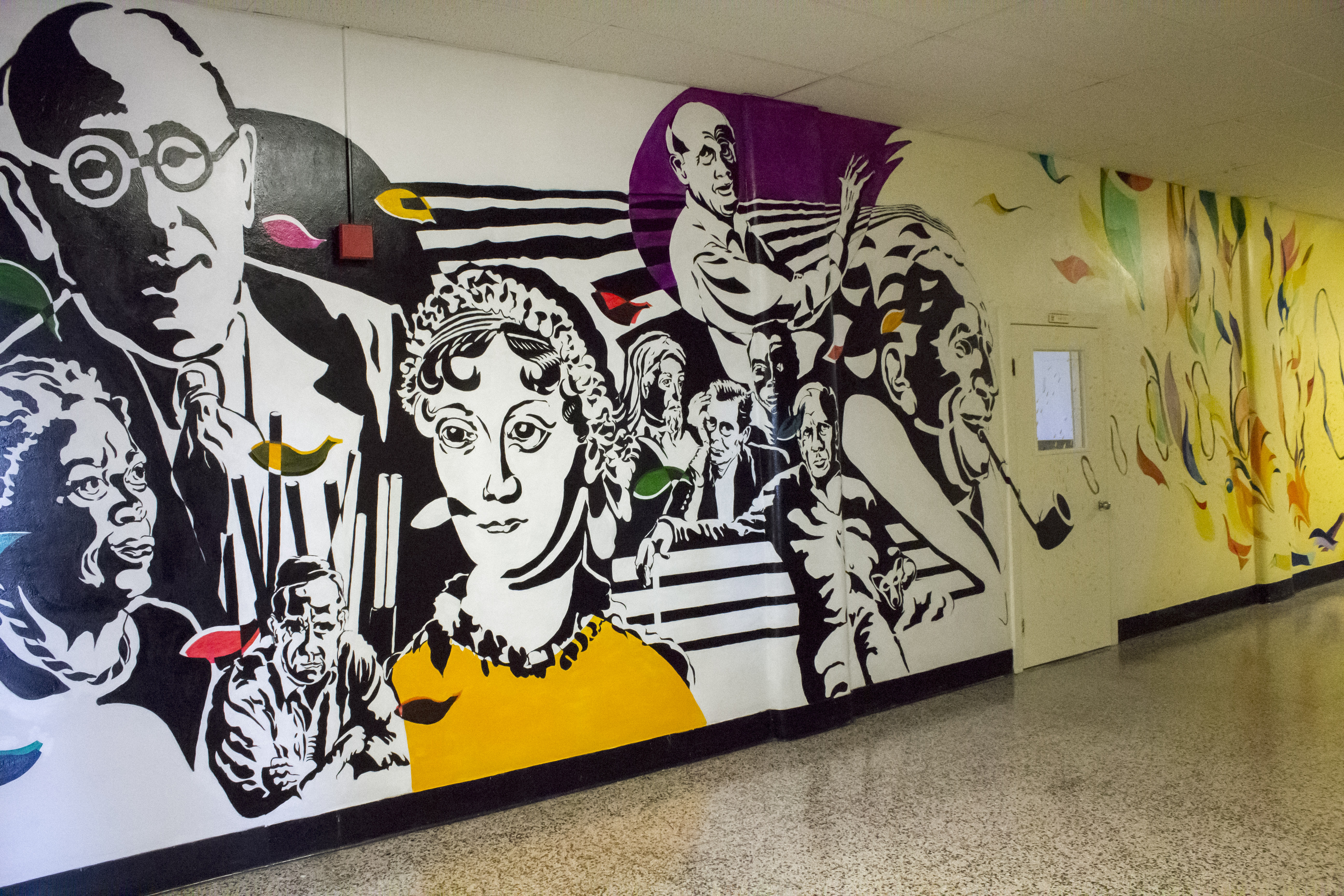
The new tennis complex, renovated locker rooms, upstairs Sayre-Decan mural, rock entrance and nursing lab officially opened on Homecoming Day, Oct. 1.

Almost 100 percent of these five dedicated facilities were paid by donors, people who want to show their love and appreciation towards the school. None of the money to build these came from tuition.

Ever wondered why there’s a 30,000 lbs rock at the front front of the school? Or how these donors discovered Spring Arbor when some of them are not alumni? President Brent Ellis explains the stories behind each facility.

The Jones Tennis Complex

Jones Tennis Complex

Who: Ron & Marvelle Jones and other donors

What: $1.3 million tennis courts and $250,000 in scholarships

Where: North of Ogle Villages

The Story: “Ron Jones, a new board member for SAU, and his wife love tennis and  have a long history with SAU tennis alumni. That began to influence their interest in Spring Arbor. It was a real natural gift.” – President Brent Ellis

Varsity Locker Rooms for Basketball and Volleyball

Locker Rooms

Who: Faith Small (women’s locker rooms) and anonymous donors (men’s locker rooms)

What: $185,000 to renovate locker rooms

Where: Fieldhouse

The Story: “Trent Allen, who the men’s locker rooms are named for, had a relationship with the donor couple, and he passed away, which is why it is named for him. The women’s locker rooms were funded by Faith Small who was a board member who just passed away. It was eight or 10 months before she died that she had given the funds to renovate the women’s locker rooms.” – President Brent Ellis

“Word & Image” Mural

Mural

Who: Joel Varland, Roger Varland’s brother

What: Donated labor to paint a mural highlighting some of the influential authors of the Christian faith

Where: Upstairs Sayre-Decan Hall

The Story: “Joel heard that we were doing [the DC] mural a couple years back. He worked with Kimberly Moore-Jumonville and the faculty in the department of English and came up with who would make the wall and who wouldn’t make the wall.” – President Brent Ellis

E.P. Hart Circle

EP Hart Circle Rock

Who: Hal Munn, board of trustees, and anonymous donors

What: $40,000 memorial for EP Hart, the founder of SAU

Where: EP Hart Circle

The Story: “Hal Munn was one of the catalysts for the memorial when it was first raised in 2003. Two weeks prior to Hal’s death, I went to go see him just to pay my respects and he said, Brent I need you to promise me two things: first thing have a tenure of more than 20 years, be the president for more than 20 years. I said well that’s going to be up to our board. And he was like yes—you be committed. I said I am committed to this place. I’m glad I’m here and I believe in what this place is and he said the second thing is I want to give a legacy gift to complete the construction of the EP Hart circle. I said Hal, we’ll find a way to get it done. He made a very generous gift from his family. That gave us almost what we needed to get it done. We’ve gone out and raised and additional 15-20k to fund that circle as well. It’s not just going to be a memorial, but also an entrance, and that’s why you see the brick façade that says Spring Arbor University, lights, when you come into that entrance, you’ll now where you are. It also will serve as a nice welcome, entrance into the university, which I don’t think we have a entrance, where’s the front gate, where the front door. Now that will be the front door to the university.” – President Brent Ellis

Jaworski Clinical Simulation Center and Physical Therapy & Sports Medicine Service Clinic

Nursing Lab

Who: Joe Jaworski, retired professor of biology

What: Clinical space (labs) to kickstart a residential nursing program

Where: Across M-60 in the old Physical Plant

The Story: “As we’ve been doing market research and where we’re losing students, nursing continued to be a place where we continued to lose students because people wanted a nursing degree from a Christian university, so we were losing students to Indiana Wesleyan, Huntington, etc. I could name 10 people that I know that did not go here because of the nursing program. One of our professors, Joe Jaworski, a 30+ year faculty member in Biology, left a significant portion of his estate to the university with the caveat that it would go towards benefiting the sciences. Through conversations with our science faculty arrived at the idea if we started a nursing program that would provide a consistent stream of students into biology and into chemistry and allow us to recruit some students that we’d been losing.” – President Brent Ellis

Save

SAU Hosts Alumni Graphic Design Exhibition

By Emily Spencer
Ganton Art Gallery is hosting Spring Arbor University’s (SAU) first Alumni Graphic Design Show.

Ganton Art Gallery is hosting Spring Arbor University’s (SAU) first Alumni Graphic Design Show. Though Spring Arbor has held alumni shows before this is the first centered on graphic design. The show is up from Sept. 18 to Oct. 9.

In order to organize the alumni show, Associate Professor of Art, Brian Shaw had to contact the alumni and send out a call for entries. The art faculty then set up the show using the pieces sent in by the alumni.

Spring Arbor alumni, Kari Shimmel, class of 2003, spoke for the opening of the show. Shimmel worked for Daniel Brian Advertising in Rochester, Mich. for 11 years before going to work for another advertising agency, Campbell Ewald. Shimmel is now the chief marketing officer at Campbell Ewald where she oversees new business development. Along with a team of coworkers, she works to come up with a vision for the brand and pitch their ideas to the company. She has worked with many large brands, most recently, Travelocity and Harley-Davidson. Shimmel also oversees external as well as internal communications. This includes working on Campbell Ewald’s website, stationary and communicating the values of the company.

At the end of her talk, Shimmel gives four pieces of advice to the students. Her first advice was always try harder, stressing the importance of going above and beyond the work assigned. Secondly, said every class counts. General education classes Shimmel never thought she would need have proved to be essential to her job. Her third piece of advice was to impact culture. Her job in advertising gives Shimmel a great opportunity to make a difference in the culture around her. Finally, she said to be faithful. Throughout the course of her work, Shimmel has had to request not to work on certain projects because they did not coincide with her beliefs.

Shimmel is not the only alumni whose art pieces have made their way into the gallery. The other alumni participating in the show are, Lauren Nadrowski, class of 2011, Josh Smiertka, class of 2014, Beau Ulrey, class of 2013, Derrick Robbins, class of 2010, Emily Reed, class of 2011, Jake Fletcher, class of 2015, Kaitlin Lutz, class of 2015, Kevin Sharp, class of 2015, Kwade Joslin, 2013, Mackenzie Varnagatas, class of 2015, and Mark Adkins, class of 2013.

Shaw, class of 1990, also has a few pieces in the show. As an alumni of SAU, Shaw felt that it was important that he participate in the show.

“I felt like I should be represented,” Shaw said “I wanted to join my colleagues in showing work.”

Shaw said of his students, “I’m only going to feel successful if you’re successful.” Shaw feels it is important to showcase alumni as artists who have succeeded in SAU’s art program.

“I’m so proud of what they’re accomplishing out there,” Shaw said. This sense of pride and joy, Shaw said, is one of the main reasons that alumni shows are so important.

According to Lecturer of Art, Brianne Witt, another reason for holding alumni shows is it gives current students the opportunity to see what they could accomplish once they graduate from SAU.

“It’s great information for the students to just see the different ways they can take their skills that they’re learning within the art department,” Witt said. According to Witt, seeing the work of SAU alumni can provide direction for current students.

She said, “It’s good for them to see the different ways they can reach their ultimate goal.”

The show will run in the Ganton Art Gallery until Oct. 9 and a second reception was held on Oct. 1 at 3:30 p.m.

Our Ocean Conference 2016

By Amber Cekander
The Pulse had an opportunity to participate in a national conference call about the annual Our Ocean conference.

The Pulse recently had an opportunity to participate in a national conference call with other student publications from campuses across the country. The call was hosted by Judith Garber,  who works in Washington D.C. as the assistant secretary of state for oceans, international environmental and scientific affairs. The focus of the call was to bring attention to the annual Our Ocean conference which gathers nations across the globe to discuss ocean conservation. Our Ocean was held Sept. 15 and 16 in Washing D.C. and included keynote talks from Secretary of State John Kerry, President Barack Obama and actor Leonardo DiCaprio.

“Secretary Kerry is fond of saying that nothing connects all of us but the ocean,” Garber said in the call.

After a brief introduction about the purpose of the event, the call was opened up to the students to ask questions about the conference and its goals.

Sarah Antozzi from the Marlin Chronicle at Virginia Wesleyan College asked Garber to communicate the one main takeaway she would like students to have from the call.

“That our ocean is under threat, that solutions are possible, and it’s all of our responsibility to take action to help our ocean,” Garber said.

oceans_factsv5_page_11a
Graphic from ourocean2016.org

The main focus areas of the conference were centered around marine protected areas, climate, sustainable fisheries and marine pollution. Different solutions and ideas were proposed at the conference along with monetary donations and commitments to aid in those solutions.

Since the international conference was focused on what countries as a whole can do for ocean conservation, Katie Gagliano from the Daily Reveille at Louisiana State University asked what role the national administration was encouraging states to play.

Garber responded by confirming that some states were actually participating at the conference. “This is an issue that can’t just be solved by governments or international organizations. It is something that needs state and local communities. We are trying to do outreach at every level,” she said.

But what about states like Michigan that aren’t bordering an ocean? Spring Arbor University’s Professor of Biology Chris Newhouse said that, in terms of effects from ocean pollution, there would be “relatively few negative impacts” on the Michigan and the Great Lakes.

5-ouroceanplastic
Graphic from ourocean2016.org

Both Garber and Newhouse mentioned the role plastic plays in ocean pollution. According to Garber, the “ocean is suffering from massive quantities of plastic waste.”

Newhouse said, “We can make plastics bio-degradable. Or we can do a better job of recycling plastics. If we can figure out how to remove them in the ocean most of the those [solutions] could be applied to the Great Lakes.”

More information from the conference can be found on the website ourocean2016.org

Save

The Dangers of Desire

By Heather Clark
Radio host Al Kresta visited SAU to discuss the dangers of loving a material world.

“What do you want?”

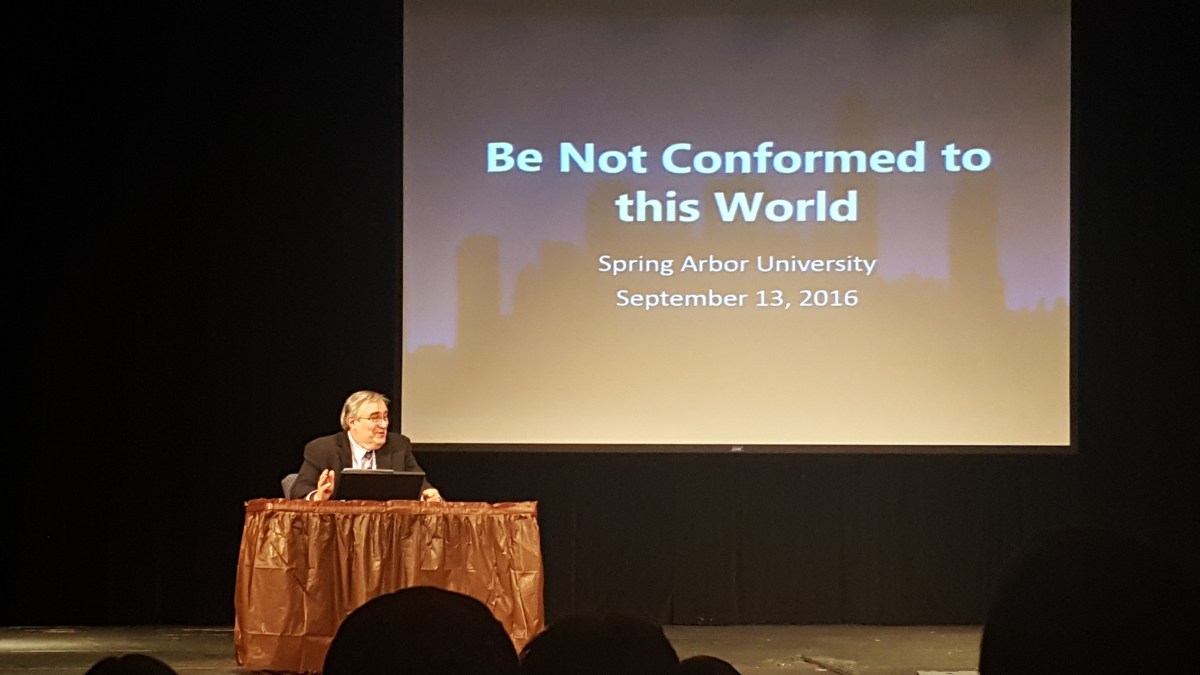
This was the foundational question Catholic radio program host and apologist Al Kresta asked at his lecture Sept. 13 at Spring Arbor University (SAU).

Kresta, whose daily program has an audience of nearly three-hundred radio stations, including the local Catholic station “Good Shepherd Radio,” has been a colleague and friend of SAU’s Professor of Communication Paul Patton for almost 40 years. The two have worked on theatrical productions and radio broadcasts together. Kresta was invited by the department of communication to speak and participate in a post-lecture reception.

For his audience of nearly one-hundred-fifty people, Kresta expounded on the dilemma Christians face in modern society. He cited seemingly conflicting Biblical messages that advise against loving the “world” but then tell us that God loves the world he created.

“Pleasure becomes hedonism, and enjoying food becomes gluttony. Kresta made me realize that one can worship through these things without worshiping the things themselves,” sophomore Trevor Tarantowski said.

Cameron Moore, assistant professor in English, said he hoped his literature students who attended the lecture would see parts of their own studies reflected.

“Loving rightly, ordering our desires, it’s very much like Dante [‘s Divine Comedy],” Moore said.

Many modern Christians, according to Kresta, rationalize their involvement and consumption of the world’s value system.

“They say, ‘God loves the world,’ so shouldn’t we imitate him?'” Kresta said.

This, Kresta said, indicates a failure to realize that the “world” spoken of in scripture has the dual meaning of the created order and also of the secular value system. There is an important distinction there that renders the seemingly conflicted passages understandable.

Kresta went on to illustrate his topic of remaining un-conformed through examples of three “illusion generators” that he said cause people to desire “the contradictory and the impossible,”. The illusion generators Kresta cited were the unattainable beauty standards set for women, media manipulation of “news” and ubiquitous advertising and marketing competing for attention.

Leah Rose, a junior advertising and public relations major, found Kresta’s talk very applicable to her own studies.

“I enjoyed Kresta’s talk because it was thought provoking; his statement about Jesus’ earthly “competition” being brands and materialistic objects changed my perspective on what and how I consume,” Rose said.

kresta2

Kresta said for the church to remain ‘relevant’ in society, it must not succumb to the devices of modern culture but rise above them by remaining distinctive.

Junior pre-engineering major Abigail Owens remembered the following quote from Kresta’s lecture: “What you lure them with is what you lure them to.”

“As he pointed out,” Owens said, “the church was not meant to be just another economical good.”

“Brands need to make us feel good. They exist to distract people,” Kresta said. His vision of the church is a place that does not dismiss the uncomfortable and painful realities of life, but rather “Bear[s] witness in the midst of suffering to joy that goes beyond.” The community and belonging offered by the church, he said, is real, not an advertising gimmick to lure consumers, and should be the reason people decide to attend a church.

Phil Webster, senior Biblical Studies major, said the advice Kresta gave will change how he reacts to the information he finds in popular media.

“Advertisers focus on our wants of happiness, fulfillment and pleasure, but that’s only because we’re so carnally minded. I’m going to keep better inventory of my wants and see to it that they are both God pleasing and beneficial for the kingdom,” Webster said.

“His question, ‘what do you want’, is really key to your soul,” Charles White ,prrofessor of Christian thought and history, said.

Kresta, in a reworking of 1 John 4:4, summed up his statements of the church’s relevance in society:  “Greater is He that is in us…than he who is over there at Starbucks or Nike or Google.”

SAU Sticker Shock

By Carly Thompson
Director of Campus Safety Scott Krebill announced a new $50 fee for parking permits this year.

Director of Campus Safety Scott Krebill announced a new $50 fee for parking permits this year.

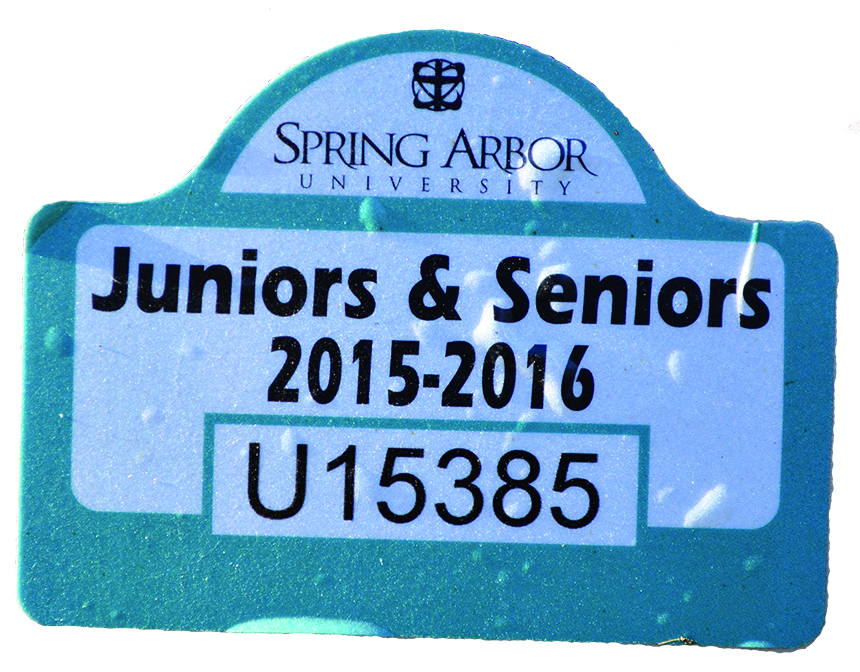
Prior to this semester, parking permits were free for all students. Krebill made this change in order to provide better service to campus.

“We have been aware that other schools charge a permit fee, and we could no longer afford to provide quality services while issuing the permits for free,” Krebill said.

Krebill researched other Council for Christian Colleges and Universities (CCCU) and found that most schools charged more than what Spring Arbor University (SAU) settled on.

“Parking permits at other schools range from free to up to $300 per year,” Krebill said.

Although parking permits have a cost, the price of parking tickets will remain the same. According to Krebill, SAU has some of the lowest fines for parking tickets, and a 50 percent break is given if paid within the first three days.

“I understand that we have a cheaper fee than most schools. What is frustrating and upsetting to me is that we were not informed until two weeks before school. There was no way to make appropriate plans for the year,” senior Emily Wilcox said.

According to junior Campus Safety officer, Lexi Horn, it was time for this change to occur, in order to continue providing necessary services. Campus Safety has needed more funds to update their equipment.

Funds from the permit charge are designated for Campus Safety use, not the general budget. Campus Safety plans to use these funds for improving some parking signage, replacing worn out equipment used to keep parking lots safe and every vehicle running smoothly.

This year, Campus Safety is able to add service hours on weekend mornings and replace their worn out patrol vehicle.

According to Horn, this new cost has nothing to do with the demolition of the tennis court parking lot, but more to do with a change in funding for Campus Safety.

Another parking lot is already in the works adjacent to the freshman lot. Juniors and seniors are being asked to park in the Gainey, Ogle and sophomore lots, as well as in the overflow lot behind the Fieldhouse.

All students are welcome to attend the “Know Parking” education blitz plan advertised the first two weeks of school. Posters and flyers will explain the changes and educate people on where to park and how to obtain the proper permit.

“Our goal is compliance, not enforcement, but this is how we have to manage a parking system with very limited space. It works if everybody does their part,” said Krebill.

Students are asked to take any complaints, questions, and concerns to Krebill at scott.krebill@arbor.edu. Campus Safety can also be contacted through the SAU mobile app.

Enrollment down: Faculty, staff suspect nostalgia

By Elise Emmert
Enrollment is down by 30 percent this year and it has not taken long for faculty to identify the reason.

Enrollment is down by 30 percent this year, and it has not taken long for faculty to identify the reason: a media-supported nostalgia for childhood.

“We haven’t seen numbers this low in over 20 years,” one admissions rep said. “It just wasn’t making sense. But then we started looking at what was going on in pop culture and I think we found our answer there.”

Many adults have been quick to blame the app Pokémon GO for making young adults more interested in gaming than in studies because of the app’s intense media coverage. But the app was released in the United States in mid-July, and student interest in responsibility and growing up had begun decreasing long before then.

flatlineonline4

“We were starting to see general decreases in student motivation as early as the end of the last school year,” one professor said. “It wasn’t just the typical ‘end of the year blahs,’ either. I believe the problem lies in something I’m calling the ‘childhood reboot.’ Movie remakes of childhood favorites are having just as much of an impact as apps like Pokémon GO.”

The sequel “Finding Dory,” for instance, found as much support from children as from the teens and young adults who grew up on “Finding Nemo,” the original film released in 2003. Disney’s live-action remake of their 1967 movie “The Jungle Book” had a similar reception, with 48 percent of the viewing audience being adults flooding the theaters to relive a part of their childhood, this time with better animation.

“Young adults are being encouraged by the media to hold onto their childhood and avoid growing up and taking on adult responsibilities, like getting jobs and planning for the future,” said another professor who looked into the issue. “That’s why fewer students are signing up for college.”

The nostalgia can take longer to catch up to some young adults than for others, but the effects are almost immediate. For example, one student was found by his Resident Assistant (RA) sitting alone in his room on move-in day because his roommate failed to show up.

“He seemed excited to come,” he said. “But a couple of weeks ago he started posting stuff about Pokémon GO, and I haven’t heard from him since. I think he dropped out or something.”

Another student was overwhelmed when her roommate carted in her complete collection of Disney movies.

flatlineonline

“She had, like, 70 DVDs and 40 VHS tapes,” she said. “Who even has VHS tapes anymore?”

In all, a total of 12 freshmen students failed to show up to campus for move-in day. Many more left their parents to unpack their things so they could go outside and see what Pokémon were hiding among the squirrels on campus.

Most professors believe there is no way to undo the effect of the nostalgia wave, and the only thing to do is wait for it to pass.

“Hopefully, people will get tired of playing the Pokémon game and we can get our numbers back up,” said one professor. “But until then, I have to defend my gym. Go Team Mystic!”

Save

SAU App Centralizes Information

By Katie Shotts

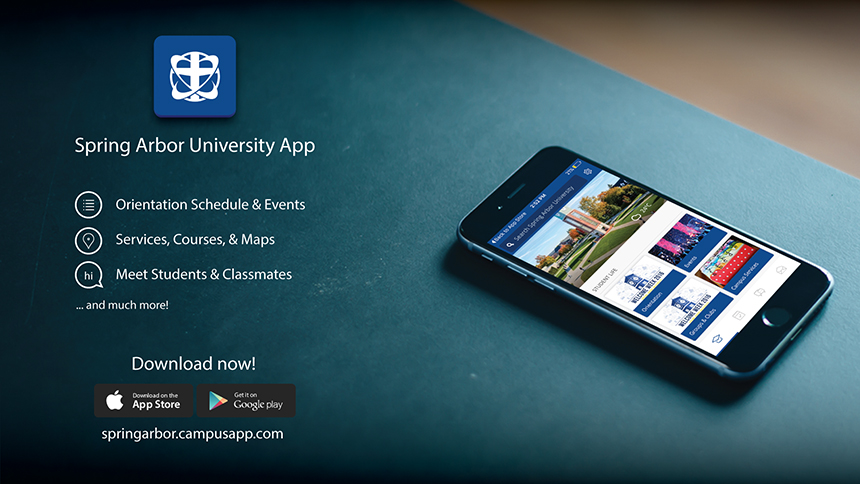
Spring Arbor University (SAU) launched a self-titled app this summer featuring information on all campus activities.

The iOS and Android app is free and available for download for students, staff, and guests alike, so parents or friends can stay connected to campus life. Its many features will improve communication and safety between students and campus groups.

Assistant Dean of Students Bobby Pratt was largely responsible for the development of the app. He said the goal behind its creation is taking information and “putting it in students’ hands.”

With the app, students can find schedules and locations of all campus events. A master calendar is also available from sports events to chapel speakers to club meetings. There is also an option to buy tickets for events such as Homecoming or shows.

Clubs and groups have their own page on the app and can keep students informed about meetings, practices and announcements through notifications by email or straight to a phone. A campus wide feed, similar to Facebook, also includes categories like “Buy & Sell,” “Lost + Found,” “Housing” and “Ride Sharing.”

Under “Campus Services,” students can find office times and locations including the Dining Commons, Cougar Den and Holton Health Center.

sau-app

In the past, Pratt said, communication to the entire campus during potential emergency situations could be difficult and possibly ineffective. Now, the app can send out campus wide notifications at a moment’s notice. The app also allows students to call Campus Safety with a touch of a button.

“It’ll be handy,” says Campus Safety Officer, Alexis Horn. “You can call us straight from the app. It’s a lot easier.”

The app is a continual work in progress, with a plan in place to add coupons from local businesses.

The administration hopes the app will be valuable to students, according to Pratt, they, “hope that it is another element to add to the community.”

Save

MCU Catch-Up (Part 3)

Marvel’s latest blockbuster “Captain America: Civil War” opened in theaters this weekend and intertwined multiple Marvel cinematic universe (MCU) stories. The plot brings back the usual Avengers gang (minus Thor and the Hulk) while introducing new members Black Panther, Ant Man, and Spiderman.

Because the conglomeration of these stories can be a bit confusing, staff writer Heather Clark and guest writer Lily O’Connor have written summaries of every Marvel movie leading up to “Civil War” in chronological order. “The Pulse” will be posting these summaries over the next couple of days to help refresh your mind before seeing “Civil War”, or to help you connect missing links you hadn’t caught after seeing the movie for the third time.

marvel


Guardians of the Galaxy (2014)

gotg

In the 1980s, a young Peter Quill is kidnapped from Earth. Years later, he is part of a band of intergalactic thieves and goes by the name Starlord. While stealing a mysterious artifact, he is targeted by two bounty hunters—Rocket, a surgically enhanced raccoon, and Groot, a humanoid plant. An assassin Gamora, working for terrorist Kree leader Ronan, also wants the artifact, the Orb. They are all captured by authorities and sent to a space prison, where Gamora is attacked by an alien called Drax the Destroyer, who is seeking revenge for Ronan killing his family.

Quill manages to convince them all to work together long enough to escape the prison and deliver the Orb to a buyer. They agree, but when they prepare to sell the Orb to a man known as the Collector, the Orb is revealed to contain one of six Infinity Stones, which also include the Tesseract and the Aether. The stone causes an explosion and the group realizes it needs to be given to the Nova government authorities, but Ronan has tracked them to the Collector’s home. In the battle, Ronan takes the Stone and Quill and Gamora are captured by Quill’s old employers, the space thieves, the Ravagers. Quill convinces the Ravagers to help him get back the stone, and they ally with the Nova fighters to stop Ronan. The stone is recovered and Ronan is destroyed, but Quill discovers that he is not entirely human. He and the others decide to continue working together.

Avengers: Age of Ultron (2015)

aou

While taking down Hydra outposts, the Avengers discover Loki’s scepter as well as two enhanced siblings. While fighting against Hydra and the Maximoff twins, Clint Barton is shot and is airlifted to Helen Cho, a doctor who works closely with the Avengers. Meanwhile, Stark is attacked by Wanda Maximoff/Scarlet Witch, who has the ability to manipulate the mind, causing Tony to see a horrible future. The Avengers are able to retrieve the scepter and return to Stark Tower, which has been renamed Avengers Tower.

Tony begins scientific experiments on the scepter, which he discovers has a computer inside. His attempts to link it to J.A.R.V.I.S. are eventually successful, although the new intelligence proves to be an adversary to Stark and his companions. The creation, named Ultron, takes over Tony’s collection of Iron-Man suits and attacks the Avengers, later disappearing into the internet when he is defeated.

The Avengers travel to Africa to meet with an arms dealer about a supply of Vibranium, the same metal that makes up Steve’s shield, which Ultron wants so he can build an infallible body. They arrive too late, and the Hulk, under the influence of Scarlet Witch, wreaks havoc on the city of Johannesburg, South Africa. With nowhere else to go, Clint takes the Avengers to his safe house, where they discover that Clint is married with children.

The Avengers try to figure out what to do next, and eventually realize that Ultron is attempting to build a flesh body for himself with the help of Helen Cho, whom he took control of with the use of the mind stone, an infinity stone contained in Loki’s scepter. The Avengers steal Ultron’s body before he can be fully integrated into it, and Tony decides to input JARVIS into the body instead. This creates the being known as the Vision. The Avengers, plus Vision, hurry off to Sokovia, the home-country of the Maximoffs, to face Ultron one last time.

The Maximoffs, realizing Ultron only wants war and death, switch sides and team up with the Avengers. In the midst of trying to evacuate the city is forced into the air, and S.H.I.E.L.D. sends help to save the civilians. During the battle, Pietro, one of the twins, is shot saving Clint’s life and dies. A grieving Wanda is able to destroy Ultron’s body, but he narrowly escapes. He is eventually defeated by the Vision. The movie ends with Steve training a new set of Avengers, including Tony’s friend Rhodey, Sam Wilson, and Wanda.

Ant-Man (2015)

ant man

Recently released from prison, burglar Scott Lang is trying to work and live a normal life while attempting to get visiting rights for his daughter. When he loses his job, some of his old friends talk Scott into robbing a safe in a mansion. The only thing in the safe is what looks like a motorcycle suit. However, after trying the suit on, Scott realizes it has the ability to shrink a person to the size of an ant. Freaked out, Scott tries to return the suit, and is arrested for breaking and entering. He is able to escape jail by using the suit, which was given to him again, and he discovers that his ‘release’ was caused by the suit’s owner, Dr. Hank Pym. Dr. Pym used to work with Howard Stark until he tried to get Pym’s shrinking particles to be used as a weapon.

Pym’s protégé, Darren Cross, is attempting to recreate the particle, something Pym is trying desperately to stop. With the help of Scott, and Pym’s daughter Hope, Pym plans to steal the prototype suit. In order to steal the suit, Scott needs to break into the new Avengers facility to get a part and ends up fighting with Sam Wilson. He is able to escape and heads back to the Pym household. He enlists help to break into Cross’s facility, but is unable to steal the suit before Cross takes it out of storage. Scott must then fight Cross, which alternates between normal size and ant size in Scott’s family’s house. He is eventually able to defeat Cross. The movie ends with Sam Wilson asking around about this new “hero.”

By Heather Clark and Lily O’Connor