Navigating the Post-Grad World Amid a Pandemic

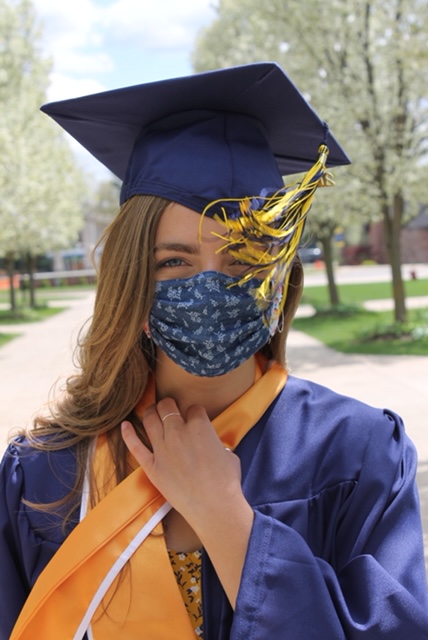
Each May, millions of twenty-somethings are thrust into the real world, but for the class of 2020, they were thrust into a world shut down by COVID-19. How did SAU’s Class of 2020 handle it?

Elizabeth Pruitt

Each May, millions of twenty-somethings are thrust from the protective bubble of college into the so-called “real world”, where they must find jobs and navigate life on their own. 

But, the Class of 2020 was thrust into a world that was shut down due to COVID-19. Many businesses were closing their doors to new hires. The Class of 2020 was in for a wild ride, and Spring Arbor University’s graduates were no exception. 

Now that a few months have passed since their graduation, what did Spring Arbor University’s Class of 2020 do?
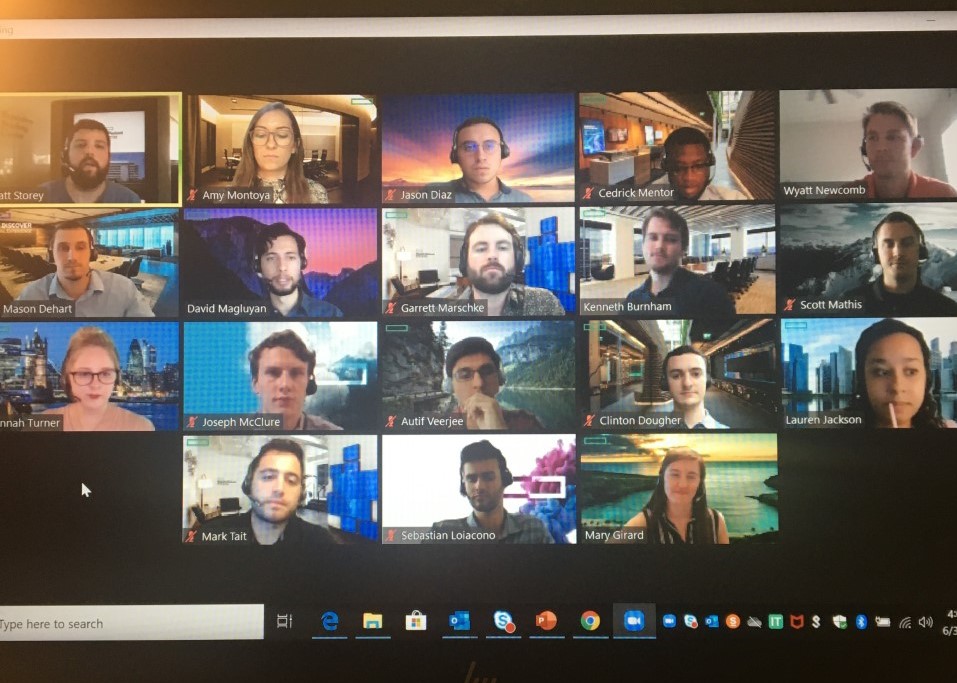
What a typical work day looks for Montoya. Photo Credit: Amy Montoya

Despite the pandemic, many SAU grads were able to find careers post-graduation. Amy Montoya, a computer science major, found a job working for Hewlett Packard Enterprise in Atlanta, Georgia as a solutions architect. She was able to snatch up her job in November of 2019, so she was secured before COVID-19 hit the United States.

However, Montoya’s work days have still been affected as she works remotely every day. She has only met with her coworkers and bosses in person just two days out of the last few months she has been in the position. Montoya had to give up a semester abroad in Japan when COVID-19 struck and had to live alone in an apartment in a new city halfway across the country from her hometown. Still, she presses on and is optimistic about her future. 

“Although the class of 2020 had to make sacrifices for COVID-19,” said Montoya, “…I understand the sacrifices were made for the greater good. It’s easy to feel like COVID-19 has personally attacked you and ruined your plans, but the truth is, everyone has had to make sacrifices and adjustments for COVID-19; not just me and not just you. The sooner we begin thinking about others as ourselves, the sooner we can move past this unprecedented time and make way for a brighter future.”

Professional Writing major Libby Koziarski has started working remotely as a communications copywriter for the Orlando-based non-profit, Ligonier Ministries. The job she applied for was not originally a remote position. It was strictly for people who could work on location. Koziarski, who had always dreamed of working with Ligonier Ministries, applied anyway, and after a rigorous interview process over Zoom, got the job. 

“I was extraordinarily blessed when it came to finding a job during COVID-19. I got the job by God’s grace and I couldn’t be more grateful,” Koziarski said. 

Many students who graduated from SAU in May were not employed right away and some are still unemployed. Either way, they have not given up hope. Madilyn Nissley, a youth ministry major, has become a nanny for local families a few times a week as she continues to look for a full-time position in youth ministry. She is enjoying the time she gets to spend with her family after four years away from them.

Kaelyn Hale, a communications major, did some freelancing, such as designing a website for Branch Adventures Day Camp and doing SEO for Chrome21, a Down Syndrome Awareness store, until she found a full-time position. She recently has been hired as a marketing associate at Design Force Marketing in Grand Rapids, Michigan. She went on many job interviews before nabbing this position, but did not give up hope that she would find a job that was right for her.

Other students went the graduate school route. This past spring, health and exercise science major Megan Mitchell was dealing with the sudden loss of her senior year, her grandmother’s death, being wait-listed for grad school, and had no idea where her future would take her. 

“Yet through that time, I could feel Jesus holding me close and whispering, ‘I’m here. I know and understand everything that’s breaking your heart. I love you more than you can imagine and we’re going to get through this,’” Mitchell said. 

Megan was then offered a spot at Grand Valley University’s occupational therapy graduate school. Mitchell completes most of her classes online and through Zoom. She also meets in-person for some classes just three days a month. Although it was rough for her, she said she has learned a lot about herself and grew in ways she never thought she would have. 
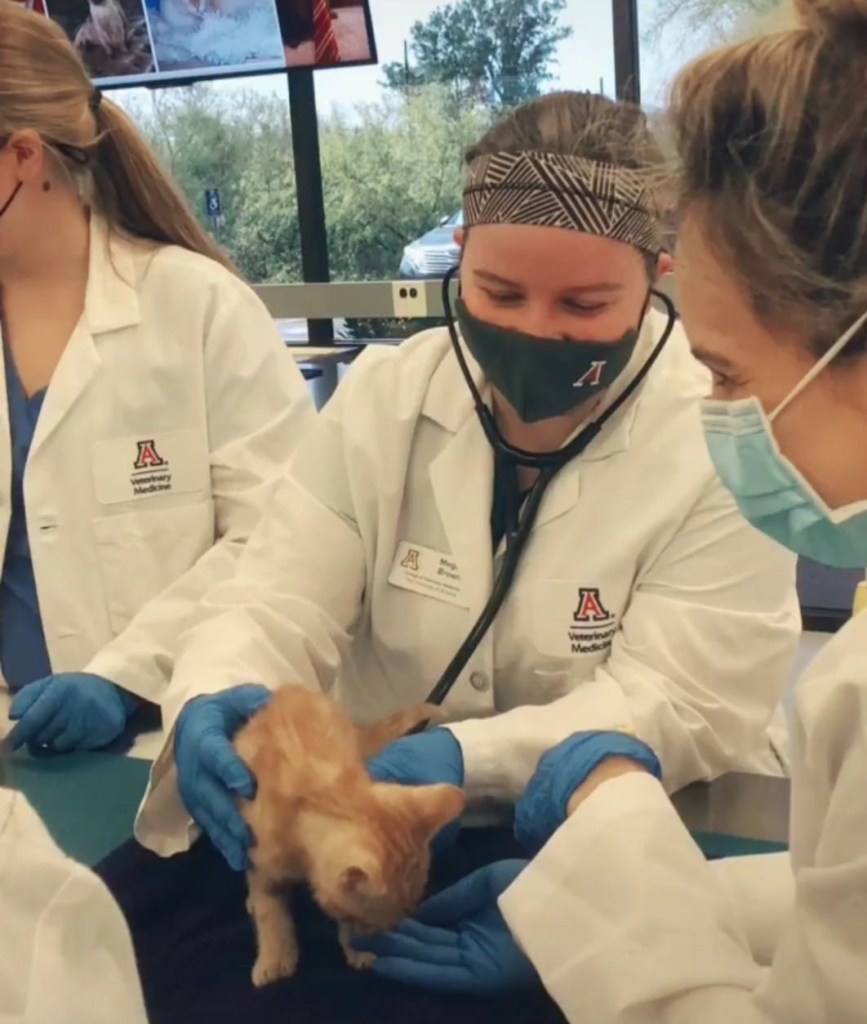
Brown with one of her patients. Photo credit: Megan Brown

Megan Brown, a biology major, moved to Arizona where she is attending the University of Arizona’s College of veterinary medicine. Brown is a part of the university’s first veterinary medicine class. Moving from Michigan to Arizona was a big step, especially in the midst of COVID-19, but Brown has been successful in her classes and is enjoying her time in Arizona.

SAU’s Class of 2020 is an example of the faith in God the university teaches students to have. In times of uncertainty, these graduates were resilient. Whether they have found a job or are still on the lookout, the class of 2020 pushed on. 

Check out what some of the other members of the SAU’s Class of 2020 are doing post-grad by checking out the Spring Arbor Student Alumni Council’s Instagram, linked here

Want more information regarding navigating life post-grad? Visit the Career Development’s website, linked here, or contact Chad Melton at chad.melton@arbor.edu.


Meet the Writers of The Pulse: Merry Castle

Meet Merry Castle, one of the staff writers of SAU’s student newspaper “The Pulse”.

By: Merry Castle

Merry Castle: Staff Writer

My name is Merry Castle. I am a Senior at SAU majoring in English and minoring in professional writing. I was drawn to Spring Arbor University because it was a small Christian college that had an excellent English department, the opportunity to travel to South Korea for my cross-cultural trip, and was just far enough away from home to be independent.

My favorite thing about SAU is the relationships I have built while I have been here. SAU truly has a strong sense of community, and I am so thankful for the relationships I have forged with my professors and other students. I am an introvert who enjoys photography, reading, listening to music, critiquing movies with my family, and collecting vintage clothing. My goal is to one day own an authentic piece of clothing from every era.

Trick-or-Treating, Trunk-or-treating, or Staying Home: Halloween During a Pandemic

Whether you are planning to to keep with the traditional door-to-door trick-or-treating, participating in a trunk-or-treat, or, or holding a small gathering at your house, we can all agree that Halloween 2020 is still about the children and everyone is committed to making it a memorable one.

By: Leslee DeRossett

Many  families have been forced to stray from normal holiday traditions due to the coronavirus pandemic. Travel plans were forced to be cancelled for Easter and outside gatherings were limited during the Fourth of July which meant that many Americans stayed home instead of heading out to see local fireworks.

Americans are now encroaching on Halloween and again, COVID has forced many families to decide what traditions they will continue on Halloween night. Jackson and most surrounding counties are still allowing traditional trick-or-treating along with local churches and other organizations holding trunk-or-treats at numerous locations.

If you are interested in your communities trick-or-treating hours, looking for alternative activities, or you would like to participate in handing candy out at a trunk-or-treat location, check out these links to events scheduled in Jackson, and the surrounding areas, for the weekend of October 31, 2020.

Jackson Halloween Activities

Hillsdale Halloween Activities

Adrian Halloween Activities

For those that do plan to celebrate Halloween in their communities, below are some of the precautions suggested from the City of Jackson webpage to keep our communities safe. 

FOR TRICK-OR-TREATERS AND PARENTS

  • Stay home if you are sick. 
  • Maintain social distancing of at least six feet. 
  • Wear a cloth mask that covers both the mouth and nose. A costume mask does not provide adequate protection. 
  • Wash hands frequently or use hand sanitizer while trick-or-treating. 

FOR RESIDENTS:  

  • If you intend to hand out treats, turn your porch light on as a sign of welcome. If you don’t wish to participate, turn off your porch light or exterior lighting.
  • Mark six-foot lines on your front sidewalk or driveway so trick-or-treaters know to social distance as they wait for candy. 
  • Position a distribution table between yourself and trick-or-treaters to maintain distance. 
  • Leave treats on a table outside your home where trick-or-treaters can pick them up. 
  • Consider handing out treats in an open space where distancing is possible, rather than a front door. 

For even more information on ways to keep safe and healthy on Halloween, check out the MDDHS webpage.

While trick-or-treating is still on the agenda for some families, there are other families that are straying from this tradition to limit their exposure to the public. One them is Kelly of Somerset Center, “We usually get together with our neighbors and take the kids by vehicle around the lake. But this year we have invited close friends and family to our house for a cookout followed by a bonfire. Everyone is welcome to dress up, but it is not required. We did ask that all adults bring a bag or two of candy so we can scatter it around the yard for the kids to find. It’s going to be like an Easter egg hunt, only without the eggs and with Halloween candy.”

Tera, of Devils Lake, has also chosen to stray from the traditional trick-or-treating, “It has been really hard to get into the Halloween spirit this year. My girls are always so excited to buy costumes so we are doing that this weekend. We have family that lives close so there are around 8 houses that my kids will be trick-or-treating at this year, ending in dinner at my parent’s house. I’m sure we will be able to keep our night busy, I am just ready for everything to get back to normal.”

Whether you are planning to to keep with the traditional door-to-door trick-or-treating, participating in a trunk-or-treat, or, or holding a small gathering at your house, we can all agree that Halloween 2020 is still about the children and everyone is committed to making it a memorable one.

First a new sport, now a new coach

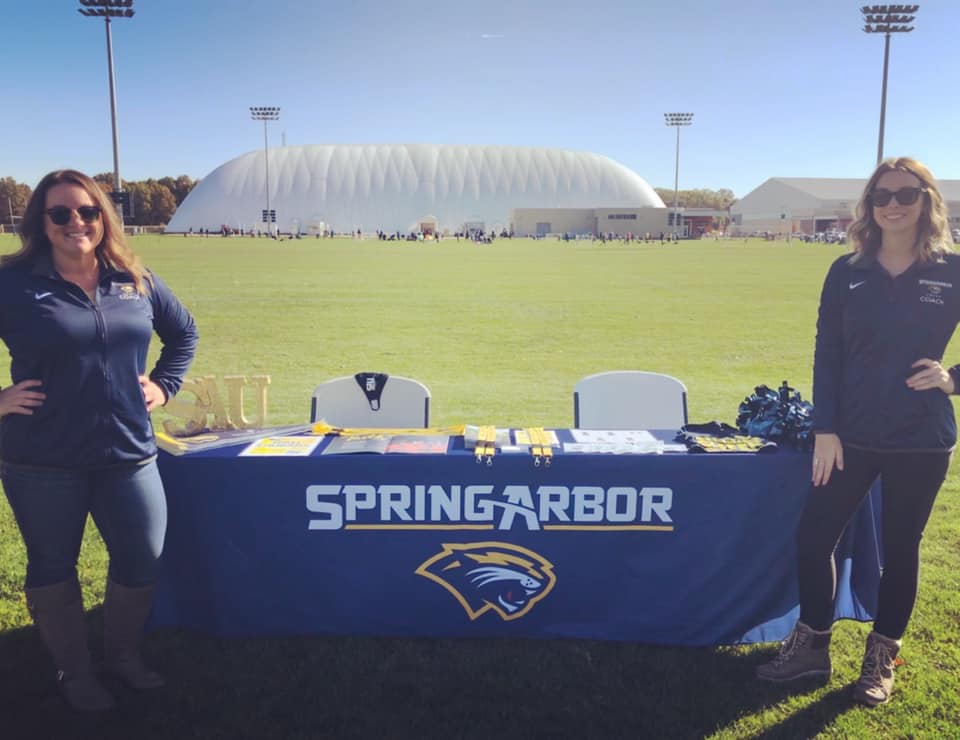
The SAU cheer team has welcomed Jessica Dowling as the new head coach. She has big plans for her team and the SAU cheer organization.

By: Leslee DeRossett

Jessica Dowling (left) at Champion Cheerleading College Recruitment Day

Spring Arbor University students coming back to the 2020 fall semester have seen many changes. This is also true for the SAU competitive cheer team. In August, SAU named Jessica Dowling as its new head coach of the competitive cheer program.

Cheer is not new to Dowling, between four years as a member of her high school varsity competitive cheer and sideline cheer teams and eight years as the Addison Community Schools middle school competitive cheerleading coach, the middle school sideline cheerleading coach, as well as the varsity competitive assistant coach. She guided her team to five straight Cascades championships, along with three consecutive undefeated seasons.

Dowling may be new to the SAU competitive cheer team, but she is not new to SAU. When Dowling is not working with her competitive cheer team, she is teaching as a professor in the SAU School of Education.

Dowling said, “The number one thing I enjoy the most coaching for SAU is working with my athletes and building a tight-knit team. The girls are amazing and all so unique in the best way! We are a perfect mix and have formed a great bond already.”

The SAU competitive cheer team is new as of last year.

“Another thing I enjoy about coaching cheer at SAU is building a foundation for years to come. I have really enjoyed working to build a program which strives in character and is centered in faith. We are eager for a safe return for big crowds as we have some big ideas for community involvement at SAU.”

Jessica Dowling

Farewell Tribute and Senior Spotlight from The Pulse Leaders

Caralyn Geyer

As a senior that would have “graduated” last week, I look back fondly on my time as a Cougar, English major, and member of The Pulse. Many nights were long and I cried a lot of tears over Brent Cline’s classes, but when I look back on my four years, I don’t see those exhausting, sleepless nights. Instead, I remember the times like winning Arbor Games, eating pizza with my Alpha 1 floor at 1 a.m., seeing the elephant on the library roof while walking to class, the first Almost Chapel video, getting hit in the face by a hotdog at Porchfest and so much more. It brings tears to my eyes knowing that the next stage of life does not include Spring Arbor University (SAU) anymore, but what I’ve learned from this place, the professors and my friends will never leave my head nor my heart.

At first, I struggled to figure out why embracing new beginnings was so hard and realized that this time, it was because moving out meant moving on too. Moving on means change, and personally, that’s not something I do very well with. This year, it means a real, full-time job (which I still do not have), more expenses, a working schedule, less free time, and not seeing the people I have made such deep friendships with every day. But changes like these, whether big or small, aren’t always a bad thing. While I’ll miss being able to lead newspaper meetings and eat cinnamon pizza during Pulse production nights while laughing at nerdy English jokes, I’ve been prepared by the entire campus in some way to go on and make an impact in another place. Staying would mean not embracing this fully, and as hard and scary as it is to go, I cannot live life in my comfort zone.

While times may be uncertain and the future is unclear for now, I leave you with the reminder that we do not need to fear the what-ifs. If Jesus says “do not be afraid” 365 times in the Bible, we really don’t need to worry about the future when we are only able to see such a fraction of the overall perspective. I want to give my sincere thanks to every faculty member, fellow student I never knew personally, every Dining Commons worker, and especially every one of The Pulse leaders, whether I worked with you or not over the last four years. I have been shaped in some way by your influence and I leave changed because of you. Thank you, SAU.


Jared Boekenhauer

I am not a graduating senior. I am a transferring sophomore, so do not think I’m trying to steal the attention of graduating seniors. I congratulate all who are graduating this year, and will be praying for your future jobs, further education or whatever else you plan to do. However, I would like to put a few thoughts out there to those facing transition decisions, as I have, while I still have this platform.

First, transferring is not a failure move. It does not mean you have made some wrong and costly mistake that will haunt you your whole life. Transferring means you have decided your college education will be better continued elsewhere. That is why I am transferring. The SAU community has nourished me and given me personal confidence in my ability to question God and the universe. Dr. Moore’s World Literature class has given me a passion for old books, like the Odyssey and the Aenied. I have even kept every book from that class to return to at some point in life. Chuck White’s J-term New Testament class (yes, I took that class) was challenging and exhausting, but taught me so much about the Bible, and gave me a new found love for the books of Acts and Roman. I could go on, but the point is, SAU transformed me into a more thoughtful person, teaching me ideas and practices that I will take with me to my next destination.

Second, we learn best from the people we disagree with. I came to SAU with the mindset that people would disagree with me on many political issues, and I was right. Instead of ignoring these people, I challenged them, and they challenged me. Through this, I developed a better understanding of other people’s opinions. Also, this practice doesn’t just have to be political, it can be about anything. If you are Protestant Lutheran, talk to a Roman Catholic. The point is to challenge each other and see why someone believes what they believe. This creates empathy and understanding. It will make debating less personal, and more issue driven, and you will be friends with those whom you couldn’t personally agree with about anything.

Last, don’t be afraid of change. Change can force us to rely on God because it is uncomfortable. If you are unsure of if God is calling you to change, pray, fast and read your Bible, but also question your motives and perceived outcome. Having a perceived outcome will give you steps, and lay out a map for you. My choice to transfer did not come without long nights of thought, but God was calling me to that choice.

The long nights working to edit and design the Pulse were stressful, but they confirmed that I was going in the right direction. Thank you to the Editor-in-Chief, Caralyn Geyer, for working long and hard to assure this magazine would be published timely. Thank you to Dr. Baker and Dr. Moore for helping me enjoy old books. Thank you to Dr. Dan Runyon for making my writing better (no matter how frustrating it got), and to Mark Edwards for your well-taught history courses that contributed to my understanding of thought and analysis.

Lending a Helping Hand

By Sarah Williams 

 During Spring Arbor University’s (SAU) spring break, SAU students went on mission trips to Guatemala, Las Vegas and North Carolina.  

Post-Undergraduate Outreach Ministry Intern (PUOMI) Cecilia Said, helped plan and coordinate SAU mission experiences and encourage students to become involved in the community.   

The mission trip locations were chosen based on different types of service opportunities provided for students. Guatemala was chosen for its relational ministry aspects, the Las Vegas trip focused on prayer and the North Carolina trip focused on service work.  

When Said was planning the trips, she wanted each student to deepen their understanding of their faith, understand how their presence can impact others and what it means to be a follower of Christ.  

According to Said, 38 students volunteered for the mission trips. Seven students went to North Carolina, 20 went to Guatemala and 11 went to Las Vegas.  

Johnathan Husted, student leader for the North Carolina mission trip, said he went on the trip for the manual labor.  

The main goal of the trip was to help Hurricane Florence victims get their houses up to code for an inspection so they can move in permanently. The campers provided to the victims by the government were being taken away at the end of March. 

“There is something about working hard for someone else with no expectations of getting anything in return that makes me feel fulfilled,” Husted said.  

The trip was one week. Excluding drive time, the students spent five days in North Carolina. They would get up at 7 a.m., have a devotion, work and then debrief during dinner. They had a recreation day where the students toured a battleship and watched the sunset on the beach.  

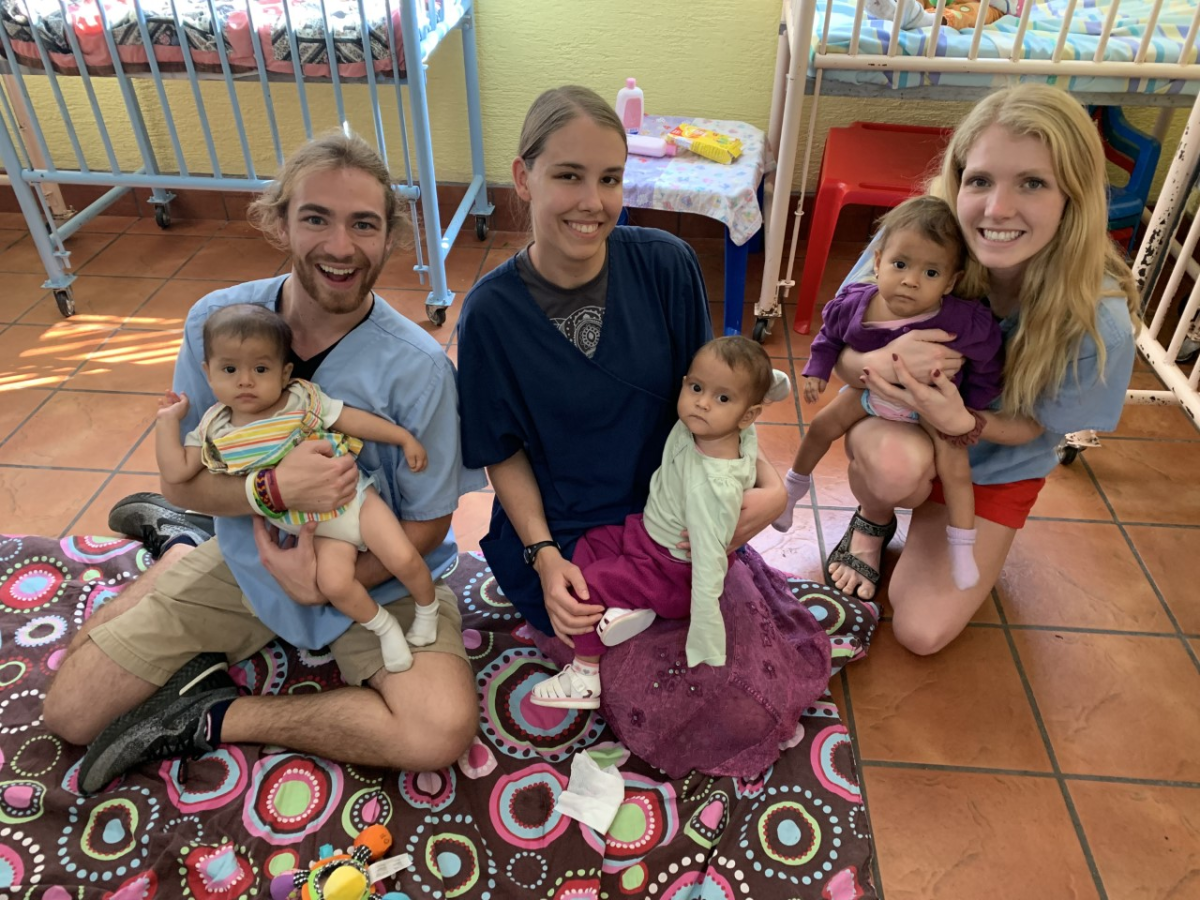
Kensington Thomas volunteered for the Guatemala mission trip. The students assisted with God’s Child Project, a center for malnourished babies, as well as Casa Jackson school and Obras Sociales hospital for people with severe disabilities. 

At the God’s Child project, the students fed babies, changed diapers, cleaned up around the facility, cleaned windows, folded clothes, moved heavy items and played with the children. At the school, they helped teachers grade assignments and played with the kids. At the hospital, they fed children and took a Zumba class with kids in wheelchairs. 

The volunteers would get to the facilities at 8 a.m. and stay until 12 p.m. They volunteered for four days. They also visited other places in Guatemala and learned Spanish. The students went to the Mayan village where they ate traditional food, made tortillas, drank coffee, acted out a traditional Mayan wedding and bought homemade souvenirs. They also went to Antigua where they did a historical tour of old cathedrals and buildings.  

The students stayed with host families during part of the experience. Thomas’s host house had six girls. Other houses had either seven or nine. The host families cooked all of their meals and provided them with a living space.  

I learned a lot about the culture. The food was amazing, and the people were so kind,” said Thomas.  

Carol Nichol volunteered for the Las Vegas mission trip. She said she felt called to go when people from Youth With A Mission (YWAM) and Grace City Church came to her peer advisor meeting and discussed the trip.  

Nichol said the trip initially seemed out of her comfort zone, yet she trusted in God’s faithfulness and protection.

The students packed sack lunches and ate with the homeless. They led worship on the street outside the MGM hotel and offered testimony and the gospel. They went into gas stations and motels to pass out flyers of three missing children that were at risk of being trafficked. One of the children was found the next day.  

Co-leader of the Las Vegas Trip, Brandon Valentine, said they also provided worship for people on the Las Vegas strip, offering “Free Prayer” on Fremont St. and worshipping with middle schoolers on the week-long trip.  

“Our commitment statement toward one another was, ‘to have zero expectations but one: to serve wholeheartedly’,” Valentine said. 

According to Nichol, the trip schedule consisted of cleaning the YWAM base after breakfast. They had quiet time and evangelism training for their outreach. Then, they ate lunch, went out on their outreach, debrief and had dinner. Finally, they would have another outreach or team bonding experience.  

Nichol said her favorite moment was when they were worshipping outside the MGM hotel and some police officers told them they couldn’t have an amplifier resting on the ground as it was blocking foot traffic. The students picked the amplifier up and sang gospel music for another half an hour. Many people stopped and joined in. 

According to Said, SAU does mission trips for multiple reasons: Mission trips allow students the opportunity to broaden their worldview, give them the opportunity to engage with Christian organizations and ministries, give them a glimpse into the lives of others, provide love and encouragement and to allow students to participate in the world with Jesus at the forefront.  

Recycling is Not the Solution

By Kaylee Clayton

Until 2018, the United States shipped roughly 7 million tons of plastic to China each year. In China, the plastic was sorted, broken down and reused to create new materials. Paper and aluminum was also shipped over from the U.S.

Not just the U.S. but about 70 percent of the world’s plastic waste went to China according to NPR writer Christopher Joyce. Many Chinese people became millionaires with new recycling businesses that bought the world’s trash and made money from processing and selling it. Joyce said this aided in making China the second wealthiest economy in the world.

At U.S. West Coast ports, empty Chinese shipping containers that had delivered goods to American consumers were sent back full of plastic and paper recycling. While American recycling machines often struggled with breaking down certain types of plastics, China had the capacity to handle the plastics with enough cheap laborers to sort the recyclable materials.

About five years ago, the Chinese government began to worry about the amount of incoming plastic. Much of the plastic was contaminated, which made it difficult to recycle and unprofitable. In 2017, the Chinese government implemented stricter regulations and began to cut down plastic trash imports. In January 2018, China banned almost all imports. “That means a huge amount of plastic is looking for a place to go,” said Joyce.

This left American recyclers with three options: pay a higher price for recycling, send it to different countries, or send it to the landfill.

“Plastic is getting separated at paper factories, dumped in neighboring communities, and the only way to get rid of it is to openly burn it,” said environmental activist Stiv Wilson. “Air, water, and land are all affected.”

Many smaller cities that feel they cannot afford to pay more for recycling choose to incinerate their recycling rather than pay for recycling, which results in harmful toxins being released into the air. Keefe Harrison who runs the nonprofit Recycling Partnership, said “more plastic in the U.S. is ending up in landfills or getting incinerated, which creates pollution.”

Shipments of plastic waste are now diverted to Southeast Asian countries instead of China. These shipments have increased exponentially since 2018. According to Laura Parker from National Geographic, exports from the U.S. to Thailand jumped almost 7,000 percent in one year. Malaysia’s increased several hundred percent. Those numbers have begun to decrease since those countries have cut back on imports.

Alana Samuels reported in The Atlantic that waste-management companies across the country are telling towns, cities, and counties there is no longer a market for their recycling. Recycling is ending at a time when the United States is producing more waste than ever before.

According to the United States Environmental Protection Agency (EPA), the total amount of municipal waste was 208.3 million tons in 1990 and 262.4 million tons in 2015. According to Frontier Group, “The U.S. produces more than 30 percent of the planet’s total waste, though it is home to only 4 percent of the world’s population.” A Columbia University study estimated Americans throw out seven pounds of materials per person every day, which is 2,555 pounds of materials per year.

The Zero-Waste Movement proposes an alternative to shipping waste to other countries and landfills. This idea started 20 years ago when Daniel Knapp, Ph.D., CEO, Urban Ore, Inc., a Material Recovery Enterprise in Berkeley, California, shared his research around the world on his idea of “No Waste.”

The Zero-Waste Movement encourages the redesign of resource life cycles so all products are reused. By eliminating single-use items, plastic water bottles, Ziploc baggies and plastic straws, one can live a lifestyle of reducing and reusing. The goal is for no trash to be sent to other countries, landfills, incinerators or the ocean. Of the 260 million tons of plastic the world produces each year, about 10 percent ends up in the ocean, according to a Greenpeace report. Plastic Oceans reported that “more than 8 million tons of plastic are dumped in the oceans every year.”

The Zero-Waste Movement encourages people to take responsibility for their product consumption and only use materials that can be reused. Some individuals have managed to keep

all the waste they have created for several years in a 16 oz. mason jar. Lauren Singer, environmental activist and CEO of Simple Co., kept all the trash she made in four years in a 16 oz. jar. She began with eliminating single-use plastic, analyzing what her trash consisted of, composting raw materials, making her own products, and investing in sustainable and reusable alternatives.

Spring Arbor University (SAU) junior and environmentalist Madilyn Nissley said “the Zero-Waste Movement is a good thing, but if someone cannot commit to changing everything in their life then it

feels overwhelmingly impossible.” The Zero-Waste Movement could be the answer to America’s current recycling dilemma.

Concluding the composition: chair of the music department to retire after 34 years

By Libby Koziarski

After 34 years of teaching, Dr. Jonathan Bruce Brown, Spring Arbor University’s (SAU) music department chair, is set to retire. 

His first encounter with SAU was 44 years ago on March 31, 1973, when his sister was married on campus. Ten years later, he heard about a job opening, “and the rest is history,” he said with a smile. 

Dr.BruceBrown
Dr. Brown. From SAU’s website.

Dr. Brown has taught several classes at SAU, with some of his favorites being Intro to Fine Arts and Music Theory. He also started and directed the string orchestra, helped set up the computer music lab, and composed a brass piece for the kick-off dedication of the campus library in 2002. 

“It is a real blessing to be here [at SAU],” he said. “I just hope people feel like I tried to be helpful.” 

According to sophomore Rachel Lawrence, “Dr. Brown is just a really great guy to talk to… and he does such a good job laying down the basics and making complex concepts easy to understand.” 

Dr. Brown is not only an accomplished professor at SAU, but he is also a nationally-recognized composer. His performances have been showcased from Washington D.C. to Honolulu, Hawaii, garnering annual awards from the American Society for Composers, Authors and Publishers (ASCAP) since 1992. 

34 years later, Dr. Brown’s career at SAU comes full-circle as he plans his farewell concert.  The concert is on April 27th, 7:00p.m., in the Spring Arbor Free Methodist Church chapel. 

Kicking Off Spring Semester

By Caralyn Geyer

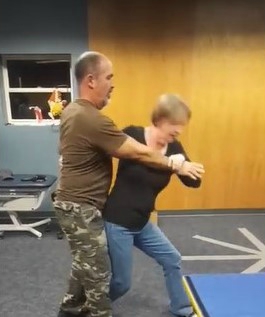
On Thursday, February 1, 10 students dodged punches and blocked kicks as they attended the newly emerging kickboxing club at Spring Arbor University (SAU) for an hour-long session of fight training.

The club started in the fall of 2016 when two students in associate professor of physical therapy Mitch Zigler’s HPR101 class expressed interest in learning techniques he taught one day in class.

Now that school is back in session for the spring, this new club is “kicking” it into action for the year with the hopes that the new semester will bring in some new recruits to help the group come out of the shadows.

The group meets every Thursday night from 5:30 to 6:30 and is led by Zigler in the Physical Therapy clinic. Zigler said that he instructs by his history of Krav Maga and Filipino fight training.

KickboxingFightingpicJPG
Mitch Zigler and Bethany Ulrich, assistant professor of HHPR. Photo by Rachel Merchant.

“Just training in Krav Maga offers your body cardiovascular exercise,” Zigler said. “It is also mainstream combative, so we get to have fun all while working on these very direct techniques, making it the most effective way to defend yourself.”

Zigler also said he would like to focus on Krav Maga techniques.

“It’s the most movement-efficient, and is proven combatively effective because it’s used by the Israeli army and is taught in our police and army systems as well,” Zigler said. “I think that all SAU students should learn how to handle any combat situation.”

Student Conner Williams attended for the first time this past Thursday.

“My favorite part of the class was being there with my friends and learning something new together,” Williams said. “We’re constantly learning new information in an academic sense, but it’s nice to learn a new way to use our bodies, too.”

Regular attendee Celeste Fendt said, “it’s a casual, fun way to get some cardio in and learn important self-defense skills.”

The class is free, welcomes beginners, and is for anyone looking to have some fun and learn how to protect themselves.


Illumination and Administration: SAU admin on their hopes to foster dialogue with LBGTQ+ students

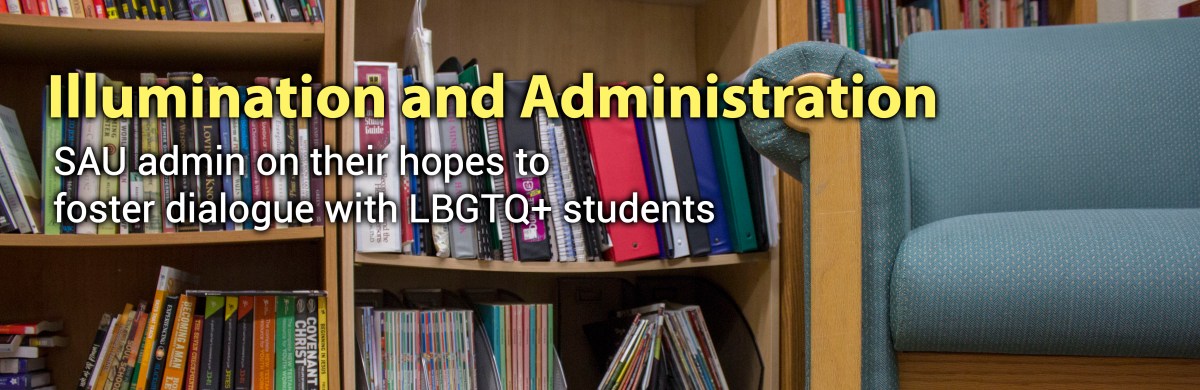
A worn green armchair sits in the corner surrounded by shelves of encyclopedias, devotionals and Biblical commentaries. Papers, reading glasses, three used mugs and a ping pong ball are scattered on a desk across from it.

By Kayla Williamson

A worn green armchair sits in the corner surrounded by shelves of encyclopedias, devotionals and Biblical commentaries. Papers, reading glasses, three used mugs and a ping pong ball are scattered on a desk across from it.

Some consider it a safe space to talk about their sexual identity.

“I don’t know how, but some [students] have chosen to come talk to me about it,” University Chaplain Brian Kono said. “As they sit in that chair and talk, I try to never make my opinion or my belief stand above the person or my relationship with them.”

The bulk of their conversation is not about what the Bible says about sexuality, but how they are processing this with their family, what shapes their identity, why they think God made them this way.

It is a conversation full of questions and listening.

It is a conversation an estimated 9.5 million Americans have had, according to a study by the Williams Institute in 2014.

It is conversation the Spring Arbor University (SAU) administration is trying to cultivate.

Living on a school campus that prohibits homosexual behavior creates a student perceived barrier to cultivating an environment of welcome conversation and loving support. Bridging that gap while maintaining student handbook rules is a challenge administrators like Kono are trying to overcome.

[It] was very revealing to me that a student didn’t think they could come out to me or an administrator without there being some sort of response from us. – Kim Hayworth, VP for Student Success and Calling

Whether the attempts land successfully or not depends on the level of trust at an individual level.

“I hope that it’s because they trust me,” Kono said. “They know my heart. It’s not unique to me. You know those that you trust because of the good conversations you have with them.”

The role of community standards

In a meeting with students, a girl asked Vice President for Student Success and Calling Kim Hayworth if someone has ever come out to her.

Her answer: absolutely.

“She was shocked, and her shock shocked me,” Hayworth said. “That was very revealing to me that a student didn’t think they could come out to me or an administrator without there being some sort of response from us.”

For Hayworth, the challenge was realizing student perception of administration—that if someone came out to an administrator, unknown concequences await. She realized the effort she and other administrators will have to do to overcome urban legends or the label of “administration.”

Both she and Associate Vice President for Student Development and Learning Dan Vanderhill emphasize the difference between identifying as LGBTQ+ and participating in LGBTQ+ behavior.

The Student Handbook states, “All students, regardless of age, residency or status, are required to abstain from cohabitation, any involvement in premarital or extramarital sexual activity, or homosexual activity (including same-sex dating behaviors). This includes the promotion, advocacy, and defense of the aforementioned activities.”

“I hope people understand that it’s not against the rules to be LGBTQ any more than it be against the rules for someone to want to have sex outside of marriage,” Vanderhill said. “It’s against behaviors which are clearly stated in the handbook. I think they’re fair expectations even if there’s room for disagreement on them.”

I don’t believe we should interact with, like this calculus in my mind of how I should interact or approach you. To me that is very unhealthy. It’s like a false reality that we create when we affiliate with each other in that manner. – Kim Hayworth, VP for Student Success and Calling

How will we engage with the other?

A group of administrators and faculty started meeting at the beginning of fall to brainstorm how to be intentional with conversations.

It is both the school and an individual’s responsibility to create safe spaces where students can feel comfortable approaching someone, Hayworth said.

“I don’t believe we should interact with, like this calculus in my mind of how I should interact or approach you,” Hayworth said. “To me that is very unhealthy. It’s like a false reality that we create when we affiliate with each other in that manner.”

This “thinktank” as they call themselves, has met with students to tell their own stories and the stories of others. By listening to these students, they hope to create more events and opportunities to cultivate community engagement with each other. Next Monday’s chapel speaker, Adam Mearse, and the following dorm talks that night are efforts to “elevate” the conversation.

Yet there is a barrier between the LGBTQ+ community and the non-affirming. SAU is built on the Free Methodist heritage, which does not affirm the LGBTQ+ lifestyle. So how can the SAU community engage with each other without forgetting that heritage?

I see both students and staff faculty just get into this comfortable rut. When we’re in stressful day-to-day things, we just want to sit with people we know at the DC instead of meeting someone new and taking time to listen. – Anna Tabone, Career Advisor

“I don’t have a good answer because I think it can be interpreted as a very painful thing to be non-affirming, but I do believe there’s ways to be so loving and non-affirming,” Tabone said.

Kono is still wrestling with how to best advocate for the other on campus.

“This is a difficult conversation to have,” Kono said. “The weight of the tension that comes is something that I feel very greatly. It becomes a weight. Yes, it can become a negative thing, but I feel it because of the weight of importance that we, as a community called Christian, try to engage these conversations well.”

Strangers Like Me – Anna Tabone’s Story

In high school in 2002, Anna Tabone had a crush.

She and her friend Joe had agreed to go to prom together. A week before the dance, he told her he was gay.

That was the first time Tabone was challenged by what her conservative upbringing had taught her about the lifestyle of the LGBTQ+ community.

“But we went to prom together [with] one of our gay friends and one of my best friends, and it was a blast,” Tabone said. “In that sense, Joe is not an ‘other’ to me. [He’s] someone I really knew and really cared about.”

As a former Resident Director (RD), Community of Learners (COL) leader and now Career Advisor, Tabone has taught and mentored several students in the LGBTQ+ community. She has had students who came out to her as an RD, as someone who will walk with them before they are ready to come out to anyone else.

“That, I feel was maybe one of the most treasured gifts, to have a student trust you with their real self,” Tabone said. “[It] still really chokes me up.”

Engaging with the LGBTQ+ community, or anyone considered “other,” is a fundamental Christian action, not just a principle, Tabone said. They become less of a stranger if their story is told and they are in an environment where they can be themselves.

Engagement starts in small ways, Tabone said.

“I see both students and staff faculty just get into this comfortable rut,” Tabone said. “When we’re in stressful day-to-day things, we just want to sit with people we know at the DC instead of meeting someone new and taking time to listen.”