Sand, turf and sweat: Intramural season has arrived

By Celeste Fendt

At Spring Arbor University (SAU), intramurals are not all about winning. They are recreational sports outside of the school’s athletic department meant to bring people together and grow the community.  In addition to the healthy competition, intramurals promote exercise and outreach among students, since students from all grades can participate, including commuters.

“Our goal is to foster community and bring people together from different areas of campus to provide fun and exciting events,” Cecilia (C.C.) Said, the Intramural Director for the Student Government Association (SGA), said.

Teams are determined by SGA and are generally split up by floor, house or wing. However, some sports, like ultimate frisbee and basketball, give students the option of creating a co-ed team. Commuters also have their own team, but an individual commuter student may be drafted by another group. Faculty members, their spouses or even the president can be drafted as well.

Each season typically runs for three to four weeks. One or two weeks at the end are reserved for a single or double elimination tournament, depending on the sport and the student turnout.

Said has been involved with intramurals since her freshman year. For her first two years at SAU, Said took on the role of floor captain for the dorm she lived in.

Because of her love for sports, Said decided to apply for the Intramural Programmer position for her junior year, which is more hands-on.

“[The programmers are] the ones who are out on the field making sure that everything’s going well,” she said.

Now, as a senior, Said is the Director of Intramurals for SGA. Her job consists of creating schedules for all the intramural sports seasons and making sure the intramural mission is carried out.

Said encourages all students to participate. “We’re all there to just have a good time and make new friends,” she said. “Just go for it.”

The first intramural event, the Block Party, includes sand volleyball and basketball tournaments. It will take place on Saturday, Sept. 9. The first day of the sand volleyball season is the following Monday, Sept. 11.

For more information on how to become involved, come to the first volleyball game, visit the SAU app or contact an SGA representative.

Extended SGA President and VP Q&A

By Elise Emmert
This is an extended version of our interview with Richard Harris and Catherine Galloway, the newly-elected SGA President and Vice President.

By Elise Emmert

This is an extended version of our interview with Richard Harris and Catherine Galloway, the newly-elected SGA President and Vice President. To read the rest of the interview, check out page five of The Pulse.

The Pulse (TP): How do you think your involvements in activities on campus, like Enactus and in the Office of Intercultural Relations (OIR), have prepared you for this leadership role?

Catherine Galloway (CG): I feel like being an Intercultural Advisor (IA) has given me a look into what leadership looks like on campus, around events, what weekly meetings look like, and what the structure on campus looks like.

Richard Harris (RH): In Enactus we do a lot of stuff in the Jackson community, so I have that relationship outside of Spring Arbor. That helped me build relationships within the school because not everybody in Enactus is a business major. So that branches me out beyond what I’m studying, and helps me develop more friendships.

TP: What skills do you think you bring to the table, other than what you have learned in Enactus and as an IA?

RH: Personally, I believe our social skills. If you can’t really tell we’re people’s people, and we’re very outgoing. That could actually be a big factor when it comes to standing in advocacy for certain things that the student body wants.

CG: I feel like working for OIR here and doing three and a half years of missions in high school in another country has taught me about what diversity looks like, even on a campus like this, and how to pull it together. (It taught me how to) be able to listen to students and be able to hear what they want and where they’re coming from.

RH: That amplification of diversity is something that we really enjoy, obviously, in ourselves. I’m an African-American male, if nobody knew that (laughs). That’s part of who I am, but that’s literally just one part of who I am. The other sides of who I am, I am a spiritual believer, I have a solid foundation in Christ, I love God with all my heart, mind, and soul, and I plan to radiate that love in this position.

TP: How do you plan to show Christ through your administration?

RH: I would really love to amplify the knowledge of Christian ministries that are here on a Christian university. There’s so many, and I believe the only thing that’s lacking is on the student’s part. There’s a lot of phenomenal ministries, they just need student participation.


Raining Dogs on Your Cat Parade

By Dane Parsons
A look on the divide between cat and dog people.

By Dane Parsons

In most things, there are two types of people in the world. Whether good or evil, Democrat or Republican, to some, the struggle becomes most significant between cats or dogs as a domestic pet. My father liked to claim he was an anomaly—that for him no pets was the best option.

He eventually caved to the constant pestering from his three kids and our mother, and our family welcomed the first (of many) pets which would populate the Parsons’ household. We have had cats, dogs, hamsters, fish, parakeets, turtles, hedgehogs and even opossums. All of this is to give you, dear reader, a good look at the kind of household I grew up in, to hopefully have a better understanding as to my perspective on this issue: one that has plagued our world for generations, the fight between the feline and the canine. It is a truly absurd war when you think about it, being forced to choose between two very different types of animals with different temperaments who could suit people differently depending on their personality type and living situation. But the war rages on, and still we find the divide growing stronger between them.

My goal here is to look at the possibility as to why this divide between people and animals has been created and see if perhaps there can be some reconciliation between these two fronts.

In my own personal experience, it seems to me people are more likely to be judgmental towards cats. Now one might ask where this resentment was born from – but I think all of us have had that one experience with one bad cat. You know, the one that lives at your great aunt’s, and who seems to be the antichrist only contained by a layer of fur and hates everything good or nice in the world. And the thing is, most cats are not like that at all. Though cats perhaps do not crave as much attention from people. In fact most cats still enjoy human affection on a less extreme basis then dogs. So why is it wrong for people to prefer a when it could be a better fit for them personally, regardless of which animal is “better” in their opinion?


web-post-dog-cat-diff-365x252-opt
Photo from thebark.com


On YouTube, a three-part video series made by Fatawesome called “Cat-Friend vs. Dog-Friend” humorously explored what it would be like if your roommates acted like a cat and a dog, overexaggerating on both sides of the spectrum. In the YouTube comments I noticed there was a significant reaction against how cats were being portrayed, complaining about how your cat shouldn’t hate you. There was also a great number of comments about how people shouldn’t fight over which animal is better, and how both animals have good aspects about them.

In closing, I would just like to say whether you are a cat person or a dog person, to recognize it’s okay to accept that not all animals might be right for you or others. It also could be good to think about the qualities as to why someone might prefer one animal to another, and hope live in harmony over this issues. That one day everyone could say every pet has their upsides and downsides. Unless, of course, you’re my dad, who still vehemently argues that all pets only have downsides.

Applying for Community: the reason behind those yellow sheets

By Alex Anhalt
It is time for housing applications again at Spring Arbor University (SAU)

By Alex Anhalt

It is time for housing applications again at Spring Arbor University (SAU).


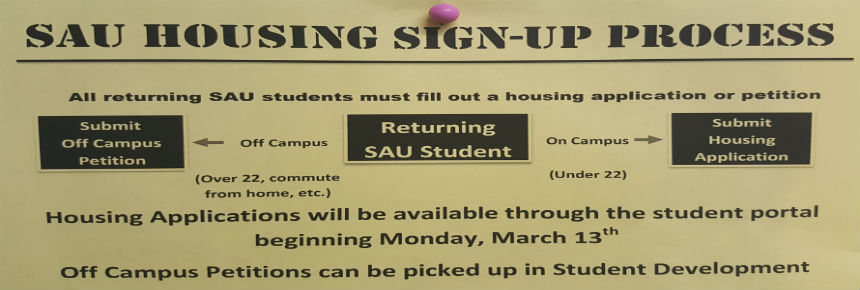
The bright yellow sheets popping up all across campus prompted roommates-to-be to make last-minute plans, and on March 13, the first applications for K-Houses were available. For the next few weeks, students will be matching up with friends and filling out one form that will help determine their living quarters for the 2017-2018 academic year.


When it comes to housing signups, there are many dates to remember, options to consider and intricacies to iron out. However, Associate Dean of Students Bobby Pratt, head of the housing application system, said the complex workings of the application system actually work to the student’s benefit.


Pratt said most schools will leave it “to the luck of the draw.” This lottery system “lets them assign living options in one fell swoop,” Pratt said, but student requests are granted at random.


Pratt believes there are better alternatives that give students more say in where they want to go, even if those methods are “a little bit more work on our end.”


Applications are given priority based on three main categories: seniority, roommate plans and squatter’s rights.


“We start with what we consider upperclassman housing,” Pratt said. He said the K-Houses and villages are designed to give seniors the chance to live more independently, and since they tend to be the most sought-after options, those applications are available first. Priority is also given to students staying in the same place because Pratt thinks they should be rewarded for “what they’ve invested in that community.”


Applicants who suggest a correct number of roommates will also receive priority, Pratt said, since it saves the administration the challenge of partnering students into well-matched groups.


Every time applicants learn whether or not their application was approved, they are given twenty-four hours before the next applications open. That gives students a chance to shuffle roommates and formulate a new housing plan before the next option is available.

IMG_1621
Photo by Alex Anhalt


Pratt said SAU’s housing system is not just designed to cater to the student; it also maximizes community.


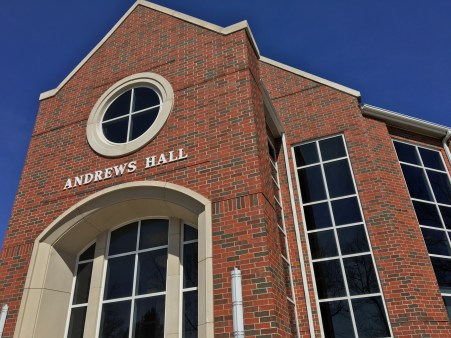
Andrews Hall, a residence hall added to SAU in 2010, is one example of this philosophy. According to Pratt, most universities would avoid building new residence halls with communal bathrooms, but SAU wanted to establish a brand-new community.


Community is also the reason freshmen can’t live in the K-Houses or Villages.


“We want our underclassmen to make a lot of connections and feel like part of the campus,” Pratt said. “We understand that as students get older, they’ve done that, they’ve identified the group that’s going to be their support.”
Village applications close on April 6, and students can opt for any of the residence halls starting April 13.

Mix and Match: the process of building an individualized major

By Collin Caroland
“If you were to throw a rock at a group of 10 college students, the odds are good you would hit one of the eight students who has changed or will change their major, according to the National Center for Education Statistics.”

By Collin Caroland | Online Writer

If you were to throw a rock at a group of 10 college students in the United States, the odds are good you would hit one of the eight students who has changed or will change their major, according to the National Center for Education Statistics. Of that same group of students, most are more than likely to have a major that is a course-load advertised by their school. There are, however, some students who have taken it upon themselves to create their own special courses of study- these courses are often referred to as individualized majors.

Each student has their own reason for choosing s specialized study, Alec Cross cited his primary reason as marketability and practicality.

“I’m studying adolescent spirituality,” Cross said. “It’s basically a youth ministry major, I just pulled out a couple of classes that are more administration and other classes that conflict with my spiritual formation minor and just added them to my major.” Cross’ main concern with making a major was nobody would understand what it meant, but professors and advisors told him the major was fine and would make him more marketable.

Nick Lemerand has a similar story about his own personalized major. Lemerand decided one week before his sixth semester at Oklahoma University he would rather be studying ministry, with a focus on helping adolescents and young adults, than meteorology, so he checked with Spring Arbor, who worked with him so he could combine urban ministry and youth ministry to make college ministry major, and transferred here.

The individual major is unique for each student, and therefore not for everyone. While it may make the student more marketable, it can be difficult to set up.

“I had to look at the semester offerings of each course in all of the related departments myself,” Cross said when asked if the individualized major was a program that had no down sides. “I had to sit down by myself one day and decide which courses could work best, and then get them approved by the overseeing faculty and when they were finally approved, I had to get a form from the registrar and I needed to get six or so signatures from a lot of different people.” From the logistical standpoint, according to Cross, it can be a nightmare to set up. Lemerand advised those looking into it to be wary of the practicality of the individual major.

“You definitely have to have some idea of what you want to do with it,” Lemerand said.

Courses were pulled from a variety of different programs for both Cross and Lemerand, with special thought put into each course so as to make their majors truly their own. Cross and Lemerand both would encourage any student who is looking at an individualized major to talk with their advisors and faculty to determine if an individualized major would be suited for the student’s goals and aspirations.

Focused on Food

By Makana Geppert
“Chartwells, the meal service provider at Spring Arbor University (SAU) recently invited all students to participate in a focus group to survey students’ feelings about their food.”

Chartwells, the meal service provider  at Spring Arbor University (SAU) recently invited all students to participate in a focus group to survey students’ feelings about their food. Chartwells held several group sessions on Jan. 25.

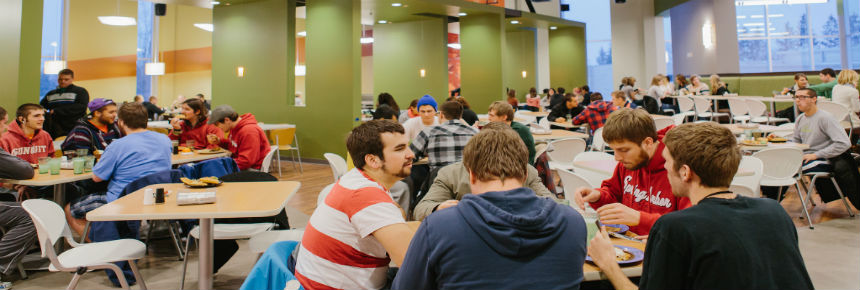
Elijah Drake, a freshman who participated in one focus group, described the session as an extensive meeting to discover his opinions regarding the various stations within the SAU Dining Commons (DC). The focus group gave feedback on four categories: quality, variety, value and staff.

Drake said the best reviews were in regard to the staff, but when it came to the other topics, he said his group had mixed views. Some thought the meals had adequate variety, while others wanted more options. Drake said the lower quality of food on the weekends was brought to Chartwells’ attention during his group’s session.

Drake said value, another category, was more important to consumers without a meal plan. Another concern presented by Chartwells was which stations in the DC were most popular and which were declared the least. According to Drake, his group chose The Grill and Create! stations as their favorites.


8445442774_519d58958b_k
Photo provided by Spring Arbor University


I found these choices to be interesting and set out to see if I could replicate his results by polling a larger group than his focus group of seven. On a Monday night, I stationed myself in the lobby of Andrews Hall and asked 25 guys who came through which Chartwells food station was their favorite, and for a little more insight, I also asked which was their least favorite. Overwhelmingly the two favorite stations were Create! and The Grill which shared nearly 60 percent of the votes.  On the flip side, the Yo Bowl, Chef’s Corner, and Oven Baked Pizza stations were tied for the least favorite of the survey participants, with a combined total of 72 percent.

Overall, Drake said the employees seemed receptive, and that he is eager to see if any changes come from the survey. DC student worker Grace Comstock was able to bring some insight to the complaints made during the focus group sessions.

“As a student myself,” Comstock said, “I can relate to them. However, I also know what goes on behind the scenes and how much work goes into each meal.” Comstock said the Chartwells employees took the comments made into consideration, and that they wish to improve the meal quality in any ways they can. The whiteboard near the dish return is another important source for feedback, Comstock said.

Not all the feedback is negative, either.

“I hear a lot of complaints indirectly on and off the job,” Comstock said, “but also a lot of compliments.” Comstock said that although complaints remain valid, she still hopes students understand the hard work that is put into “making each meal a pleasant experience for the student body.”


8445434420_028f156883_k
Photo provided by Spring Arbor University


Pirates on Playgrounds

By L.J Richardson
Spring Arbor University brings Gilbert and Sullivan to the stage

After a sabbatical semester Jen Letherer, associate professor of communications, returned to the stage to direct W.S. Gilbert and Arthur Sullivan’s comic operetta “The Pirates of Penzance” which showed in White Auditorium on Feb. 9-11 at 7:00 p.m. and on Feb. 12 at 3:00 p.m.

The decision to produce “Pirates” was a collaborative choice agreed upon by Dr. Mark Douglas and Dr. Natalie Emptage-Downs along with Letherer.

“[Natalie] said we had the voices to do a Gilbert and Sullivan Show,” Letherer said. “”Pirates” seemed the most accessible, and I came up with the idea of setting it on a playground.”

16665842_266256777128443_5822772375350692208_o
Photo by Kimmee Kiefer 

“The Pirates of Penzance” is historically set on the shores of England.

Letherer said, “The story is ridiculous, most opera stories are, and that’s why I think it’s funny we’re setting it on a playground. It strikes me as the kind of story people would just make up.”

According to Letherer, “Gilbert and Sullivan were the Shakespeares of musical theatre. The appeal of Gilbert and Sullivan is the music is incredible, the way it is scored is very memorable, clever, witty, wordy and beautiful. The integrity of the story and the integrity of the music carry it above and beyond.”


16665578_266258577128263_3431978393413812596_o
Photo by Kimmee Kiefer


In a show fraught with pirates, maidens and major generals, Letherer said truth and how it effects the characters was the overall message of the show: “Sometimes truth causes us to leave the ones we love and distance ourselves from those we care about when they are dishonest.” Letherer’s vison is that those who watch the play will examine the truth in their own lives.

Letherer said the one emotion that she wanted audiences to experience at the end of the show was joy. “As the finale states, ‘Poor wandering ones, though thee hast surely strayed, take heart of grace, thy steps retrace, poor wandering ones. Take heart.’”


Hacksaw Ridge: a flimsy perspective of pacifism and Christianity

By Baylor Smith
Perhaps the most telling line of “Hacksaw Ridge” is found in a clip from an interview with Hal Doss, (the brother of the main character Desmond Doss), “You are your convictions.”

Perhaps the most telling line of “Hacksaw Ridge” is found in a clip from an interview with Hal Doss, (the brother of the main character Desmond Doss), “You are your convictions.”

“Hacksaw Ridge” follows the real life story of World War II soldier, Desmond Doss, who was the first conscientious objector to win the Medal of Honor, doing so while refusing to carry a gun because of religious justifications. Rather than serving as an infantry soldier, Doss choses to run into the field of battle without a gun and attempt to save his fellow soldier’s lives as a medic.

“Hacksaw Ridge” presents pacifism and to a larger extent, Christianity in accordance with Hal’s statement, that one must be their convictions. Such a statement not only misrepresents the life and message of Christ, but it is the foundation of fundamentalism and in some cases, bigotry.

Director Mel Gibson rewards service to a conviction far and above a more robust understanding of the Christian life, particularly the importance of recognizing the personhood of the other. This can be seen through his depiction of the Japanese, who are horribly manipulated as a fear mechanism throughout the entire film. We hardly ever see their faces, let alone hear them talk or interact with another human being. The one moment given to an individual Japanese soldier simply serves to further glorify Doss’ character as holding his conviction. After Doss has attended to the wounds of an injured Japanese soldier, an American back at base camp says in reference to Doss, “He even saved a couple of Japs, but they didn’t make it. Anyway, gotta go back to see Doss save more people!” Ok, maybe the latter sentence is a little exaggerated but you get the point.  

Gibson, true to his previous films, aestheticizes violence as the backdrop to a painting of his main character. Using severed bodies, slow motion shots of flamethrowers and cries of men shooting guns as a means of a gloried spectacle. The hypocrisy of it all is that in his films, Gibson’s characters are supposed to stand for peace, nonviolence and compassion (see, Jesus Christ in “The Passion of The Christ”) not military victory or individual heroics.

Now, the true story of Desmond Doss is compelling and certainly should not be scoffed at, it involves immense bravery and physical sacrifice. However, Gibson’s film adaptation purports to be a powerful message of Christianity while it ultimately diverts from the message of Christ. One ought not be simply satisfied with little nods to Bible stories (and believe me, there is no shortage of those in the film). If a director wants to handle Christian theology in a film, it ought to be done with closer attention and care. 

hacksaw-ridge-screen-shot
Andrew Garfield stars as Desmond Doss in “Hacksaw Ridge”

(It’s gonna get a little preachy right now, so brace yourself)

For those who claim the title Christian it is ever pressing to understand that Christ’s message was not about being a conviction, but rather by consistently viewing people who are different than you as a person-holding the image of the divine, so that “to the extent to which Christ became human, humans may participate in becoming divine.” (That’s a little quote from my boy G-Naz, otherwise known as Gregory of Nazianzus, first century Church father… I certainly am not enlightened enough to formulate that myself.)

Being a conviction can hinder a human’s ability to pursue humility, suffering and the empathy necessary to recognize another human being’s personhood. Desmond Doss (as directed by Mel Gibson) was nonviolent for the sake of being nonviolent, forever focused on his service to his own conviction rather than his service to the other human beings as holding the personhood of Christ Jesus.

If you do go to see “Hacksaw Ridge,” which I would not necessarily recommend, at least examine Doss’ exercise of religious conviction in tandem with your own. Are you holding a belief for the sake holding it? Or does it allow you to embrace another human being, especially one who is different than you?

The Origin of Halloween

By Celeste Fendt
The Halloween celebration we know today can be traced back over 2000 years to the ancient Celtic festival Samhain.

Photo by Celeste Fendt

The Halloween celebration we know today can be traced back over 2000 years to the ancient Celtic festival Samhain. Although our modern holiday and Samhain both took place on the last day of October, the festivities involved in these celebrations differ greatly. In this festival the Celtic people paid tribute to the dead by gathering together for ceremonial bonfires and banquets. They oftentimes dressed in disguises in an effort to scare away unwanted spirits from their celebrations.

Christianity spread to the Celtic lands of what are now Ireland, the United Kingdom and France at the beginning of the ninth century. Shortly after, the Church declared November 2 as All Souls’ Day, a similar celebration to the Celtic Halloween because of its dedication to honoring the dead.

In addition to the ritualistic bonfires and masquerades, this Christian holiday included a practice called “souling.” Souling was a time for poor people to knock on the doors of the wealthy in hopes of receiving a pastry called a soul cake. Children later joined in on this tradition, asking wealthy families for sweets or spare coins. Thus emerged the “treating” side of the Halloween tradition we know as trick-or-treating.

Similar All Souls’ Day practices arose in Scotland and Ireland. Children dressed in costumes to go “guising” and performed small tricks for the homeowners in exchange for treats. The Irish people brought this tradition with them to America in the nineteenth century as they fled from Ireland’s potato famine. American children, however, preferred pranks over the traditional innocent performances in exchange for treats.

Spring Arbor University (SAU) freshman Cassidy Crim loved participating in Halloween traditions as a child.

“I used to double-hit houses for candy and I would turn my cape inside out or do something a little bit different,” Crim said.

As she grew older, Crim also enjoyed passing out candy to other trick-or-treaters.

“I climbed up in the tree, dressed up like a cat, and I would throw candy at the kids trying to get it in their bags,” Crim said.

In 2016, Americans are predicted to spend $8.4 billion on Halloween candy alone. Skittles became America’s favorite candy in the summer of 2016. Approximately 171 million people will celebrate the holiday this year, whether it be dressing up in homemade costumes or throwing candy at children passing by.


How to Vote by Absentee Ballot

By Celeste Fendt
With the general election less than a month away, now is an important time for registered voters to consider how they plan on submitting their votes.

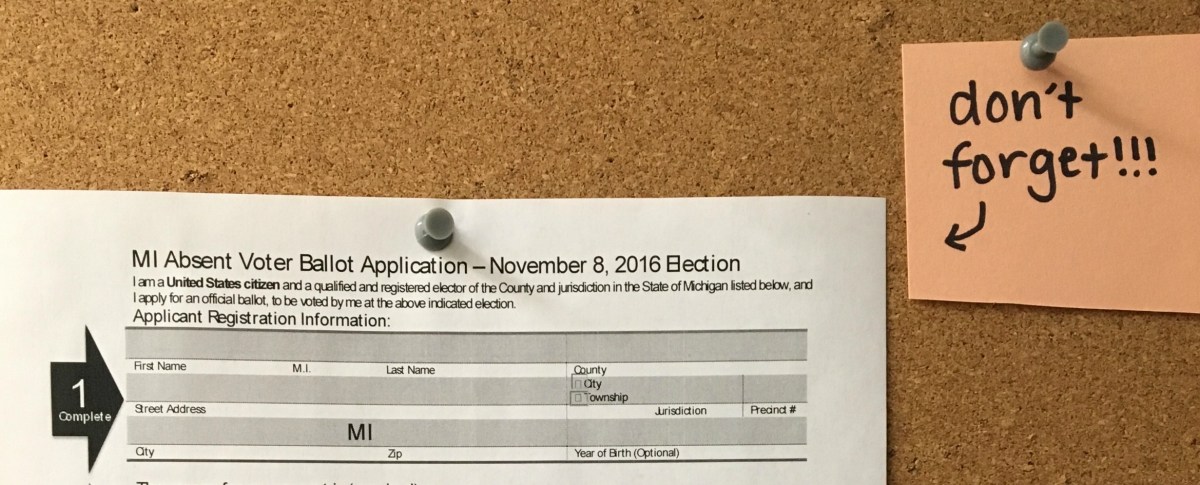
With the general election less than a month away, now is an important time for registered voters to consider how they plan on submitting their votes. The traditional method of voting involves meeting at a designated Polling Place between the hours of 7:00 a.m and 8:00 p.m. Thankfully, there is another way to vote for those who can’t make it to their Polling Place on election day. This other method is called Absentee Voting.

According to the Absentee Ballot application, Michigan residents must meet at least one of these requirements:

  • You are physically disabled and because of this you cannot vote on Election Day without another’s assistance
  • You can’t vote on Election Day because of the principles of your religion
  • You can’t vote on Election Day in the precinct where you are registered because you are an election precinct inspector in another precinct
  • You are 60 years of age or older
  • You are absent or expect to be absent from the township or city in which you reside during the entire time the polls are open for voting on Election Day
  • You are confined in jail awaiting arraignment for trial

If you meet one of the above requirements, the Michigan Secretary of State website says the next steps are as follows:

  1. You must be registered to vote (the deadline for registering to vote in Michigan has already passed for the general election)
  2. Get your Absentee Ballot application here
  3. Fill out the form, making sure to select the proper reason why you cannot vote on Election Day
  4. Find out who your local clerk is here
  5. Submit your Absentee Ballot application to your local clerk by one of the following methods:
  6. Print and mail the application in an envelope
  7. Personally deliver the application to the clerk’s office
  8. Have an immediate family member (or other person residing in your household) mail or personally deliver the application for you

Your application must be submitted to the clerk’s office no later than 2:00 p.m. on November 5.

For out-of-state residents, the Absentee Voting process is almost exactly the same. The biggest difference is in step two – each state has a slightly different application. It is also important to pay attention to deadlines, as they may differ by state.

Indiana Absentee Voting Application

Ohio Absentee Voting Application

That’s it! You will receive your Absentee Ballot in the mail shortly after your application is submitted. For Michigan residents, your final Absentee Ballot must be submitted to your clerk no later than 8:00 p.m. on November 8.