Mix and Match: the process of building an individualized major

By Collin Caroland
“If you were to throw a rock at a group of 10 college students, the odds are good you would hit one of the eight students who has changed or will change their major, according to the National Center for Education Statistics.”

By Collin Caroland | Online Writer

If you were to throw a rock at a group of 10 college students in the United States, the odds are good you would hit one of the eight students who has changed or will change their major, according to the National Center for Education Statistics. Of that same group of students, most are more than likely to have a major that is a course-load advertised by their school. There are, however, some students who have taken it upon themselves to create their own special courses of study- these courses are often referred to as individualized majors.

Each student has their own reason for choosing s specialized study, Alec Cross cited his primary reason as marketability and practicality.

“I’m studying adolescent spirituality,” Cross said. “It’s basically a youth ministry major, I just pulled out a couple of classes that are more administration and other classes that conflict with my spiritual formation minor and just added them to my major.” Cross’ main concern with making a major was nobody would understand what it meant, but professors and advisors told him the major was fine and would make him more marketable.

Nick Lemerand has a similar story about his own personalized major. Lemerand decided one week before his sixth semester at Oklahoma University he would rather be studying ministry, with a focus on helping adolescents and young adults, than meteorology, so he checked with Spring Arbor, who worked with him so he could combine urban ministry and youth ministry to make college ministry major, and transferred here.

The individual major is unique for each student, and therefore not for everyone. While it may make the student more marketable, it can be difficult to set up.

“I had to look at the semester offerings of each course in all of the related departments myself,” Cross said when asked if the individualized major was a program that had no down sides. “I had to sit down by myself one day and decide which courses could work best, and then get them approved by the overseeing faculty and when they were finally approved, I had to get a form from the registrar and I needed to get six or so signatures from a lot of different people.” From the logistical standpoint, according to Cross, it can be a nightmare to set up. Lemerand advised those looking into it to be wary of the practicality of the individual major.

“You definitely have to have some idea of what you want to do with it,” Lemerand said.

Courses were pulled from a variety of different programs for both Cross and Lemerand, with special thought put into each course so as to make their majors truly their own. Cross and Lemerand both would encourage any student who is looking at an individualized major to talk with their advisors and faculty to determine if an individualized major would be suited for the student’s goals and aspirations.

Focused on Food

By Makana Geppert
“Chartwells, the meal service provider at Spring Arbor University (SAU) recently invited all students to participate in a focus group to survey students’ feelings about their food.”

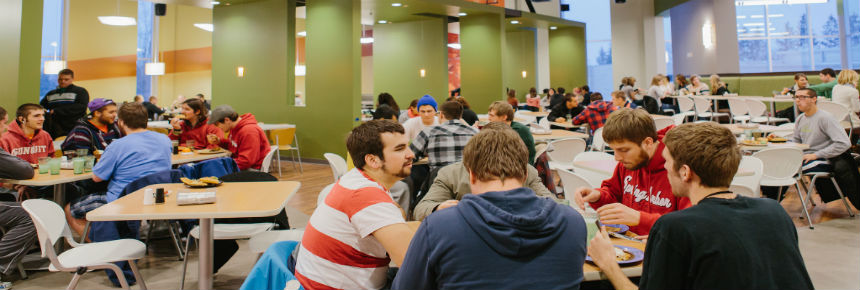
Chartwells, the meal service provider  at Spring Arbor University (SAU) recently invited all students to participate in a focus group to survey students’ feelings about their food. Chartwells held several group sessions on Jan. 25.

Elijah Drake, a freshman who participated in one focus group, described the session as an extensive meeting to discover his opinions regarding the various stations within the SAU Dining Commons (DC). The focus group gave feedback on four categories: quality, variety, value and staff.

Drake said the best reviews were in regard to the staff, but when it came to the other topics, he said his group had mixed views. Some thought the meals had adequate variety, while others wanted more options. Drake said the lower quality of food on the weekends was brought to Chartwells’ attention during his group’s session.

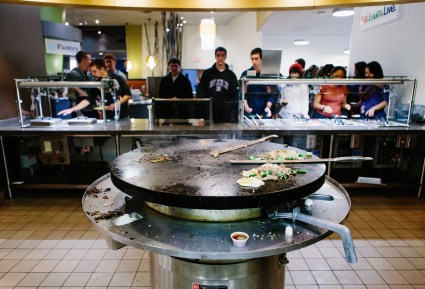
Drake said value, another category, was more important to consumers without a meal plan. Another concern presented by Chartwells was which stations in the DC were most popular and which were declared the least. According to Drake, his group chose The Grill and Create! stations as their favorites.


8445442774_519d58958b_k
Photo provided by Spring Arbor University


I found these choices to be interesting and set out to see if I could replicate his results by polling a larger group than his focus group of seven. On a Monday night, I stationed myself in the lobby of Andrews Hall and asked 25 guys who came through which Chartwells food station was their favorite, and for a little more insight, I also asked which was their least favorite. Overwhelmingly the two favorite stations were Create! and The Grill which shared nearly 60 percent of the votes.  On the flip side, the Yo Bowl, Chef’s Corner, and Oven Baked Pizza stations were tied for the least favorite of the survey participants, with a combined total of 72 percent.

Overall, Drake said the employees seemed receptive, and that he is eager to see if any changes come from the survey. DC student worker Grace Comstock was able to bring some insight to the complaints made during the focus group sessions.

“As a student myself,” Comstock said, “I can relate to them. However, I also know what goes on behind the scenes and how much work goes into each meal.” Comstock said the Chartwells employees took the comments made into consideration, and that they wish to improve the meal quality in any ways they can. The whiteboard near the dish return is another important source for feedback, Comstock said.

Not all the feedback is negative, either.

“I hear a lot of complaints indirectly on and off the job,” Comstock said, “but also a lot of compliments.” Comstock said that although complaints remain valid, she still hopes students understand the hard work that is put into “making each meal a pleasant experience for the student body.”


8445434420_028f156883_k
Photo provided by Spring Arbor University


Pirates on Playgrounds

By L.J Richardson
Spring Arbor University brings Gilbert and Sullivan to the stage

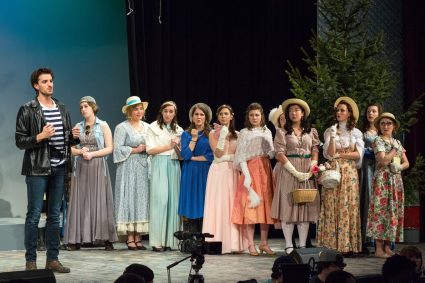
After a sabbatical semester Jen Letherer, associate professor of communications, returned to the stage to direct W.S. Gilbert and Arthur Sullivan’s comic operetta “The Pirates of Penzance” which showed in White Auditorium on Feb. 9-11 at 7:00 p.m. and on Feb. 12 at 3:00 p.m.

The decision to produce “Pirates” was a collaborative choice agreed upon by Dr. Mark Douglas and Dr. Natalie Emptage-Downs along with Letherer.

“[Natalie] said we had the voices to do a Gilbert and Sullivan Show,” Letherer said. “”Pirates” seemed the most accessible, and I came up with the idea of setting it on a playground.”

16665842_266256777128443_5822772375350692208_o
Photo by Kimmee Kiefer 

“The Pirates of Penzance” is historically set on the shores of England.

Letherer said, “The story is ridiculous, most opera stories are, and that’s why I think it’s funny we’re setting it on a playground. It strikes me as the kind of story people would just make up.”

According to Letherer, “Gilbert and Sullivan were the Shakespeares of musical theatre. The appeal of Gilbert and Sullivan is the music is incredible, the way it is scored is very memorable, clever, witty, wordy and beautiful. The integrity of the story and the integrity of the music carry it above and beyond.”


16665578_266258577128263_3431978393413812596_o
Photo by Kimmee Kiefer


In a show fraught with pirates, maidens and major generals, Letherer said truth and how it effects the characters was the overall message of the show: “Sometimes truth causes us to leave the ones we love and distance ourselves from those we care about when they are dishonest.” Letherer’s vison is that those who watch the play will examine the truth in their own lives.

Letherer said the one emotion that she wanted audiences to experience at the end of the show was joy. “As the finale states, ‘Poor wandering ones, though thee hast surely strayed, take heart of grace, thy steps retrace, poor wandering ones. Take heart.’”


Hacksaw Ridge: a flimsy perspective of pacifism and Christianity

By Baylor Smith
Perhaps the most telling line of “Hacksaw Ridge” is found in a clip from an interview with Hal Doss, (the brother of the main character Desmond Doss), “You are your convictions.”

Perhaps the most telling line of “Hacksaw Ridge” is found in a clip from an interview with Hal Doss, (the brother of the main character Desmond Doss), “You are your convictions.”

“Hacksaw Ridge” follows the real life story of World War II soldier, Desmond Doss, who was the first conscientious objector to win the Medal of Honor, doing so while refusing to carry a gun because of religious justifications. Rather than serving as an infantry soldier, Doss choses to run into the field of battle without a gun and attempt to save his fellow soldier’s lives as a medic.

“Hacksaw Ridge” presents pacifism and to a larger extent, Christianity in accordance with Hal’s statement, that one must be their convictions. Such a statement not only misrepresents the life and message of Christ, but it is the foundation of fundamentalism and in some cases, bigotry.

Director Mel Gibson rewards service to a conviction far and above a more robust understanding of the Christian life, particularly the importance of recognizing the personhood of the other. This can be seen through his depiction of the Japanese, who are horribly manipulated as a fear mechanism throughout the entire film. We hardly ever see their faces, let alone hear them talk or interact with another human being. The one moment given to an individual Japanese soldier simply serves to further glorify Doss’ character as holding his conviction. After Doss has attended to the wounds of an injured Japanese soldier, an American back at base camp says in reference to Doss, “He even saved a couple of Japs, but they didn’t make it. Anyway, gotta go back to see Doss save more people!” Ok, maybe the latter sentence is a little exaggerated but you get the point.  

Gibson, true to his previous films, aestheticizes violence as the backdrop to a painting of his main character. Using severed bodies, slow motion shots of flamethrowers and cries of men shooting guns as a means of a gloried spectacle. The hypocrisy of it all is that in his films, Gibson’s characters are supposed to stand for peace, nonviolence and compassion (see, Jesus Christ in “The Passion of The Christ”) not military victory or individual heroics.

Now, the true story of Desmond Doss is compelling and certainly should not be scoffed at, it involves immense bravery and physical sacrifice. However, Gibson’s film adaptation purports to be a powerful message of Christianity while it ultimately diverts from the message of Christ. One ought not be simply satisfied with little nods to Bible stories (and believe me, there is no shortage of those in the film). If a director wants to handle Christian theology in a film, it ought to be done with closer attention and care. 

hacksaw-ridge-screen-shot
Andrew Garfield stars as Desmond Doss in “Hacksaw Ridge”

(It’s gonna get a little preachy right now, so brace yourself)

For those who claim the title Christian it is ever pressing to understand that Christ’s message was not about being a conviction, but rather by consistently viewing people who are different than you as a person-holding the image of the divine, so that “to the extent to which Christ became human, humans may participate in becoming divine.” (That’s a little quote from my boy G-Naz, otherwise known as Gregory of Nazianzus, first century Church father… I certainly am not enlightened enough to formulate that myself.)

Being a conviction can hinder a human’s ability to pursue humility, suffering and the empathy necessary to recognize another human being’s personhood. Desmond Doss (as directed by Mel Gibson) was nonviolent for the sake of being nonviolent, forever focused on his service to his own conviction rather than his service to the other human beings as holding the personhood of Christ Jesus.

If you do go to see “Hacksaw Ridge,” which I would not necessarily recommend, at least examine Doss’ exercise of religious conviction in tandem with your own. Are you holding a belief for the sake holding it? Or does it allow you to embrace another human being, especially one who is different than you?

The Origin of Halloween

By Celeste Fendt
The Halloween celebration we know today can be traced back over 2000 years to the ancient Celtic festival Samhain.

Photo by Celeste Fendt

The Halloween celebration we know today can be traced back over 2000 years to the ancient Celtic festival Samhain. Although our modern holiday and Samhain both took place on the last day of October, the festivities involved in these celebrations differ greatly. In this festival the Celtic people paid tribute to the dead by gathering together for ceremonial bonfires and banquets. They oftentimes dressed in disguises in an effort to scare away unwanted spirits from their celebrations.

Christianity spread to the Celtic lands of what are now Ireland, the United Kingdom and France at the beginning of the ninth century. Shortly after, the Church declared November 2 as All Souls’ Day, a similar celebration to the Celtic Halloween because of its dedication to honoring the dead.

In addition to the ritualistic bonfires and masquerades, this Christian holiday included a practice called “souling.” Souling was a time for poor people to knock on the doors of the wealthy in hopes of receiving a pastry called a soul cake. Children later joined in on this tradition, asking wealthy families for sweets or spare coins. Thus emerged the “treating” side of the Halloween tradition we know as trick-or-treating.

Similar All Souls’ Day practices arose in Scotland and Ireland. Children dressed in costumes to go “guising” and performed small tricks for the homeowners in exchange for treats. The Irish people brought this tradition with them to America in the nineteenth century as they fled from Ireland’s potato famine. American children, however, preferred pranks over the traditional innocent performances in exchange for treats.

Spring Arbor University (SAU) freshman Cassidy Crim loved participating in Halloween traditions as a child.

“I used to double-hit houses for candy and I would turn my cape inside out or do something a little bit different,” Crim said.

As she grew older, Crim also enjoyed passing out candy to other trick-or-treaters.

“I climbed up in the tree, dressed up like a cat, and I would throw candy at the kids trying to get it in their bags,” Crim said.

In 2016, Americans are predicted to spend $8.4 billion on Halloween candy alone. Skittles became America’s favorite candy in the summer of 2016. Approximately 171 million people will celebrate the holiday this year, whether it be dressing up in homemade costumes or throwing candy at children passing by.


How to Vote by Absentee Ballot

By Celeste Fendt
With the general election less than a month away, now is an important time for registered voters to consider how they plan on submitting their votes.

With the general election less than a month away, now is an important time for registered voters to consider how they plan on submitting their votes. The traditional method of voting involves meeting at a designated Polling Place between the hours of 7:00 a.m and 8:00 p.m. Thankfully, there is another way to vote for those who can’t make it to their Polling Place on election day. This other method is called Absentee Voting.

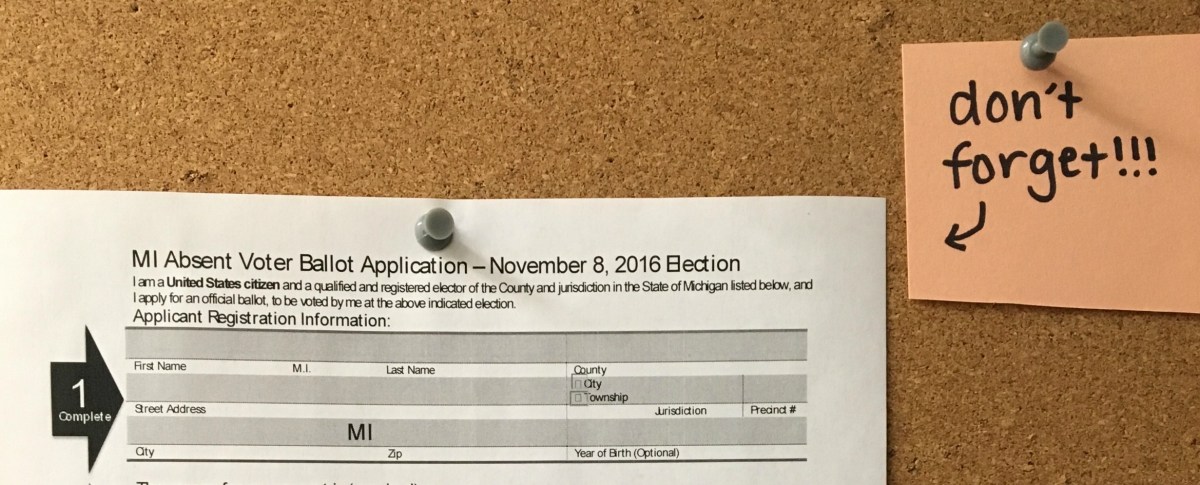
According to the Absentee Ballot application, Michigan residents must meet at least one of these requirements:

  • You are physically disabled and because of this you cannot vote on Election Day without another’s assistance
  • You can’t vote on Election Day because of the principles of your religion
  • You can’t vote on Election Day in the precinct where you are registered because you are an election precinct inspector in another precinct
  • You are 60 years of age or older
  • You are absent or expect to be absent from the township or city in which you reside during the entire time the polls are open for voting on Election Day
  • You are confined in jail awaiting arraignment for trial

If you meet one of the above requirements, the Michigan Secretary of State website says the next steps are as follows:

  1. You must be registered to vote (the deadline for registering to vote in Michigan has already passed for the general election)
  2. Get your Absentee Ballot application here
  3. Fill out the form, making sure to select the proper reason why you cannot vote on Election Day
  4. Find out who your local clerk is here
  5. Submit your Absentee Ballot application to your local clerk by one of the following methods:
  6. Print and mail the application in an envelope
  7. Personally deliver the application to the clerk’s office
  8. Have an immediate family member (or other person residing in your household) mail or personally deliver the application for you

Your application must be submitted to the clerk’s office no later than 2:00 p.m. on November 5.

For out-of-state residents, the Absentee Voting process is almost exactly the same. The biggest difference is in step two – each state has a slightly different application. It is also important to pay attention to deadlines, as they may differ by state.

Indiana Absentee Voting Application

Ohio Absentee Voting Application

That’s it! You will receive your Absentee Ballot in the mail shortly after your application is submitted. For Michigan residents, your final Absentee Ballot must be submitted to your clerk no later than 8:00 p.m. on November 8.

Willkommen in Deutschland!

By Carly Thompson
Adventures on my semester abroad

Embarking on an Adventure

It is impossible to accurately put into words just how incredible my semester abroad in Germany was, except to say I have gained a second home in Europe.

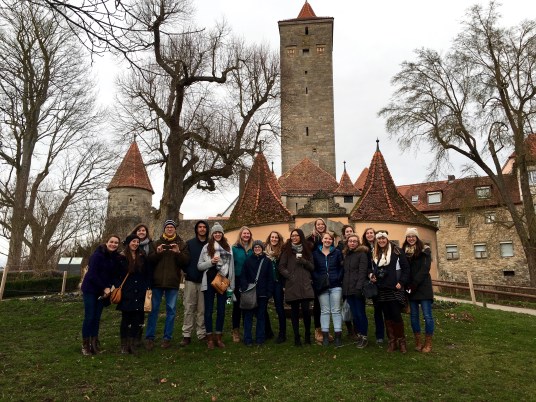
On January 15, senior Allie Herkenroder and I embarked on a three-month journey in Germany for the AMBEX (American Bavarian Exchange) semester. I had never flown before, let alone been outside of the United States We had no idea what to expect and barely knew each other. Here we were, with 14 students from colleges on the west coast, trying to figure out a new life together.

Everything was new. Picture New Student Orientation (NSO) week, but thousands of  miles across the ocean in Germany. Picture 15 people you’ve never met who you have to live and room with. Now, picture an unfamiliar culture, language and time difference. It was NSO on steroids.
The semester was structured in two week periods, the first week being orientation in Nürnberg. We then moved to Regensburg for the duration of the semester.
We had five two-week classes: Christian Worldview, Reformation Theology, Modern European Literature, Art History and German Culture and Geography. Following each two week class was either a free week to travel elsewhere in Europe (we had three of these), or an academic tour week (one was a Reformation tour through cities in Germany and the other was in Austria and Italy studying art). It sounds like a lot to do in three months—it was, but it was the adventure of a lifetime.
florence-italy
Florence, Italy (Photo by Carly Thompson)


Exploring Europe
During the first of three independent travel weeks I went to Greece, where we climbed up to the Acropolis and took in the view of ancient Greek ruins paired with the panoramic view of the entire city of Athens. We ate a gyro a day and swam in a cave lake with tiny fish that tried to suck on our toes.
My second travel week was spent in Barcelona, Spain. We visited the Futbol Stadium and the locations of the Cheetah Girls 2 film: the natural history museum where I held colored pigeons, the fountain and Park Güell with mosaic benches.
garmisch-germany-2
Photo by Carly Thompson
Our final independent travel week was my favorite. It was the week of my birthday, which I spent in England and Ireland. We toured London in a single day. We awoke at 6:00 a.m. and saw the Sherlock Holmes Museum, Buckingham Palace, Big Ben and Westminster Abbey. We took a tour of the locations used in filming the Harry Potter movies– our tour guide dressed to look just like Hagrid. We finished the day by watching the musical “Wicked” at the Apollo Theater, my dream come true, and taking pictures at Platform 9¾ in King’s Cross Station.
We took a ferry over to Ireland for the rest of the week, staying in Dublin, Killarney and Galway. We stayed in both the countryside, with brilliant green grass and sheep, and in bustling cities. We visited the Cliffs of Moher, took meandering walks through the countryside and experienced the city life of street performers and Irish music while celebrating my birthday in Galway.
A New Home
We always returned home to Regensburg after our excursions. Living in Germany was like living in a storybook. Every cobblestone street, narrow alley and red-roofed building took us back in time to a history preserved tangibly in their culture. Regensburg is a quaint little town on the Danube River, with storybook Bavarian architecture, unmistakable red roofs, cathedrals and home to the royal Thurn and Taxis family living in their elaborate palace.
We lived in one wing of our Jungendherberge (hostel) in rooms that resembled standard dorms, except the windows didn’t have any screens.
On our trip we had 15 girls and one guy, so girls got to rotate roommates while poor Jonah was by himself.
germany
Photo by Carly Thompson
Our classes took place in a conference room in our hostel down the hall from our rooms, and we would usually meet from 8:00 a.m. until lunchtime for class every day for two weeks. After lunch we had free time for the rest of the day to do “homework,” which meant explore the city.
Most days we would frequent cafes and listen to the locals converse while eating delectable pastries. In the winter, most of our exploring involved food. Bavarian pretzels, chocolate and gelato were staples every day. If we didn’t like the food at the hostel, our favorite meal
to grab was döner kebabs (pita stuffed with shaved meat, cabbage, cucumbers, onions and special sauce) and dürum (which is everything inside döner but stuffed into a wrap). Our spring explorations took us on walks down the river on paths lined with hundreds of wild flowers, or up the hill to a small chapel where we climbed into the largest tree I had ever seen. Every day was an adventure.
On one of our adventures at the ice skating rink I met my dear German friend, Maike. We were brought together by her longing to be back in America and my longing for a local friendship.
We skated and talked the entire night about our love of books, writing and cultural differences. Maike also attended Lifestream church where we went on Sundays, an independent “free” church which met in a bar. The congregation was so hospitable and friendly. Although the services were conducted in German, we were connected by our faith. Whether we sang in English or German, we were united in one language—God’s language. Regensburg will forever have a piece of my heart.

Follow the money and see where it goes

Ever wonder how the school makes money and where tuition money goes? President Ellis answers all your questions.

How does the school generate income? And where does our tuition go?

Kayla Williamson | Editor-in-Chief

One of President Brent Ellis’ priorities when he took the leadership role was fundraising and increasing endowment (the school’s savings and investments.) While the budget for Ivy League university Harvard is $78 billion and Spring Arbor University (SAU)’s rival, Indiana Wesleyan’s, 2016-17 budget is $178 million, Spring Arbor’s revenue and contributions in 2014 totaled $72 million.

As SAU continues to grow and expand, donor contributions, tuition and other supplementary projects are key sources of income, Ellis said.

The recent additions to campus–the new tennis courts, the E.P. Hart memorial for SAU’s founder, renovated locker rooms, English mural and nursing program–were all contributed by donors.

“Part of what you do within these donor relationships is people fall in love with the university and they have interests and they have passions that are focused in certain areas, so you really want to empower people to be involved in things they’re passionate about,” Ellis said. “I think every one of these gifts really is a manifestation of the person’s passion for Spring Arbor University.”

Ever wonder how the school makes money and where tuition money goes? President Ellis answers all your questions.

The Pulse (TP): You’ve actually worked in fundraising before you were president in Advancement right?

President Brent Ellis (PE): Yes I did. I still work in fundraising. (laughs) But for four years while Chuck Webb was president, I was the Vice President of Advancement. The chief fundraiser at the time.

TP: How do donations work? Do you go out and find donors for specific projects or do they come to you with projects?

PE: Both. At times projects are driven by the institution based on its needs. At times projects are driven by donors who have certain ideas of what they want to do, and then at times, like with the Kauffman Center, it’s, “I want to do something to honor Ken Kauffman, what could we do?” Really, it runs the gamut. And there are times we say no. I’ll just throw out a hypothetical. If someone says, “Brent we’re going to give you $20 million to build a science building, but we want you to teach these certain components of stem cell research” or something that could be controversial, we generally will say no. If it’s consistent with what we have set for priorities for the institution and allows us to fulfill our mission in greater ways, then by all means we’ll accept it. We will do that in a manner that it doesn’t impact student tuition, and we don’t divert tuition funds towards those projects.

TP: What does tuition actually go towards?

PE: The operations of the institution. Our operational budget is in the neighborhood of $70 million and tuition funds a portion of that broader operational budget. Tuition does not cover the full cost of running the institution. We have endowment dollars. We raise money. There are a variety of different things we do to have the income necessary to run the institution. The majority of the operational budget is personnel. Salary and benefits. It pays for our faculty and staff. The other big portions of it would be some of our licenses (i.e. Blackboard), computers we provide and infrastructure.

TP: Like Wi-Fi?

PE: Yeah, Wi-Fi. Athletic teams and coaches, it’s all through tuition dollars. Anything that is a consistent recurring cost on an annual basis, that is what tuition goes to, and nothing outside of that. I think tuition covers 85 percent of our operational funds. About 15 percent of our operational budget is outside of tuition dollars.

TP: One of the incomes of the school would be donors and tuition, and where does the rest come from?

PE: Endowment. It’s investments people make. We draw four or five percent on an annual basis from endowment to fund operational expenses. And then there are other auxiliary enterprises, like summer camps and leasing facilities.

TP: So tuition would be directly correlated with enrollment, and so as enrollment goes up or down the operational budget would go up and down?

PE: Yes.

TP: And so that affects how many professors we can hire or facilities we can update?

PE: Right. Some of the operational dollars go to what we call broadly deferred maintenance. It takes on different projects that would be helpful for maintaining facilities throughout their lifespan.

TP: How do you predict the budget? Do you know at the beginning of the year how many students come?

PE: We base our budgets on three year averages. So right now we already know what next year’s budget is going to be because we know what we’ve enrolled this year. Our new student class is up 20 students from a year ago, which is great. That then becomes the target for their recruiting efforts the following year.

TP: So it really depends on admissions, too.

PE: Absolutely. Enrollment is significant. Schools like Spring Arbor are often times referred to as tuition driven. We say we’re tuition dependent. Because we do depend on tuition dollars to run the institution. If all the students left, we wouldn’t have access to funds to be able to maintain the institution. There are some schools that would have significant endowments that say we’re really not tuition dependent. It doesn’t really matter what we charge, like Princeton or Yale or Harvard, they can charge whatever they want. Their endowments are so big that they can live off of their investments. It doesn’t matter. If they had years where they had zero students they could continue to operate. We couldn’t. We have to adjust our budgets based on our enrollments.

TP: So endowment is a really important part of your job as fundraising?

PE: Endowment is an enormous focal point to what we’re doing. When I came here seven years ago, our endowment was just under seven million dollars and our expectancies (potential future donations through wills) were about 18 million. Now our endowment has more than doubled, so it’s over 15 million, and our expectancies have gone from about 18 million to about 55 million which is great. We’re on our way, but part of the problem was, if you go back into the mid 80s, our endowment was about $250,000. There was a mentality for a lot of Christian institutions to say if you build endowment, you were removing your dependency on God to provide you on an annual basis what it takes to survive. I think God can provide endowment to provide, it’s still His provision. Whether it’s tuition dollars or endowment, it’s all God’s money. So I don’t agree with that philosophy so we’ve put a strong emphasis to try to build the endowment. The more we raise the better job we can do to keep tuition low. And I know it doesn’t seem that way. In the last several years the  average increase has been at 3.5-5 percent, which is lower than the national average. I know it’s expensive, but we are in the bottom quartile of institutions. There are more than 75 percent of private Christian institutions that have higher tuition rates than Spring Arbor. We do intentionally try to stay in that bottom quartile to try and make it as affordable as possible.

TP: Why does it increase every year? Is it inflation?

PE: The primary driver to that is healthcare. It’s an issue institutions face outside of higher education as well. We don’t pay the highest salaries, so we try to provide more significant benefits. So, that’s what has been done. We know what our budget as far as targets for enrollment next year goes. We have no idea what the increase in our health care premium is going to be. So, all of that becomes very difficult to predict. That and technology are the two main culprits. As technology becomes better it costs more and people’s expectations of that increases. What was really rare and uncommon 15 years ago (i.e. Wi-Fi) is now expected.

TP: One last question, so all of these five dedications, they have nothing to do whatsoever with parking passes and paying $50.

PE: Absolutely zero have to do with that.

TP: So the $50 goes straight to campus safety and the new parking lot?

PE: Nope, has nothing to do with the new parking lot. The $50 only goes towards campus safety budget and allows them to have some funds to make sure that we are a safe campus.

TP: So where does the new parking lot come from?

PE: That was part of the tennis court project. One of the things that we were required to do by Spring Arbor Township is to replace the parking lot that we lost. That was part of the project cost.


Cougar Bowling

By Olivia Landis
SAU leads the trend by starting the first ever Crossroads League Bowling team

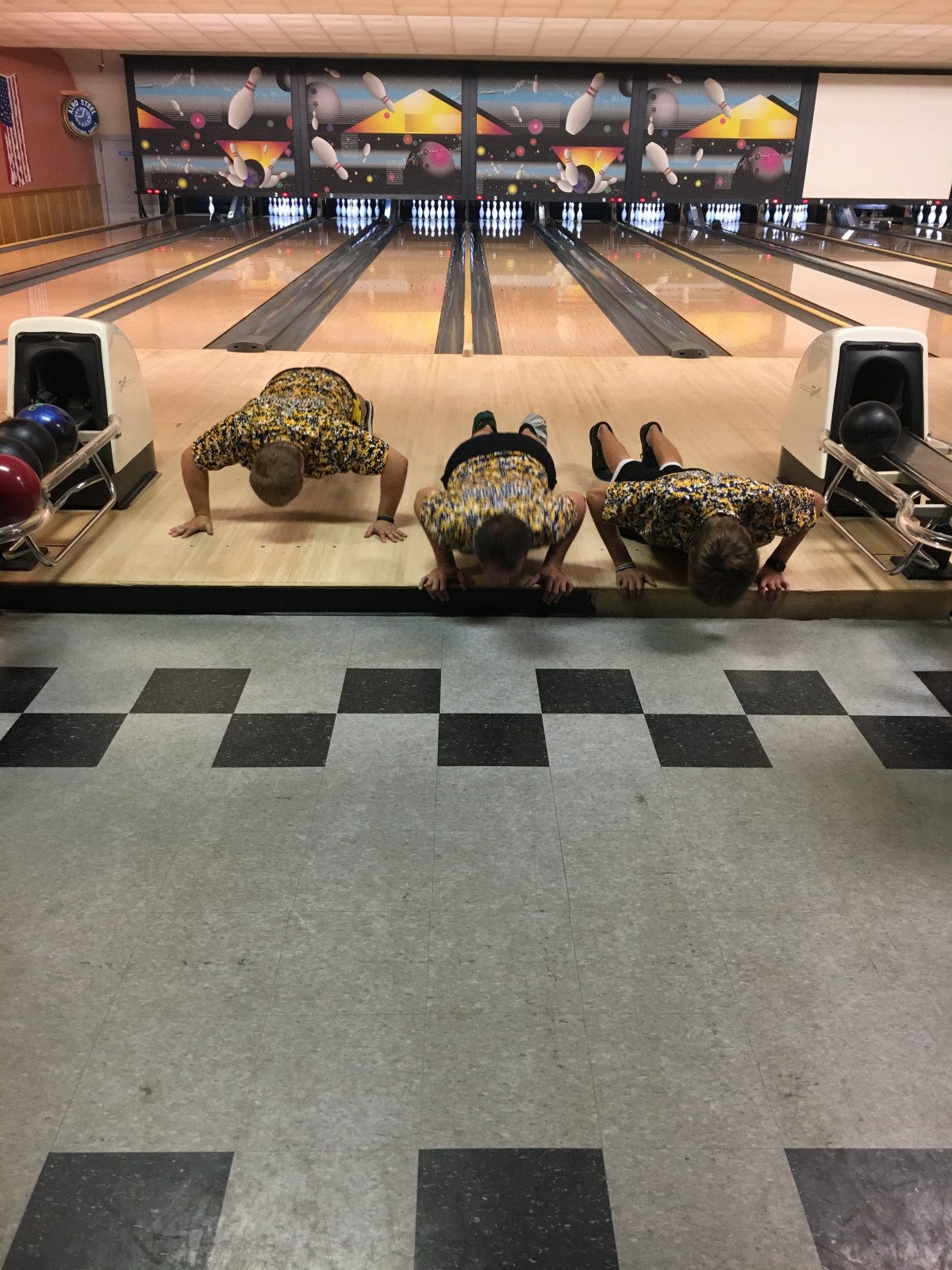
Bowling is a sport on the rise, and Spring Arbor University (SAU) is the first school in the Crossroads League to have a bowling team. Both are comprised entirely of freshmen, with six students on the womens team and seven on the mens.
The Cougars will be competing in the Wolverine Hoosier Athletic Conference (WHAC) this winter because none of the schools in the Crossroads League have bowling teams. When asked which team will be the biggest competition, Coach Michael Hall is quick to mention
Concordia.
“They have a really good program that has been there for a while now, but all our bowlers have a 220 or better average, so I am confident we will be able to compete well with them
[Concordia],” Hall said.
The Cougar bowling teams practice three times a week at Airport Lanes in addition to 6:30 a.m. conditioning twice a week. The conditioning the teams are doing includes lots of sprints, lifting and burpees. The muscle groups Hall wants to target are the forearms and wrists, which are the primary ones used when bowling.
“They are doing sprints because they have to get used to seven or eight hour long tournaments,” Hall said. “In high school they only went for three or four hours.”
In tournaments, the top five bowlers from the mens and the womens teams are chosen to bowl for the Cougars on the tournament day, and each player begins by bowling six individual games. After the individual games, the players get into teams to play a Baker Game, where five of the bowlers get together and bowl as a group, combining their skills for an even higher score. The first bowler bowls the first frame, second bowler the second frame, third bowler the third frame and so on until they have finished the game.
In the tournaments, players use different types of bowling balls to achieve different purposes. One ball is covered in resin and curves more. The players bowl with it first, because they can curve it and knock down more pins. The next ball is plastic and is better for spares because it rolls straight. And the heavier the ball, the harder it will hit the pins because it has more momentum behind it. The average weight of a ball used, for both men and women, is 15 pounds.
img_0234
Photo by Olivia Landis
A challenge for the players lies in the oil patterns on the lanes. All lanes have a layer of oil, but it is smooth and uniform when people bowl for fun. For the more experienced bowlers,
there are oil patterns put down on the lanes to make it harder to get a strike on nearly every opportunity. The oil is laid down so there will be hooks, curves and smooth parts in the lane. This forces the bowlers to be creative with their releases.
The Spring Arbor bowling teams are sponsored by Ebonite International, which provides all the bags and bowling balls for the team. The teams also have an advantage over other schools because they have access to a machine called a Strike Seeker. This records the athlete as they bowl and breaks down their form.
Practice begins with some stretches to warm up, and then a warm up game for the bowlers. During the warm up game, the coaches are able to go around and talk to them about footwork, approach and the best angles to take. After warm ups, they will do more specific drills to work on endurance, form and the precision of hitting a single pin. Almost all of the athletes have been bowling since they were toddlers. Hall found his recruits through YouTube videos and tournaments such as the Junior Gold Tournament.
Hall started the bowling program at Cornerstone, and he heard about Spring Arbor when SAU contacted him asking for information on how he got the program started there.
“After the initial call, I was kind of intrigued. I was working part time and looking for a full time position, which Spring Arbor had. I asked if I could throw my name in the hat, and my family and I visited here four times before I took the offer,” Hall said.
Assisting Hall this winter is Coach Rich Bradley, who is currently coaching at Western High School.
“Their practices go 2:30-5:30, and we go 7-9, so I’ll be pretty busy this winter… but I love it.” Bradley said.
You can truly see the passion the coaches and players have for the sport. Practices are focused and intense, and Hall said the fans and teams get competitive and crazy at
tournaments. They have their own cheers, trash talk and dress in crazy
attire to support their team.
Hall is working to make the adjustment as smooth and comfortable as possible.
“I always tell them I live close to campus, and if you need a break and want to come hang out, the doors are always open.” He laughs and adds, “They definitely take advantage of that, but I love them.”

Lazeez overcomes obstacles with community support

By Kayla Williamson and Nathan Salsbury
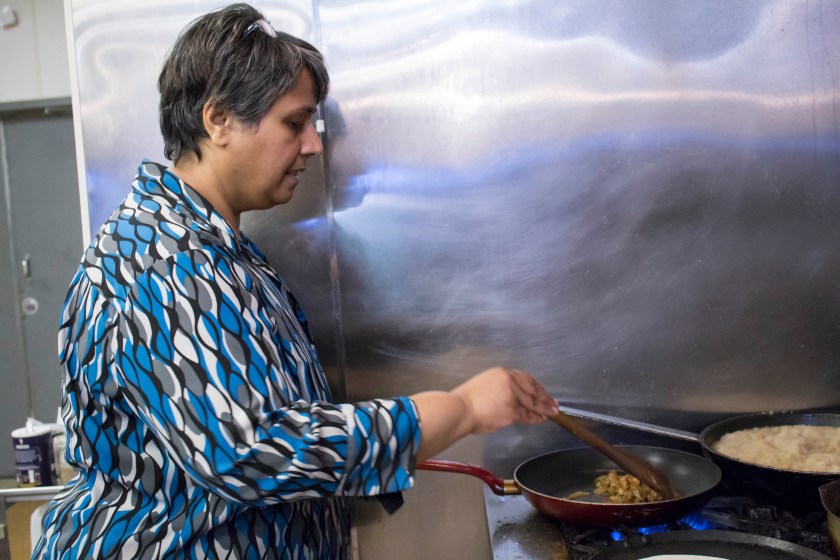
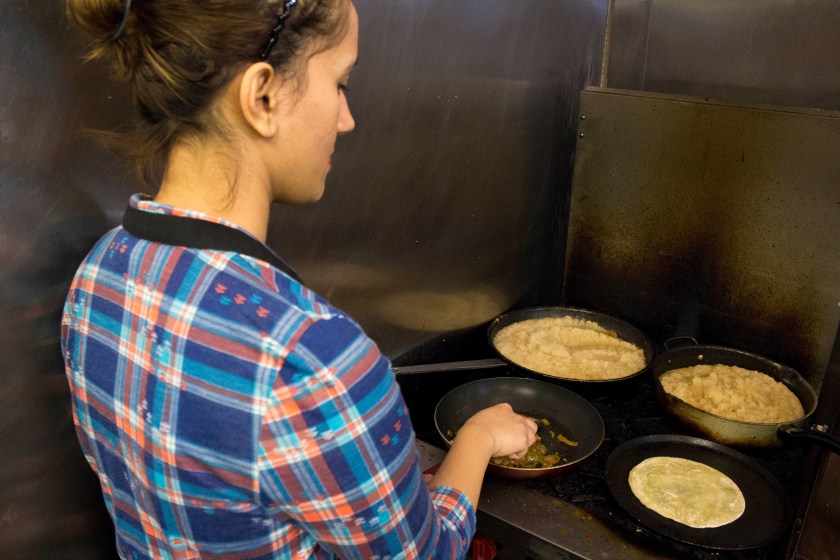
This summer, Lazeez Flavors of India moved to Spring Arbor after a corporation bought its Westwood Mall location.

This summer, Lazeez Flavors of India moved to Spring Arbor after a corporation bought its Westwood Mall location.

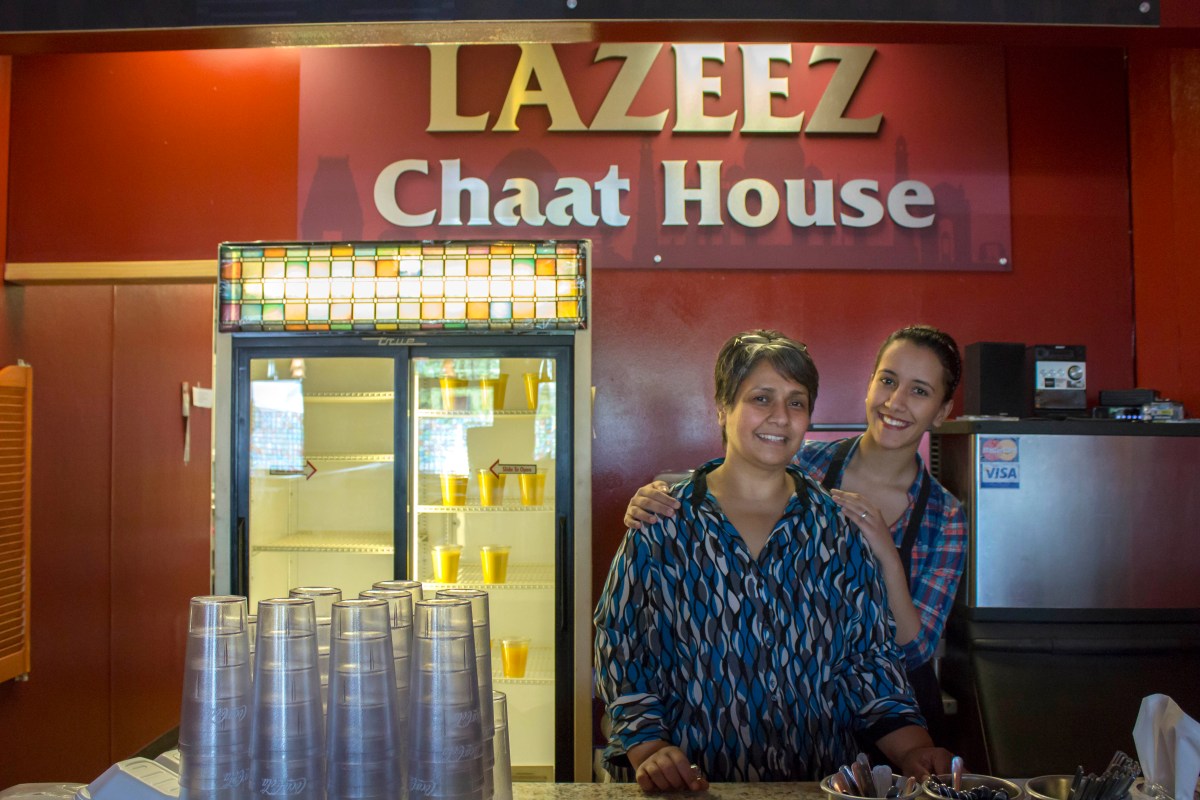
After four months into their two year contract, Sangeeta Awan and her daughter Mehr, a former Spring Arbor University (SAU) student, began wondering what they were going to do next.

Mehr said after their contract was terminated, she and her mother were in a state of shock.

“We didn’t know what to do,” Mehr said. “The Lord led us here, and Mom saw this place. In two weeks we had signed the lease here and then in about a month we had moved over. So that was just a total God thing.”

kayla-williamson_9178
Photo by Kayla Williamson

Since their move, the Awans said they have received support from not only SAU faculty and students, but also many members of the Spring Arbor community. The move into the area has also provided Assistant Professor of Marketing Allen Knight’s business classes with the opportunity to use what they are learning and apply it to a real-life business in order to help Lazeez succeed in this new location. Knight has been working with some of his classes this semester using Lazeez as an example of a real life business. He is having his public relations, marketing and small business classes work with them to look at to look at a real business and compare it to what they’re learning.

“The students can say ‘okay, here’s what the textbook is walking us through and here’s an example of a business and we as students can be involved, talk to the owner and see what issues they’re encountering,’” Knight said. “And at the end of this, maybe we can offer an updated or modified business plan.”

Taking the lead for three of Knight’s classes is senior Lacey Morgan.

“Dr. Knight has put me in charge of our public relations class, our marketing class and small business management with an entrepreneurial approach,” Morgan said. “So I’m the team lead in all of those classes for Lazeez.”

Through these projects, Morgan said they will do an audit, or business plan, then work on a marketing plan using their findings and, finally, further develop a business plan with a public relations standpoint.

kayla-williamson_9193
Photo by Kayla Williamson

Professor of Communication Robert Woods, although not working on any projects for Lazeez, gave high praise of the restaurant.

“I eat there as often as I can and have as many meetings as I can there,” Woods said.

Woods also mentioned he suggests the restaurant to many people, both students and faculty. Mehr also spoke about how grateful she and her mother are that news of the restaurant is spreading so strongly by word of mouth.

Lazeez Flavors of India is now located in the Village Crossing strip mall on Spring Arbor Road. On Mondays they are open from 4 p.m. to 9 p.m. and on Tuesday-Saturday they are open 11 a.m. to 9 p.m. They are closed on Sundays.