
How Important is Coffee to Your Daily Routine?
Let us know how important coffee is to your daily routine.
Let us know how important coffee is to your daily routine.
Students, teachers, and faculty alike have had many technological advances thrown their way, some without much of a warning.
By: Emily Selby
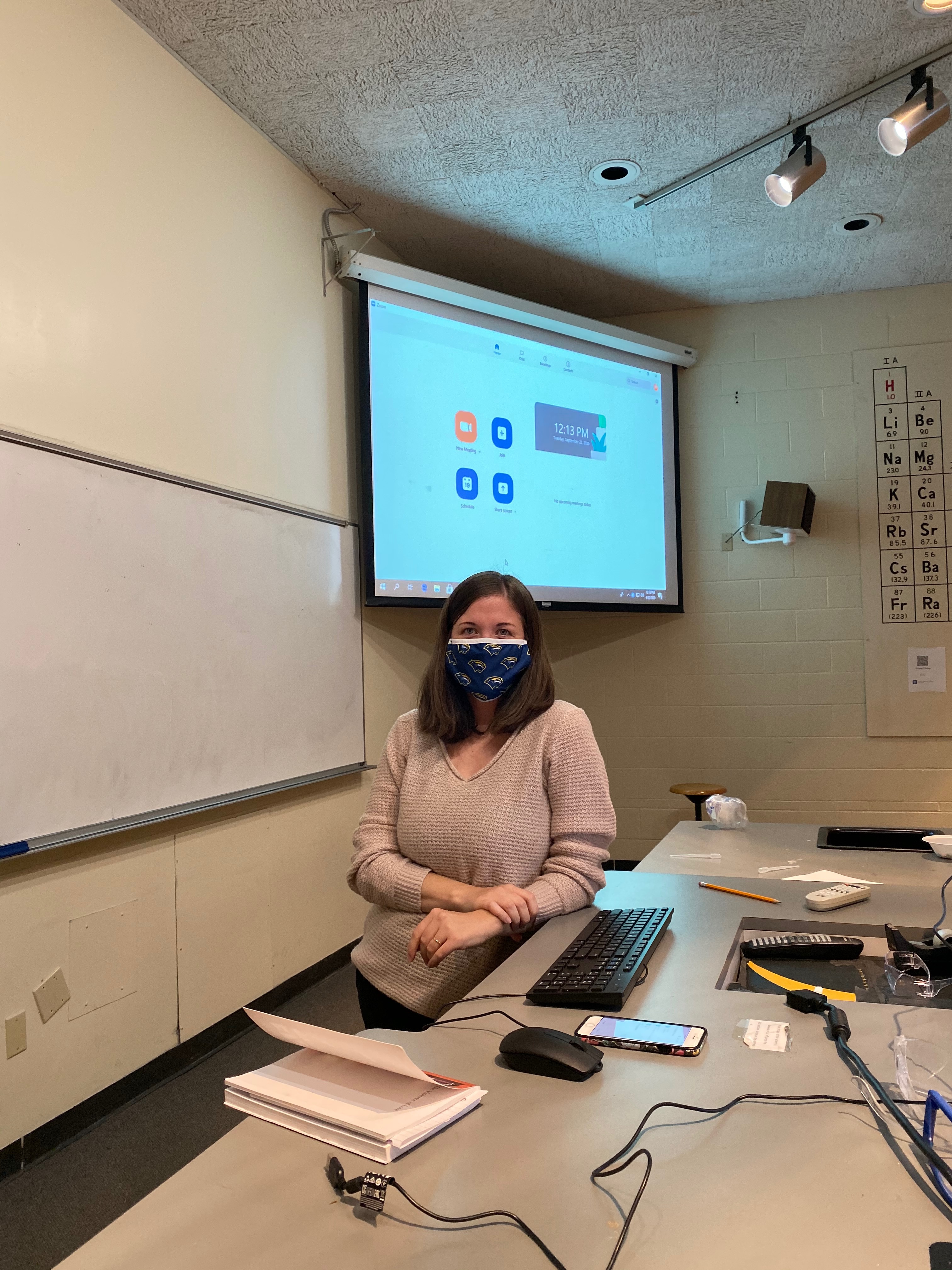
COVID-19 has changed the way we do everything. Students, teachers, and faculty alike have had many technological advances thrown their way, some without much of a warning. I asked both professors and students what they think the biggest struggles are with the added technology adjustments and this is what they said:
• Can’t ask questions
• Bad internet connections
• Not personalized
• General technology reliability
• Added time
• Lack of communication
Students are not able to get as much one on one time with their professors. There is also a lack of bonding between students and professors because it can be rather difficult when Zoom is so impersonal. Communication skills are lacking, the overall attitude surrounding the virus is making things difficult, and professors are having to take away time from their class to get everything working properly. Internet is not always the most dependable, so students have to miss class at times if their connection won’t work. Both professors and students are having to learn new programs which can add on to the already existent anxiety that a lot of people are feeling.
On a brighter note, the increase in the use of Zoom and other technology has given everyone the opportunity to learn a new set of skills that they may not have had to otherwise. While many people had used Zoom before the hit of COVID-19, many had not used it to this extent. Professors and students are having to learn how to navigate through a plethora of new changes and advancements. However, staying safe is the number one priority for everyone right now. If increased Zoom sessions are helping with that, then that is what is going to happen.
How will Spring Arbor University continue to advance and combat these struggles? Only time and experience will tell.
Fifth year super senior Emily Smith has an important story to tell. She transferred around to several different colleges before eventually landing at SAU. As a Communication Studies major, Smith is writing a blog about her personal struggles and triumphs for her Digital Influence course.
By: Merry Castle
“I am a recovering binge eater,” said Smith. “I am a recovering fat person and always will be.”
Fifth year super senior Emily Smith has an important story to tell. She transferred around to several different colleges before eventually landing at SAU. As a Communication Studies major, Smith is writing a blog about her personal struggles and triumphs for her Digital Influence course.
“I am finally ready to begin sharing my story,” said Smith. “My project is about finally being able to open up about my lifelong struggle with mental health and obesity.”
Smith seeks to use her personal experiences to encourage and inspire others who may be struggling with the same issues. “I want to share how I was able to turn my entire life around,” said Smith. “I want to share how I went from being at a point where I accepted that I was going to get diabetes, live out my days hiding in the house, and to die an early death from obesity and unresolved issues, to the point I’m at now: a strong, successful, motivated, outgoing, and happy woman.”
Smith’s goal is to provide a safe space for others to hear her story and learn from her struggles and her joy. “My issues are not unique, but I believe I have a uniquely personal perspective to share when it comes to my journey,” said Smith. “I’ve dealt with depression, anxiety, and body dysmorphia since I was in elementary school.”
“Through my physical health journey and meeting with a therapist, I have learned to accept, overcome and transform these chains that have kept me from living my life for far too long,” said Smith. “This past year has been the most metamorphic year of my life, and I feel that it is worth sharing with others.”
Writing this blog has been educational for Smith. Before writing her blog, Smith executed a trial run by posting a short blurb on her Facebook about her weight loss journey. “Never would I have thought that I would post a picture of myself at my heaviest weight in only a bra and underwear,” said Smith. “I needed to post that photo to acknowledge myself both at 316 pounds and at my weight at the time of 234 pounds — 82 pounds lost.”
The overwhelming amount of love and support Smith received on the post helped her grow. “Even though now I live in a body that is 92 pounds lighter, I was still me at 316 pounds,” said Smith. “I can’t pretend she didn’t exist — that person was and is me.”
Smith never imagined people would read and listen to what she had to say. “I thought to myself, why would anyone care what I have to say about my struggles?” said Smith. “But then I remembered that I found support and love in reading the words of others who have experienced the struggles that I have.”
Now, Smith hopes her blog will be educational to others, too. “I want to be that person for someone else,” said Smith. “I want to be someone who can help bring even one person through their hurdles and into the love, grace and sovereignty of God’s plan for their life.”
By Jasmine Harper
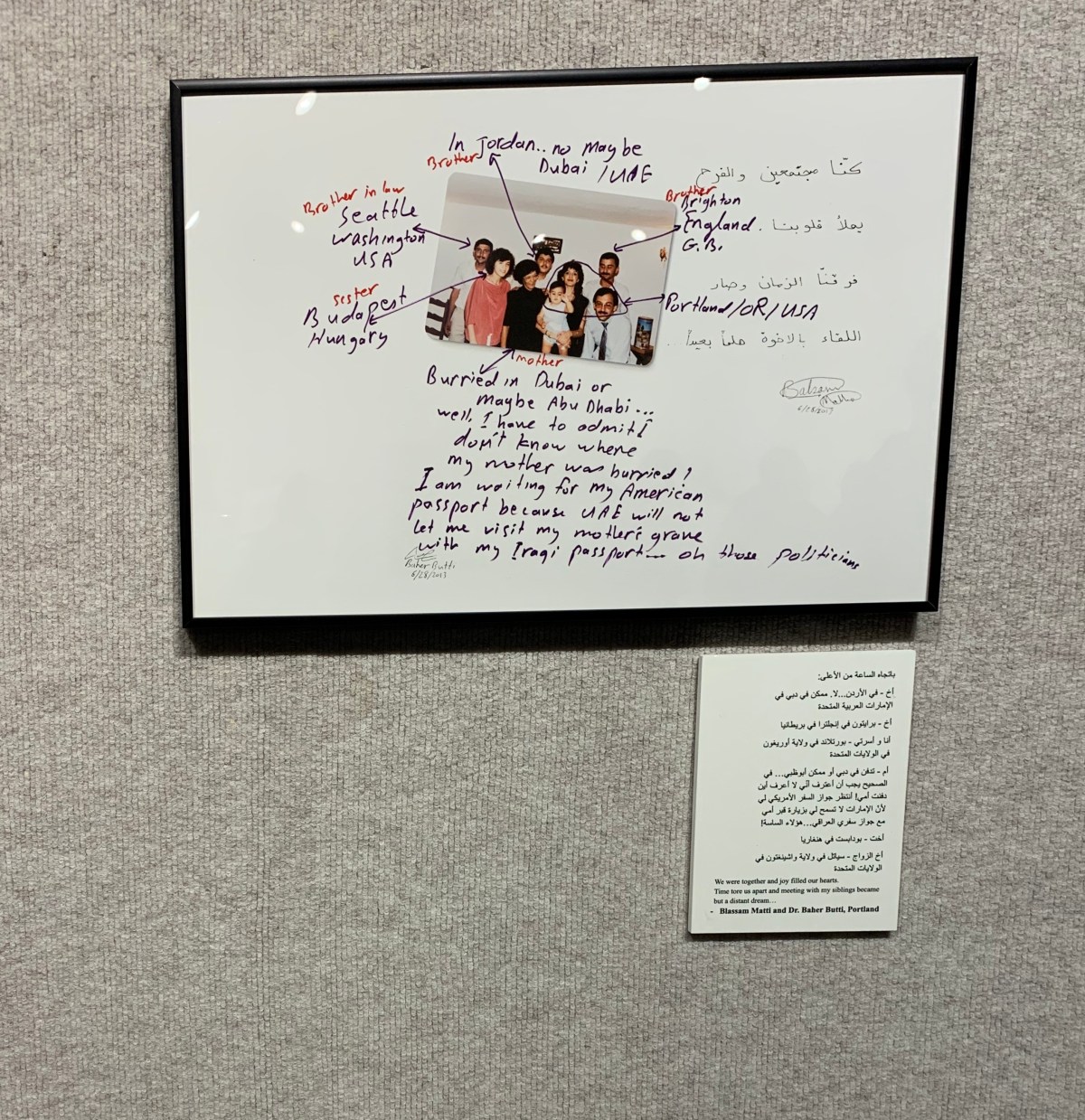
The traveling exhibit “What We Carried: Fragments and Memories from Iraq and Syria” opened in the Ganton Art Gallery at Spring Arbor University (SAU) on Feb. 9. The art pieces were on loan from the Arab American National Museum in Dearborn, Michigan. Photographer Jim Lommasson said his goal with the exhibit was to personalize objective statistics about Iraqi and Syrian refugees.
Lommasson initially photographed veterans, and later Iraqi and Syrian refugees to depict the conflicts of war. He then decided to photograph items the refugees took from their homes before fleeing their countries, including mementos like a woman’s teddy bear and a child’s Barbie doll. The refugees wrote personalized descriptions of the objects on the photos, and the Arab American National Museum translated the messages from Arabic to English.
“The refugees’ photographs had the most impact on me. I see my friends and family regularly, but for some refugees, a picture is all they have to remember their families,” senior art major Erin Karafa said.
In the exhibit’s introduction lecture, art professor and Ganton Art Gallery director Jonathan Rinck said 140,000 Iraqis have come to the U.S. since 2003, and one-half to one-third of Syrian refugees are children.
Rinck said he felt passionate about bringing this project to SAU because it aligned well with the university’s global focus.
For college students wanting to learn more about events in Arab nations Rinck suggests The New York Times, The Economist and BBC News rather than social media websites.
“Pretty much everything I own is expendable. The objects refugees took are not worth much in monetary value, but they’re the kind of things that really matter, like family,” Rinck said.
The Ganton Art Gallery will continue to host “What We Carried: Fragments and Memories from Iraq and Syria” until March 22.
By Kaelyn Hale
The second-hand shopping industry reached a record high of $24 billion in 2018. Sales have been on a steady climb from $11 billion in 2012 and are projected to reach $51 billion by 2023 according to ThreadUp, the leading online resale company.
The modern-day ‘thrift shop’ is a relatively new concept which emerged after the Industrial Revolution (1760-1840). Until the past few decades, most people had only a few articles of clothing and used them for as long as they could.
Blanche Hale, born in 1947 said, “When I was a kid I probably never had more than 10 to 12 things to wear. I usually had two pairs of shorts, two church dresses, one pair of shoes… I didn’t have jeans.”
As clothing became more mass-produced, it became more affordable. This allowed people to buy more clothes and get rid of clothes they did not want, therefore creating a market for thrift shops.
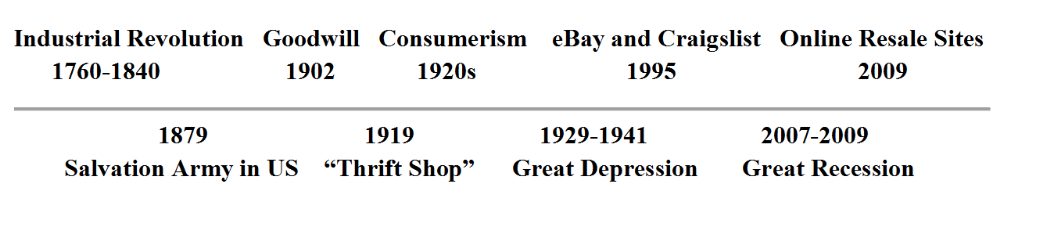
In 1879, Salvation Army came to the US and in 1902, Goodwill was founded. In 1919, the term “thrift shop” was coined and the 1920s saw the rise of consumerism. During the Great Depression (1929-1941), Goodwill opened almost 100 stores. In 1995, eBay and Craigslist were founded. During the Great Recession (2007-2009), resale stores saw sales increase 35 percent. In 2009, ThreadUp was founded followed by many other online resale companies.
“I can’t even remember a thrift store when I was a kid,” said Hale. “We didn’t have Goodwill or anything like that. Heck, we didn’t even have yard sales!” Hale said in the ‘70s they had stores called boutiques, which sold second-hand goods, but they were not very big and did not have much merchandise.
Time Magazine writer Olivia Waxman, said when thrift shops first came out, “there was a stigma attached to wearing used clothes… The items themselves [were] a sign of a lack of money.” Hale’s first impression of thrift stores was that they were “confusing and not very clean.”
Perceptions of thrift shopping have changed. Now people of all socioeconomic classes shop second-hand. Spring Arbor University (SAU) student Caitlin Ackermann said she likes to thrift shop “just for fun, for the thrill of the hunt.” According to ThredUp, luxury shoppers buy second-hand more than value chain shoppers do. In 2018, 26 percent of women either bought or were willing to buy second-hand.
Hale said people have become more accepting of thrift shopping throughout her lifetime. “I know people now that brag about finding something at Goodwill. It has become a status thing if you can shop and find good stuff.”
Thrift shopping is gaining popularity fastest among Millennials and Gen Z. According to ThreadUp, 18-37 year olds are adopting second-hand apparel 2.5 times faster than other age groups.
Many young people buy second-hand online instead of going into traditional thrift shops. SAU student Celeste Fendt said she buys second-hand more than she buys new clothing and does most of her shopping on a resale app called Poshmark. She also sells some of her own clothing on this app. “It’s cheaper, it leaves less of a carbon footprint, and on Poshmark you’re buying from an actual person so you’re helping them,” said Fendt.
SAU student Beth Kulaga started her own Instagram thrift store called Reverie Thrift where she sells clothes she buys at thrift stores to SAU students. She said she started the mini-business because she has always loved thrifting. “People would compliment my outfits and I would say I found them at a thrift shop,” said Kulaga. “They would say they can never find things at thrift shops, and I thought ‘I could find things for you.’”
Kulaga goes shopping about three or four times per month and usually buys about 20 items. She sells about 12 of them as soon as she posts them. “It’s a good way to make a little extra money,” she said. “I sell each shirt for $8 and I get each shirt for about $1 to $3.”
On March 21, the Resident Assistants (RAs) of the women’s dorms at SAU hosted a Ladies Clothing Swap where students gave clothes they did not want to their RAs, the RAs put the clothes on tables, and students took the same number of clothing items as they had donated.
One RA, Kaylee Clayton, started the event last year in her dorm. This year she got the other RA’s together and made it a campus-wide event. Clayton said “It’s a good way to recycle and inform people about the effects of the textile industry.” More than 750 items were donated and about 50 people participated. Clayton said they plan to keep doing it even after she graduates.
Clayton said she is committed to the zero-waste movement and recycling. She said buying second-hand is good for the environment because it creates less demand for clothes. “Just one shirt takes more than 700 gallons of water to make,” said Clayton. Buying second-hand is also good because “you’re not creating demand for or supporting companies that use bad practices like human trafficking, poor treatment of workers, and hazardous working conditions,” said Clayton.
Thrift shopping reuses garments instead of throwing them out, reducing the amount of textile waste produced. According to planetaid.org, the average American throws out about 82 pounds of textile waste each year, most of which ends up in landfills where it produces toxic greenhouse gasses as it decomposes causing global warming.
By Crisilee DeBacker
To a Spring Arbor University (SAU) student, the name “John Williams” could mean two things: “Associate Professor of Education” John Williams Jr (also known as Biggs), or “that guy who composed the Star Wars soundtrack” John Williams. Now, there is a third.
John M. Williams IV fills three roles at SAU. He is the Coordinator of Elementary Education, an Assistant Professor of Education and the Assistant Womens Basketball Coach. Despite not wanting to come to SAU at first, he says he is a proud SAU alumnus.
“It was just a good, safe, familiar place,” he said, concerning why he finally committed to SAU.
During his time at SAU, he studied music, pre-med and elementary education and played on the soccer team for two seasons. After he completed his undergraduate program, he continued studying at SAU, and went on to get his master’s in education and then a post-graduate certification in K-12 administration. After he was certified, he worked seven years as an elementary school principal.

“Being an elementary school principal, there’s always something crazy going on,” he said.
He also coached basketball, and worked with the same girls from fifth grade on. Seeing them grow and improve as high schoolers was something he said he loved, especially since one of his players is now a freshman here at SAU and is serving alongside him as the manager of the womens basketball team.
Williams briefly taught math and science classes before he was a principal. When he was a principal, he evaluated teachers regularly, so to him, evaluating students in class is not much different.
Williams’ faith is something he strives to model to his students. He begins every class with a time for prayer requests and a short devotional, and concentrates on being a good example for his students and living “unapologetically Christian.”
“Before talking about prayer, you have to live and model faith first,” he said.
He also focuses on faith outside of the classroom by taking it to the basketball court. Currently, the whole basketball team is reading the book “Love Does” by Bob Goff. He says it is a great example of putting both faith and love into action and illustrates the message, “don’t be afraid to love extravagantly.”
Through both the teaching and the modeling of faith, Williams hopes to influence his students for their future.
“I’m making them prepared before they’re on their own,” he said.
Hogwarts House: Gryffindor
Favorite TV shows: Stranger Things, Longwire and Madame Secretary
Favorite classes to teach: “Math and Science Methods for Upper Elementary and Middle School Teachers” and “Effective Classroom Management Assessment and Instruction”
Fun Fact: When he was a principal, he let students duct tape him to a wall to raise money for a local child with cancer.
He’s Not Done Yet: He’s currently in a doctorate program with Trevecca Nazarene University.
If you didn’t already know: He’s married to Carrie Williams, the director of student success and first year programming at SAU.
You may have already seen Joey Dearduff (JD) and Alessandra Varelis’s (AV) interview in the current issue of “The Pulse” (go and pick up a copy if you haven’t yet!). Here a couple of extra questions that didn’t make it past the editing and cutting down process.
The Pulse (TP): What are some of the main goals you want to accomplish as president and vice president?
JD: Our slogan for the campaign and what it will be for SGA as a whole next year, is “Believe, belong, beyond.” Those three words encapsulate what we want to continue on campus and what we want to push for even more next year. Believe is Alessandra’s and my rootedness in Christ’s transformative power and the university’s desire to pursue Him, love Him and serve Him. Our belief in that empowers us to belong and to go beyond. What we desire for this campus next year is to belong, to build support among and between communities. Like Alessandra mentioned, empowering the people who feel as though their voice isn’t heard. To let them know that it is heard. So, belonging. Having people on campus know that they’re loved and taking that fellowship and that love we have for each other and having it transcend outside of these boundaries, outside of the Spring Arbor bubble into the world around us. That looks like service and worshipping not just in Chapel, and inviting the community here and going out and loving the community.
TP: Have Ty and Holly given you guys any advice on what to expect?
AV: We’ve talked a lot with them. They’re great and very encouraging. They’ve said if we have any questions we can call, email or text them; even next year, when they’re gone, if we need any help or advice. I’ve met with Holly and she told me the beginning of the year is super busy so make sure we take the summer and plan and think through things, which is helpful because a lot goes on in the beginning of the year.
JD: Ty has been very encouraging but also very real. He mentioned the campaign and how exhausting it would be and how taxing. When I was elected, he pulled me aside and congratulated me and said, “Hey man, just know that when times get rough, and they will get rough, I’ll be here for you.” I’ve been communicating with Steven Hlatky, who was the student body president my freshman year, and we built a relationship my freshman year. Even Ben Frederick here and there a little bit. It’s been really cool how encouraging, how supportive, and how real current and past presidents and vice presidents have been for us.
By Amber Cekander