First a new sport, now a new coach

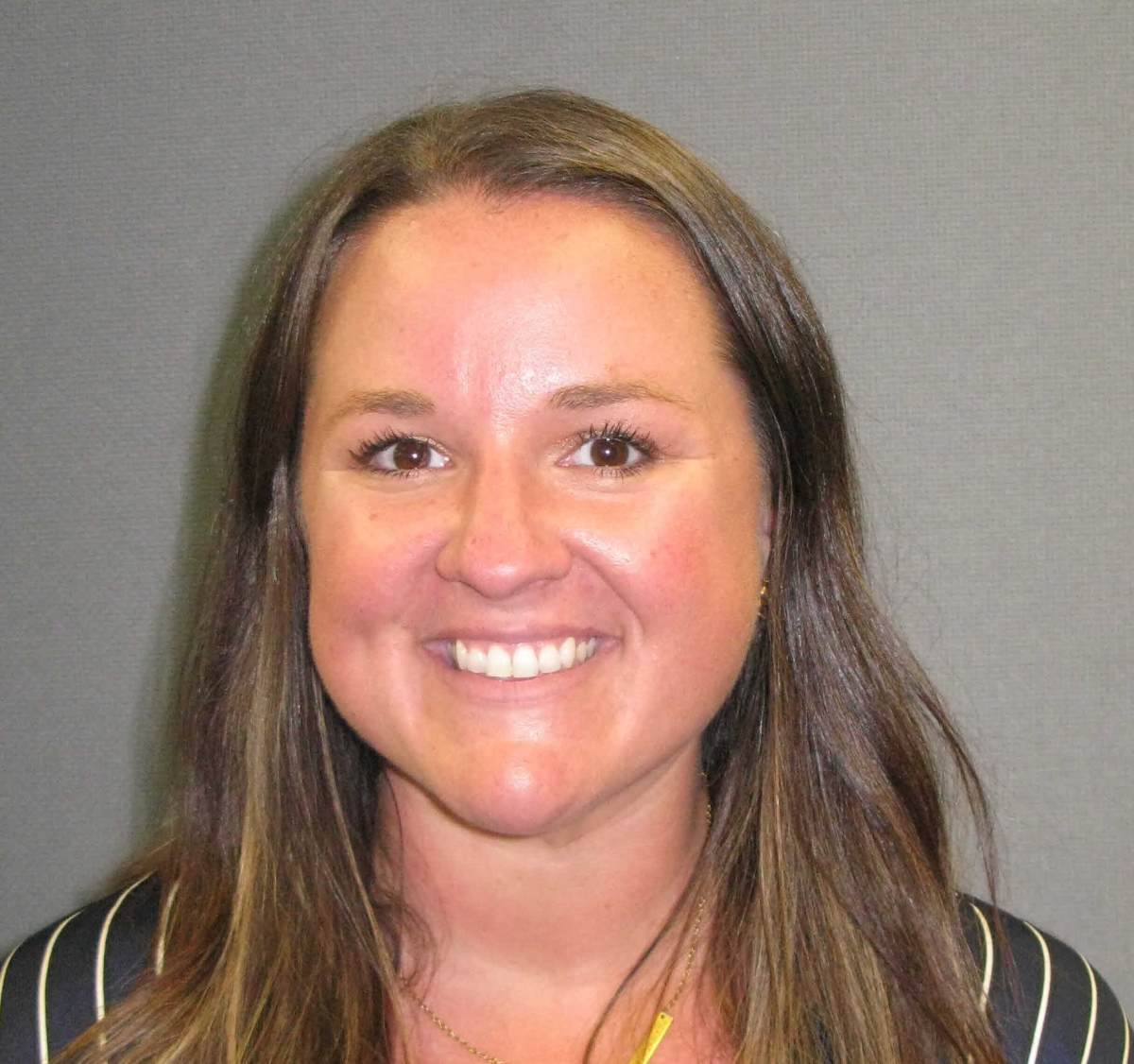
The SAU cheer team has welcomed Jessica Dowling as the new head coach. She has big plans for her team and the SAU cheer organization.

By: Leslee DeRossett

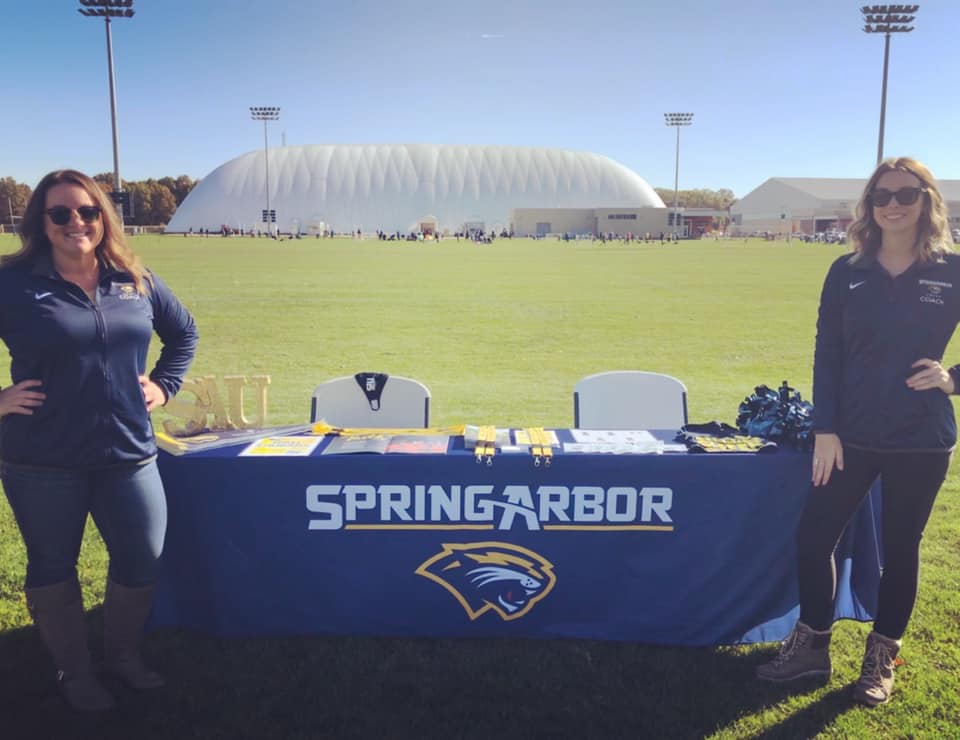
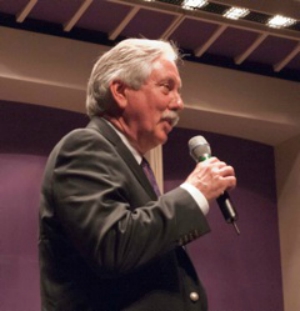
Jessica Dowling (left) at Champion Cheerleading College Recruitment Day

Spring Arbor University students coming back to the 2020 fall semester have seen many changes. This is also true for the SAU competitive cheer team. In August, SAU named Jessica Dowling as its new head coach of the competitive cheer program.

Cheer is not new to Dowling, between four years as a member of her high school varsity competitive cheer and sideline cheer teams and eight years as the Addison Community Schools middle school competitive cheerleading coach, the middle school sideline cheerleading coach, as well as the varsity competitive assistant coach. She guided her team to five straight Cascades championships, along with three consecutive undefeated seasons.

Dowling may be new to the SAU competitive cheer team, but she is not new to SAU. When Dowling is not working with her competitive cheer team, she is teaching as a professor in the SAU School of Education.

Dowling said, “The number one thing I enjoy the most coaching for SAU is working with my athletes and building a tight-knit team. The girls are amazing and all so unique in the best way! We are a perfect mix and have formed a great bond already.”

The SAU competitive cheer team is new as of last year.

“Another thing I enjoy about coaching cheer at SAU is building a foundation for years to come. I have really enjoyed working to build a program which strives in character and is centered in faith. We are eager for a safe return for big crowds as we have some big ideas for community involvement at SAU.”

Jessica Dowling

Farewell Tribute and Senior Spotlight from The Pulse Leaders

Caralyn Geyer

As a senior that would have “graduated” last week, I look back fondly on my time as a Cougar, English major, and member of The Pulse. Many nights were long and I cried a lot of tears over Brent Cline’s classes, but when I look back on my four years, I don’t see those exhausting, sleepless nights. Instead, I remember the times like winning Arbor Games, eating pizza with my Alpha 1 floor at 1 a.m., seeing the elephant on the library roof while walking to class, the first Almost Chapel video, getting hit in the face by a hotdog at Porchfest and so much more. It brings tears to my eyes knowing that the next stage of life does not include Spring Arbor University (SAU) anymore, but what I’ve learned from this place, the professors and my friends will never leave my head nor my heart.

At first, I struggled to figure out why embracing new beginnings was so hard and realized that this time, it was because moving out meant moving on too. Moving on means change, and personally, that’s not something I do very well with. This year, it means a real, full-time job (which I still do not have), more expenses, a working schedule, less free time, and not seeing the people I have made such deep friendships with every day. But changes like these, whether big or small, aren’t always a bad thing. While I’ll miss being able to lead newspaper meetings and eat cinnamon pizza during Pulse production nights while laughing at nerdy English jokes, I’ve been prepared by the entire campus in some way to go on and make an impact in another place. Staying would mean not embracing this fully, and as hard and scary as it is to go, I cannot live life in my comfort zone.

While times may be uncertain and the future is unclear for now, I leave you with the reminder that we do not need to fear the what-ifs. If Jesus says “do not be afraid” 365 times in the Bible, we really don’t need to worry about the future when we are only able to see such a fraction of the overall perspective. I want to give my sincere thanks to every faculty member, fellow student I never knew personally, every Dining Commons worker, and especially every one of The Pulse leaders, whether I worked with you or not over the last four years. I have been shaped in some way by your influence and I leave changed because of you. Thank you, SAU.


Jared Boekenhauer

I am not a graduating senior. I am a transferring sophomore, so do not think I’m trying to steal the attention of graduating seniors. I congratulate all who are graduating this year, and will be praying for your future jobs, further education or whatever else you plan to do. However, I would like to put a few thoughts out there to those facing transition decisions, as I have, while I still have this platform.

First, transferring is not a failure move. It does not mean you have made some wrong and costly mistake that will haunt you your whole life. Transferring means you have decided your college education will be better continued elsewhere. That is why I am transferring. The SAU community has nourished me and given me personal confidence in my ability to question God and the universe. Dr. Moore’s World Literature class has given me a passion for old books, like the Odyssey and the Aenied. I have even kept every book from that class to return to at some point in life. Chuck White’s J-term New Testament class (yes, I took that class) was challenging and exhausting, but taught me so much about the Bible, and gave me a new found love for the books of Acts and Roman. I could go on, but the point is, SAU transformed me into a more thoughtful person, teaching me ideas and practices that I will take with me to my next destination.

Second, we learn best from the people we disagree with. I came to SAU with the mindset that people would disagree with me on many political issues, and I was right. Instead of ignoring these people, I challenged them, and they challenged me. Through this, I developed a better understanding of other people’s opinions. Also, this practice doesn’t just have to be political, it can be about anything. If you are Protestant Lutheran, talk to a Roman Catholic. The point is to challenge each other and see why someone believes what they believe. This creates empathy and understanding. It will make debating less personal, and more issue driven, and you will be friends with those whom you couldn’t personally agree with about anything.

Last, don’t be afraid of change. Change can force us to rely on God because it is uncomfortable. If you are unsure of if God is calling you to change, pray, fast and read your Bible, but also question your motives and perceived outcome. Having a perceived outcome will give you steps, and lay out a map for you. My choice to transfer did not come without long nights of thought, but God was calling me to that choice.

The long nights working to edit and design the Pulse were stressful, but they confirmed that I was going in the right direction. Thank you to the Editor-in-Chief, Caralyn Geyer, for working long and hard to assure this magazine would be published timely. Thank you to Dr. Baker and Dr. Moore for helping me enjoy old books. Thank you to Dr. Dan Runyon for making my writing better (no matter how frustrating it got), and to Mark Edwards for your well-taught history courses that contributed to my understanding of thought and analysis.

Editorial- Helping From Home With a Christian Attitude

 Co-written by Caralyn Geyer and Jared Boekenhauer

Covid-19, or the coronavirus, is dominating the news cycle and has put a halt on a large portion of the international economic system. The United States recently took the lead in confirmed coronavirus cases, with Spain and Italy close behind. 

South Korea has flattened the curve. According to CNBC, flattening the curve means lowering the amount of confirmed coronavirus cases and thus avoiding overwhelming a healthcare system. According to the New York Times, South Korea has done this through a jump start in testing and treatment, restrictions on people with confirmed cases  including an app that can tell when coronavirus-positive patients have left quarantine  and fines for those who leave quarantine after testing positive.  

Polls have shown an overall support and respect by the South Korean people for the efforts of their government to combat this illness. 

While in the United States, cases are still rising as many people are racing out to aid medical workers, the most vulnerable and the sick. Some have worked to make face masks for doctors and nurses, others are coming out of retirement from careers in medicine to fill the need for nurses and doctors among shortages. Others are taking up jobs at grocery stores to handle the larger crowds and make extra money during an increase in job loss. Even some plants that would normally make different products have temporarily stopped production in order to accommodate greater needs and produce things like hand sanitizer and masks. These are all honorable and positive acts that benefit society in its present dilemma.  

Unfortunately, organizations like some churches have chosen to stay open and worship in crowded spaces, directly violating the temporary law banning larger public gatherings. Some Christians have cited that the banning of public worship is “oppression” and “Christian persecution.” The belief that temporary government intervention on daily life is oppression, even though it is in order to prevent the spread of a pandemic, is wrong. Following the law, and avoiding public gatherings for now, is what a Christian should do.  

The Bible teaches to follow the law, as long as the law is not leading one to sin. “Everyone must submit himself to the governing authorities, for there is no authority except that which God has established. The authorities that exist have been established by God,” (Romans 13:1, New International Version).  

With bans on public gatherings in place, the government is not telling Christians to avoid worshipping, it is telling Christians to specifically avoid public gatherings. To stay in accordance with the law, many churches now worship, preach and run Bible studies online. Just because Christians cannot worship in the ways they have before does not mean it has to be limited. It just means that different measures must be taken in order to go along with the temporary laws set in place, which are ultimately for the safety of everyone. 

The Bible also says to aid the poor and sick. Quarantine and social distancing especially help the sick and vulnerable. Though it may seem to be an inconvenience for the time being, doing these two things actually help prevent spreading to those who could be more susceptible to the virus. Christians should be thinking with others in mind, especially those who are more at risk.  

While it may seem like this is government oppression of Christianity, this is not what is happening. True oppression would prevent any form of worship by law; temporarily pausing social activities to prevent the spread of a pandemic is not oppression.  

What Christians can do during this time of uncertainty is encourage those who are struggling to deal with or understand the pandemic, and follow local and national ordinances. Create prayer teams through Zoom or Webex, send out letters to people and continue to think positive. In a time where so many questions lie unanswered, the most we can do is not try to answer them, but point those to the one who can. 

Lending a Helping Hand

By Sarah Williams 

 During Spring Arbor University’s (SAU) spring break, SAU students went on mission trips to Guatemala, Las Vegas and North Carolina.  

Post-Undergraduate Outreach Ministry Intern (PUOMI) Cecilia Said, helped plan and coordinate SAU mission experiences and encourage students to become involved in the community.   

The mission trip locations were chosen based on different types of service opportunities provided for students. Guatemala was chosen for its relational ministry aspects, the Las Vegas trip focused on prayer and the North Carolina trip focused on service work.  

When Said was planning the trips, she wanted each student to deepen their understanding of their faith, understand how their presence can impact others and what it means to be a follower of Christ.  

According to Said, 38 students volunteered for the mission trips. Seven students went to North Carolina, 20 went to Guatemala and 11 went to Las Vegas.  

Johnathan Husted, student leader for the North Carolina mission trip, said he went on the trip for the manual labor.  

The main goal of the trip was to help Hurricane Florence victims get their houses up to code for an inspection so they can move in permanently. The campers provided to the victims by the government were being taken away at the end of March. 

“There is something about working hard for someone else with no expectations of getting anything in return that makes me feel fulfilled,” Husted said.  

The trip was one week. Excluding drive time, the students spent five days in North Carolina. They would get up at 7 a.m., have a devotion, work and then debrief during dinner. They had a recreation day where the students toured a battleship and watched the sunset on the beach.  

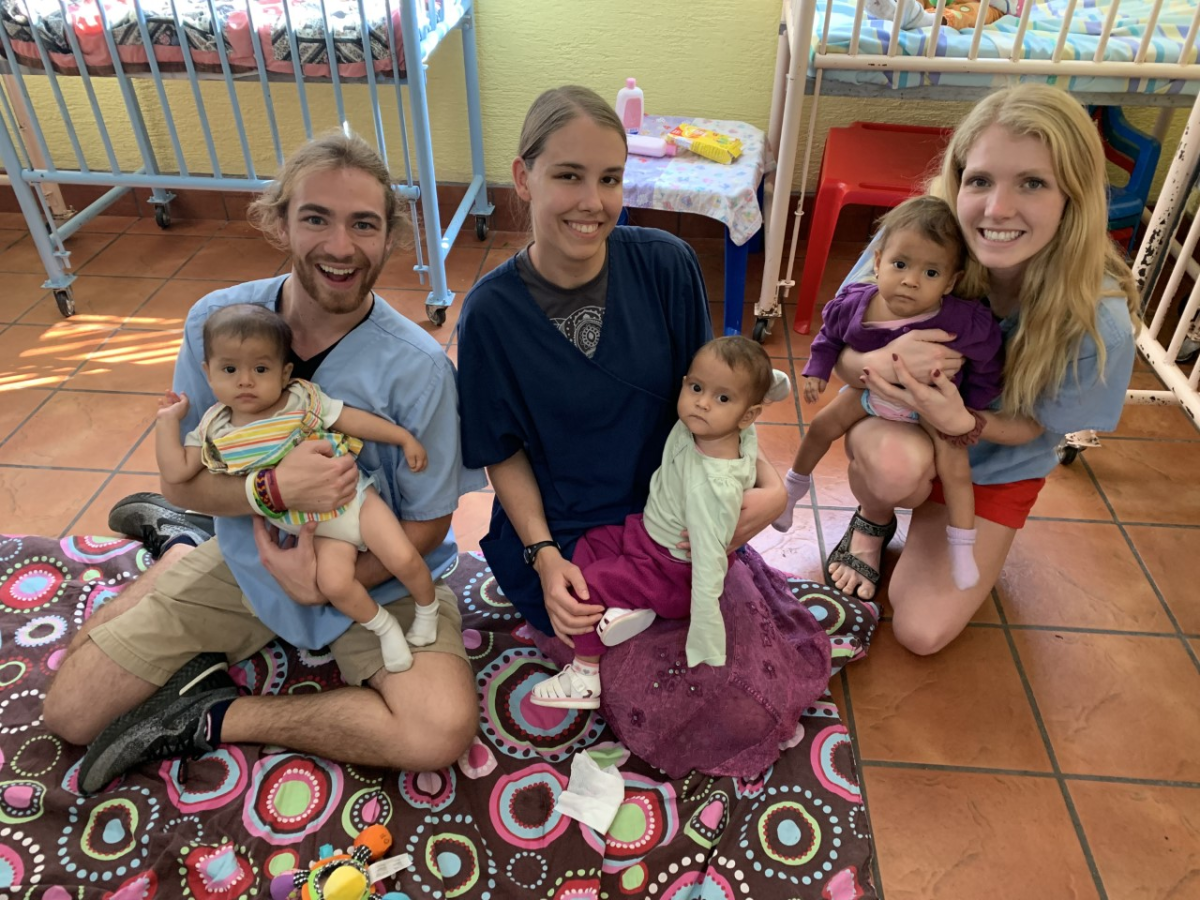
Kensington Thomas volunteered for the Guatemala mission trip. The students assisted with God’s Child Project, a center for malnourished babies, as well as Casa Jackson school and Obras Sociales hospital for people with severe disabilities. 

At the God’s Child project, the students fed babies, changed diapers, cleaned up around the facility, cleaned windows, folded clothes, moved heavy items and played with the children. At the school, they helped teachers grade assignments and played with the kids. At the hospital, they fed children and took a Zumba class with kids in wheelchairs. 

The volunteers would get to the facilities at 8 a.m. and stay until 12 p.m. They volunteered for four days. They also visited other places in Guatemala and learned Spanish. The students went to the Mayan village where they ate traditional food, made tortillas, drank coffee, acted out a traditional Mayan wedding and bought homemade souvenirs. They also went to Antigua where they did a historical tour of old cathedrals and buildings.  

The students stayed with host families during part of the experience. Thomas’s host house had six girls. Other houses had either seven or nine. The host families cooked all of their meals and provided them with a living space.  

I learned a lot about the culture. The food was amazing, and the people were so kind,” said Thomas.  

Carol Nichol volunteered for the Las Vegas mission trip. She said she felt called to go when people from Youth With A Mission (YWAM) and Grace City Church came to her peer advisor meeting and discussed the trip.  

Nichol said the trip initially seemed out of her comfort zone, yet she trusted in God’s faithfulness and protection.

The students packed sack lunches and ate with the homeless. They led worship on the street outside the MGM hotel and offered testimony and the gospel. They went into gas stations and motels to pass out flyers of three missing children that were at risk of being trafficked. One of the children was found the next day.  

Co-leader of the Las Vegas Trip, Brandon Valentine, said they also provided worship for people on the Las Vegas strip, offering “Free Prayer” on Fremont St. and worshipping with middle schoolers on the week-long trip.  

“Our commitment statement toward one another was, ‘to have zero expectations but one: to serve wholeheartedly’,” Valentine said. 

According to Nichol, the trip schedule consisted of cleaning the YWAM base after breakfast. They had quiet time and evangelism training for their outreach. Then, they ate lunch, went out on their outreach, debrief and had dinner. Finally, they would have another outreach or team bonding experience.  

Nichol said her favorite moment was when they were worshipping outside the MGM hotel and some police officers told them they couldn’t have an amplifier resting on the ground as it was blocking foot traffic. The students picked the amplifier up and sang gospel music for another half an hour. Many people stopped and joined in. 

According to Said, SAU does mission trips for multiple reasons: Mission trips allow students the opportunity to broaden their worldview, give them the opportunity to engage with Christian organizations and ministries, give them a glimpse into the lives of others, provide love and encouragement and to allow students to participate in the world with Jesus at the forefront.  

Black History Month

The following are two excerpts written by Spring Arbor University (SAU) members sharing their feelings about Black History Month:

I believe that it’s important to intentionally expose our community to African American culture and achievement throughout the year and not just during the month of February.  We are working to do that through various events and chapel speakers throughout the year.  During the month of February, we want to educate our campus community on the history and achievement of African Americans in the United States. It is also a time for us to recognize Spring Arbor’s African American alumni and their achievements and contributions to society and the building of God’s kingdom. –Kevin Brown, Chief Diversity Officer 

I believe Black History Month is the one time of the year where education, celebration and inspiration of black culture is a given. Black people embrace the culture to its fullest in February. For other racial groups learning about black culture may end at the end of February, if it even was talked about to begin with. However, for Black people we are always black and we try to celebrate our melanin as much as possible or even allowed. We need to always remind ourselves that we can achieve, that we are beautiful and that we are Kings and Queens, because we live in a world that tells us otherwise. Black history continues for us in conversations, affirmations, celebrations and more. Here at SAU it may seem like we haven’t done much for Black History Month, but our Black population has celebrated it every day this month in the form of community celebration and self-love. Office of Intercultural Relations wanted to take this month to educate others on black experience, but in reality we do that every day of our lives in and out of school. As I said earlier, the month may be another month to everyone else and it ends for them March 1st. But for Black people we are making new history to be learned.            Australia Smith, Sophomore Student 

SAU Hosts Art Exhibit of Refugee Mementos

By Jasmine Harper

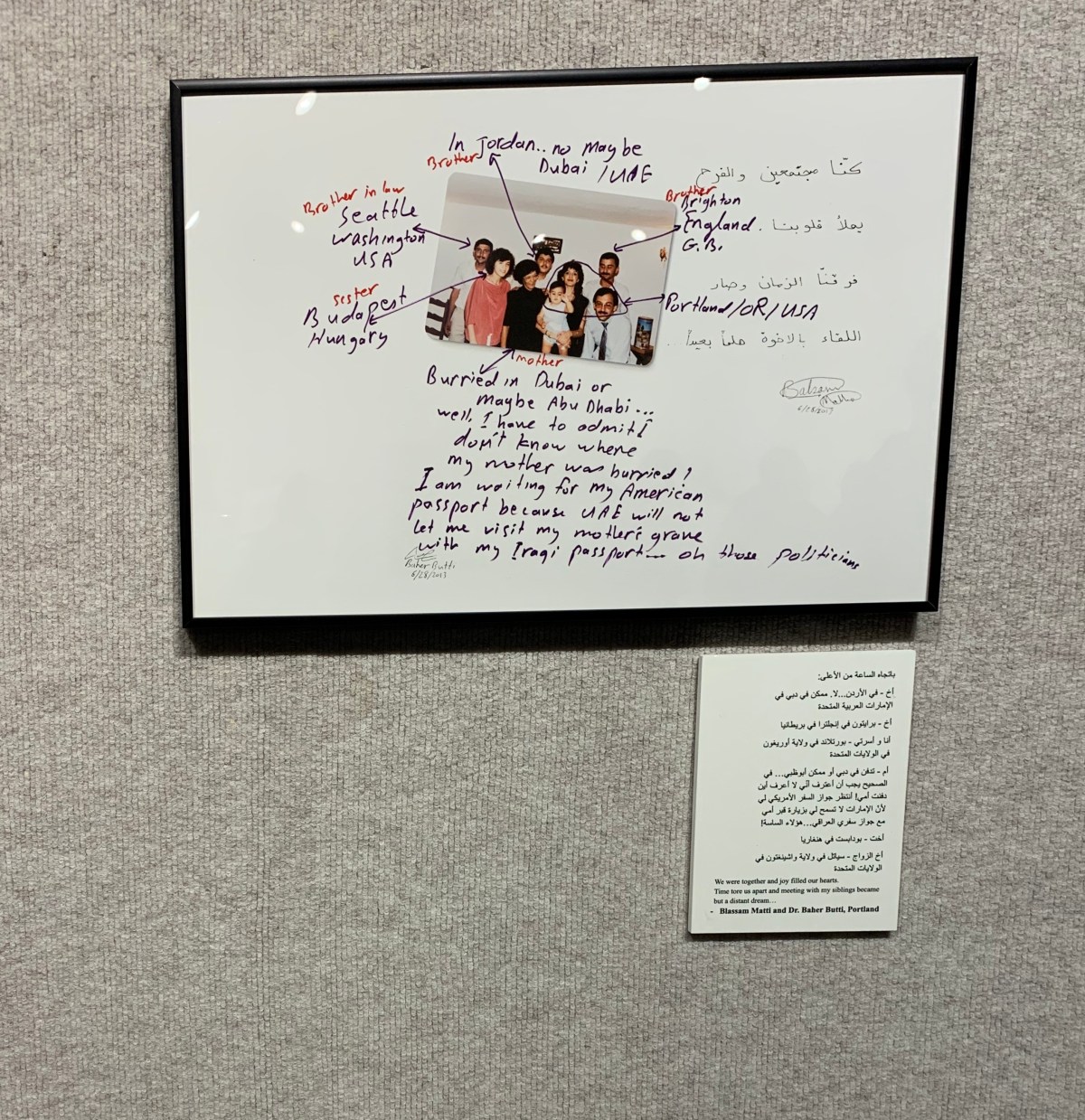
The traveling exhibit “What We Carried: Fragments and Memories from Iraq and Syria” opened in the Ganton Art Gallery at Spring Arbor University (SAU) on Feb. 9. The art pieces were on loan from the Arab American National Museum in Dearborn, Michigan. Photographer Jim Lommasson said his goal with the exhibit was to personalize objective statistics about Iraqi and Syrian refugees.

Lommasson initially photographed veterans, and later Iraqi and Syrian refugees to depict the conflicts of war. He then decided to photograph items the refugees took from their homes before fleeing their countries, including mementos like a woman’s teddy bear and a child’s Barbie doll. The refugees wrote personalized descriptions of the objects on the photos, and the Arab American National Museum translated the messages from Arabic to English.

“The refugees’ photographs had the most impact on me. I see my friends and family regularly, but for some refugees, a picture is all they have to remember their families,” senior art major Erin Karafa said.

In the exhibit’s introduction lecture, art professor and Ganton Art Gallery director Jonathan Rinck said 140,000 Iraqis have come to the U.S. since 2003, and one-half to one-third of Syrian refugees are children.

Rinck said he felt passionate about bringing this project to SAU because it aligned well with the university’s global focus.

For college students wanting to learn more about events in Arab nations Rinck suggests The New York Times, The Economist and BBC News rather than social media websites.

“Pretty much everything I own is expendable. The objects refugees took are not worth much in monetary value, but they’re the kind of things that really matter, like family,” Rinck said.

The Ganton Art Gallery will continue to host “What We Carried: Fragments and Memories from Iraq and Syria” until March 22.


Thrift Shopping on the Rise

By Kaelyn Hale

The second-hand shopping industry reached a record high of $24 billion in 2018. Sales have been on a steady climb from $11 billion in 2012 and are projected to reach $51 billion by 2023 according to ThreadUp, the leading online resale company.

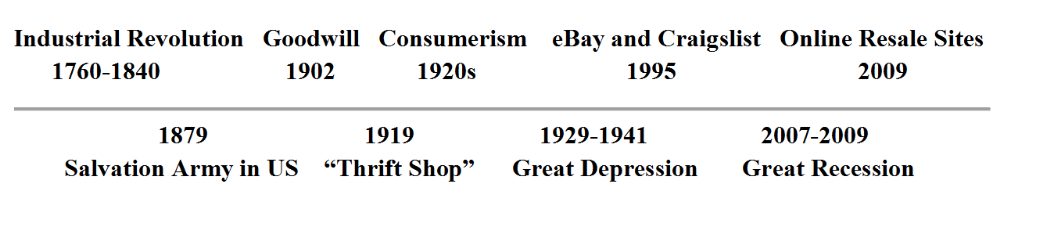
The modern-day ‘thrift shop’ is a relatively new concept which emerged after the Industrial Revolution (1760-1840). Until the past few decades, most people had only a few articles of clothing and used them for as long as they could.

Blanche Hale, born in 1947 said, “When I was a kid I probably never had more than 10 to 12 things to wear. I usually had two pairs of shorts, two church dresses, one pair of shoes… I didn’t have jeans.”

As clothing became more mass-produced, it became more affordable. This allowed people to buy more clothes and get rid of clothes they did not want, therefore creating a market for thrift shops.

Screen Shot 2019-04-26 at 4.21.33 PM.png

In 1879, Salvation Army came to the US and in 1902, Goodwill was founded. In 1919, the term “thrift shop” was coined and the 1920s saw the rise of consumerism. During the Great Depression (1929-1941), Goodwill opened almost 100 stores. In 1995, eBay and Craigslist were founded. During the Great Recession (2007-2009), resale stores saw sales increase 35 percent. In 2009, ThreadUp was founded followed by many other online resale companies.

“I can’t even remember a thrift store when I was a kid,” said Hale. “We didn’t have Goodwill or anything like that. Heck, we didn’t even have yard sales!” Hale said in the ‘70s they had stores called boutiques, which sold second-hand goods, but they were not very big and did not have much merchandise.

Time Magazine writer Olivia Waxman, said when thrift shops first came out, “there was a stigma attached to wearing used clothes… The items themselves [were] a sign of a lack of money.” Hale’s first impression of thrift stores was that they were “confusing and not very clean.”

Perceptions of thrift shopping have changed. Now people of all socioeconomic classes shop second-hand. Spring Arbor University (SAU) student Caitlin Ackermann said she likes to thrift shop “just for fun, for the thrill of the hunt.” According to ThredUp, luxury shoppers buy second-hand more than value chain shoppers do. In 2018, 26 percent of women either bought or were willing to buy second-hand.

Hale said people have become more accepting of thrift shopping throughout her lifetime. “I know people now that brag about finding something at Goodwill. It has become a status thing if you can shop and find good stuff.”

Thrift shopping is gaining popularity fastest among Millennials and Gen Z. According to ThreadUp, 18-37 year olds are adopting second-hand apparel 2.5 times faster than other age groups.

Many young people buy second-hand online instead of going into traditional thrift shops. SAU student Celeste Fendt said she buys second-hand more than she buys new clothing and does most of her shopping on a resale app called Poshmark. She also sells some of her own clothing on this app. “It’s cheaper, it leaves less of a carbon footprint, and on Poshmark you’re buying from an actual person so you’re helping them,” said Fendt.

SAU student Beth Kulaga started her own Instagram thrift store called Reverie Thrift where she sells clothes she buys at thrift stores to SAU students. She said she started the mini-business because she has always loved thrifting. “People would compliment my outfits and I would say I found them at a thrift shop,” said Kulaga. “They would say they can never find things at thrift shops, and I thought ‘I could find things for you.’”

Kulaga goes shopping about three or four times per month and usually buys about 20 items. She sells about 12 of them as soon as she posts them. “It’s a good way to make a little extra money,” she said. “I sell each shirt for $8 and I get each shirt for about $1 to $3.”

On March 21, the Resident Assistants (RAs) of the women’s dorms at SAU hosted a Ladies Clothing Swap where students gave clothes they did not want to their RAs, the RAs put the clothes on tables, and students took the same number of clothing items as they had donated.

One RA, Kaylee Clayton, started the event last year in her dorm. This year she got the other RA’s together and made it a campus-wide event. Clayton said “It’s a good way to recycle and inform people about the effects of the textile industry.” More than 750 items were donated and about 50 people participated. Clayton said they plan to keep doing it even after she graduates.

Clayton said she is committed to the zero-waste movement and recycling. She said buying second-hand is good for the environment because it creates less demand for clothes. “Just one shirt takes more than 700 gallons of water to make,” said Clayton. Buying second-hand is also good because “you’re not creating demand for or supporting companies that use bad practices like human trafficking, poor treatment of workers, and hazardous working conditions,” said Clayton.

Thrift shopping reuses garments instead of throwing them out, reducing the amount of textile waste produced. According to planetaid.org, the average American throws out about 82 pounds of textile waste each year, most of which ends up in landfills where it produces toxic greenhouse gasses as it decomposes causing global warming.

Recycling is Not the Solution

By Kaylee Clayton

Until 2018, the United States shipped roughly 7 million tons of plastic to China each year. In China, the plastic was sorted, broken down and reused to create new materials. Paper and aluminum was also shipped over from the U.S.

Not just the U.S. but about 70 percent of the world’s plastic waste went to China according to NPR writer Christopher Joyce. Many Chinese people became millionaires with new recycling businesses that bought the world’s trash and made money from processing and selling it. Joyce said this aided in making China the second wealthiest economy in the world.

At U.S. West Coast ports, empty Chinese shipping containers that had delivered goods to American consumers were sent back full of plastic and paper recycling. While American recycling machines often struggled with breaking down certain types of plastics, China had the capacity to handle the plastics with enough cheap laborers to sort the recyclable materials.

About five years ago, the Chinese government began to worry about the amount of incoming plastic. Much of the plastic was contaminated, which made it difficult to recycle and unprofitable. In 2017, the Chinese government implemented stricter regulations and began to cut down plastic trash imports. In January 2018, China banned almost all imports. “That means a huge amount of plastic is looking for a place to go,” said Joyce.

This left American recyclers with three options: pay a higher price for recycling, send it to different countries, or send it to the landfill.

“Plastic is getting separated at paper factories, dumped in neighboring communities, and the only way to get rid of it is to openly burn it,” said environmental activist Stiv Wilson. “Air, water, and land are all affected.”

Many smaller cities that feel they cannot afford to pay more for recycling choose to incinerate their recycling rather than pay for recycling, which results in harmful toxins being released into the air. Keefe Harrison who runs the nonprofit Recycling Partnership, said “more plastic in the U.S. is ending up in landfills or getting incinerated, which creates pollution.”

Shipments of plastic waste are now diverted to Southeast Asian countries instead of China. These shipments have increased exponentially since 2018. According to Laura Parker from National Geographic, exports from the U.S. to Thailand jumped almost 7,000 percent in one year. Malaysia’s increased several hundred percent. Those numbers have begun to decrease since those countries have cut back on imports.

Alana Samuels reported in The Atlantic that waste-management companies across the country are telling towns, cities, and counties there is no longer a market for their recycling. Recycling is ending at a time when the United States is producing more waste than ever before.

According to the United States Environmental Protection Agency (EPA), the total amount of municipal waste was 208.3 million tons in 1990 and 262.4 million tons in 2015. According to Frontier Group, “The U.S. produces more than 30 percent of the planet’s total waste, though it is home to only 4 percent of the world’s population.” A Columbia University study estimated Americans throw out seven pounds of materials per person every day, which is 2,555 pounds of materials per year.

The Zero-Waste Movement proposes an alternative to shipping waste to other countries and landfills. This idea started 20 years ago when Daniel Knapp, Ph.D., CEO, Urban Ore, Inc., a Material Recovery Enterprise in Berkeley, California, shared his research around the world on his idea of “No Waste.”

The Zero-Waste Movement encourages the redesign of resource life cycles so all products are reused. By eliminating single-use items, plastic water bottles, Ziploc baggies and plastic straws, one can live a lifestyle of reducing and reusing. The goal is for no trash to be sent to other countries, landfills, incinerators or the ocean. Of the 260 million tons of plastic the world produces each year, about 10 percent ends up in the ocean, according to a Greenpeace report. Plastic Oceans reported that “more than 8 million tons of plastic are dumped in the oceans every year.”

The Zero-Waste Movement encourages people to take responsibility for their product consumption and only use materials that can be reused. Some individuals have managed to keep

all the waste they have created for several years in a 16 oz. mason jar. Lauren Singer, environmental activist and CEO of Simple Co., kept all the trash she made in four years in a 16 oz. jar. She began with eliminating single-use plastic, analyzing what her trash consisted of, composting raw materials, making her own products, and investing in sustainable and reusable alternatives.

Spring Arbor University (SAU) junior and environmentalist Madilyn Nissley said “the Zero-Waste Movement is a good thing, but if someone cannot commit to changing everything in their life then it

feels overwhelmingly impossible.” The Zero-Waste Movement could be the answer to America’s current recycling dilemma.

Concluding the composition: chair of the music department to retire after 34 years

By Libby Koziarski

After 34 years of teaching, Dr. Jonathan Bruce Brown, Spring Arbor University’s (SAU) music department chair, is set to retire. 

His first encounter with SAU was 44 years ago on March 31, 1973, when his sister was married on campus. Ten years later, he heard about a job opening, “and the rest is history,” he said with a smile. 

Dr.BruceBrown
Dr. Brown. From SAU’s website.

Dr. Brown has taught several classes at SAU, with some of his favorites being Intro to Fine Arts and Music Theory. He also started and directed the string orchestra, helped set up the computer music lab, and composed a brass piece for the kick-off dedication of the campus library in 2002. 

“It is a real blessing to be here [at SAU],” he said. “I just hope people feel like I tried to be helpful.” 

According to sophomore Rachel Lawrence, “Dr. Brown is just a really great guy to talk to… and he does such a good job laying down the basics and making complex concepts easy to understand.” 

Dr. Brown is not only an accomplished professor at SAU, but he is also a nationally-recognized composer. His performances have been showcased from Washington D.C. to Honolulu, Hawaii, garnering annual awards from the American Society for Composers, Authors and Publishers (ASCAP) since 1992. 

34 years later, Dr. Brown’s career at SAU comes full-circle as he plans his farewell concert.  The concert is on April 27th, 7:00p.m., in the Spring Arbor Free Methodist Church chapel. 

Kicking Off Spring Semester

By Caralyn Geyer

On Thursday, February 1, 10 students dodged punches and blocked kicks as they attended the newly emerging kickboxing club at Spring Arbor University (SAU) for an hour-long session of fight training.

The club started in the fall of 2016 when two students in associate professor of physical therapy Mitch Zigler’s HPR101 class expressed interest in learning techniques he taught one day in class.

Now that school is back in session for the spring, this new club is “kicking” it into action for the year with the hopes that the new semester will bring in some new recruits to help the group come out of the shadows.

The group meets every Thursday night from 5:30 to 6:30 and is led by Zigler in the Physical Therapy clinic. Zigler said that he instructs by his history of Krav Maga and Filipino fight training.

KickboxingFightingpicJPG
Mitch Zigler and Bethany Ulrich, assistant professor of HHPR. Photo by Rachel Merchant.

“Just training in Krav Maga offers your body cardiovascular exercise,” Zigler said. “It is also mainstream combative, so we get to have fun all while working on these very direct techniques, making it the most effective way to defend yourself.”

Zigler also said he would like to focus on Krav Maga techniques.

“It’s the most movement-efficient, and is proven combatively effective because it’s used by the Israeli army and is taught in our police and army systems as well,” Zigler said. “I think that all SAU students should learn how to handle any combat situation.”

Student Conner Williams attended for the first time this past Thursday.

“My favorite part of the class was being there with my friends and learning something new together,” Williams said. “We’re constantly learning new information in an academic sense, but it’s nice to learn a new way to use our bodies, too.”

Regular attendee Celeste Fendt said, “it’s a casual, fun way to get some cardio in and learn important self-defense skills.”

The class is free, welcomes beginners, and is for anyone looking to have some fun and learn how to protect themselves.