SAU Sticker Shock

By Carly Thompson
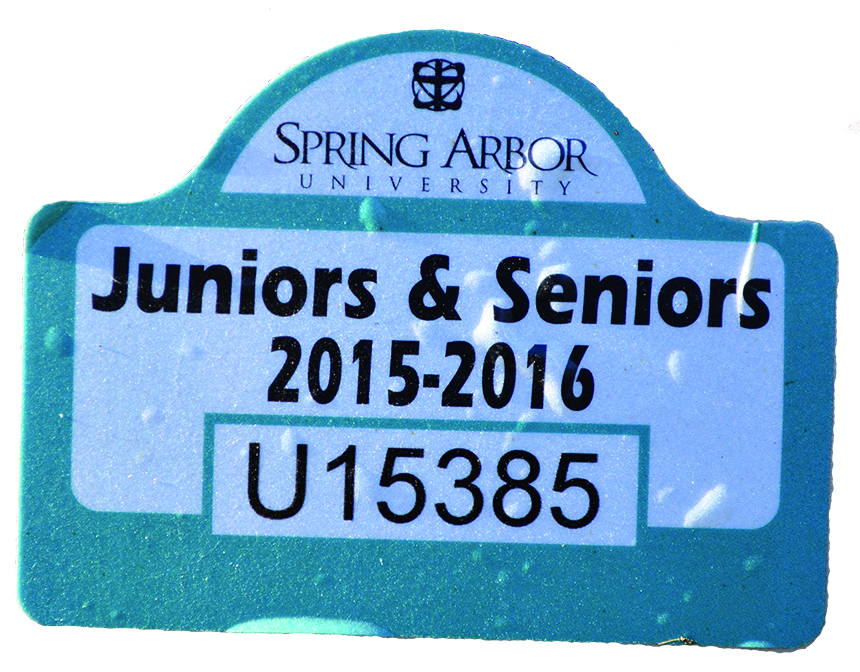
Director of Campus Safety Scott Krebill announced a new $50 fee for parking permits this year.

Director of Campus Safety Scott Krebill announced a new $50 fee for parking permits this year.

Prior to this semester, parking permits were free for all students. Krebill made this change in order to provide better service to campus.

“We have been aware that other schools charge a permit fee, and we could no longer afford to provide quality services while issuing the permits for free,” Krebill said.

Krebill researched other Council for Christian Colleges and Universities (CCCU) and found that most schools charged more than what Spring Arbor University (SAU) settled on.

“Parking permits at other schools range from free to up to $300 per year,” Krebill said.

Although parking permits have a cost, the price of parking tickets will remain the same. According to Krebill, SAU has some of the lowest fines for parking tickets, and a 50 percent break is given if paid within the first three days.

“I understand that we have a cheaper fee than most schools. What is frustrating and upsetting to me is that we were not informed until two weeks before school. There was no way to make appropriate plans for the year,” senior Emily Wilcox said.

According to junior Campus Safety officer, Lexi Horn, it was time for this change to occur, in order to continue providing necessary services. Campus Safety has needed more funds to update their equipment.

Funds from the permit charge are designated for Campus Safety use, not the general budget. Campus Safety plans to use these funds for improving some parking signage, replacing worn out equipment used to keep parking lots safe and every vehicle running smoothly.

This year, Campus Safety is able to add service hours on weekend mornings and replace their worn out patrol vehicle.

According to Horn, this new cost has nothing to do with the demolition of the tennis court parking lot, but more to do with a change in funding for Campus Safety.

Another parking lot is already in the works adjacent to the freshman lot. Juniors and seniors are being asked to park in the Gainey, Ogle and sophomore lots, as well as in the overflow lot behind the Fieldhouse.

All students are welcome to attend the “Know Parking” education blitz plan advertised the first two weeks of school. Posters and flyers will explain the changes and educate people on where to park and how to obtain the proper permit.

“Our goal is compliance, not enforcement, but this is how we have to manage a parking system with very limited space. It works if everybody does their part,” said Krebill.

Students are asked to take any complaints, questions, and concerns to Krebill at scott.krebill@arbor.edu. Campus Safety can also be contacted through the SAU mobile app.


Enrollment down: Faculty, staff suspect nostalgia

By Elise Emmert
Enrollment is down by 30 percent this year and it has not taken long for faculty to identify the reason.

Enrollment is down by 30 percent this year, and it has not taken long for faculty to identify the reason: a media-supported nostalgia for childhood.

“We haven’t seen numbers this low in over 20 years,” one admissions rep said. “It just wasn’t making sense. But then we started looking at what was going on in pop culture and I think we found our answer there.”

Many adults have been quick to blame the app Pokémon GO for making young adults more interested in gaming than in studies because of the app’s intense media coverage. But the app was released in the United States in mid-July, and student interest in responsibility and growing up had begun decreasing long before then.

flatlineonline4

“We were starting to see general decreases in student motivation as early as the end of the last school year,” one professor said. “It wasn’t just the typical ‘end of the year blahs,’ either. I believe the problem lies in something I’m calling the ‘childhood reboot.’ Movie remakes of childhood favorites are having just as much of an impact as apps like Pokémon GO.”

The sequel “Finding Dory,” for instance, found as much support from children as from the teens and young adults who grew up on “Finding Nemo,” the original film released in 2003. Disney’s live-action remake of their 1967 movie “The Jungle Book” had a similar reception, with 48 percent of the viewing audience being adults flooding the theaters to relive a part of their childhood, this time with better animation.

“Young adults are being encouraged by the media to hold onto their childhood and avoid growing up and taking on adult responsibilities, like getting jobs and planning for the future,” said another professor who looked into the issue. “That’s why fewer students are signing up for college.”

The nostalgia can take longer to catch up to some young adults than for others, but the effects are almost immediate. For example, one student was found by his Resident Assistant (RA) sitting alone in his room on move-in day because his roommate failed to show up.

“He seemed excited to come,” he said. “But a couple of weeks ago he started posting stuff about Pokémon GO, and I haven’t heard from him since. I think he dropped out or something.”

Another student was overwhelmed when her roommate carted in her complete collection of Disney movies.

flatlineonline

“She had, like, 70 DVDs and 40 VHS tapes,” she said. “Who even has VHS tapes anymore?”

In all, a total of 12 freshmen students failed to show up to campus for move-in day. Many more left their parents to unpack their things so they could go outside and see what Pokémon were hiding among the squirrels on campus.

Most professors believe there is no way to undo the effect of the nostalgia wave, and the only thing to do is wait for it to pass.

“Hopefully, people will get tired of playing the Pokémon game and we can get our numbers back up,” said one professor. “But until then, I have to defend my gym. Go Team Mystic!”

Save

SAU App Centralizes Information

By Katie Shotts

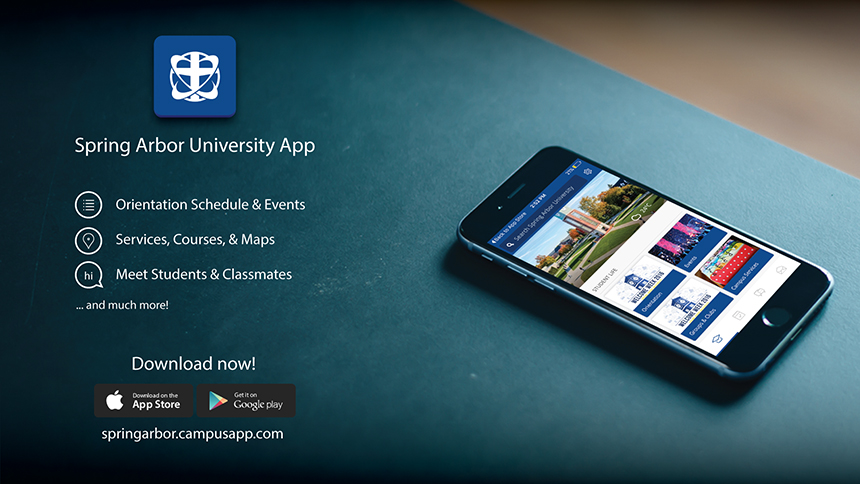
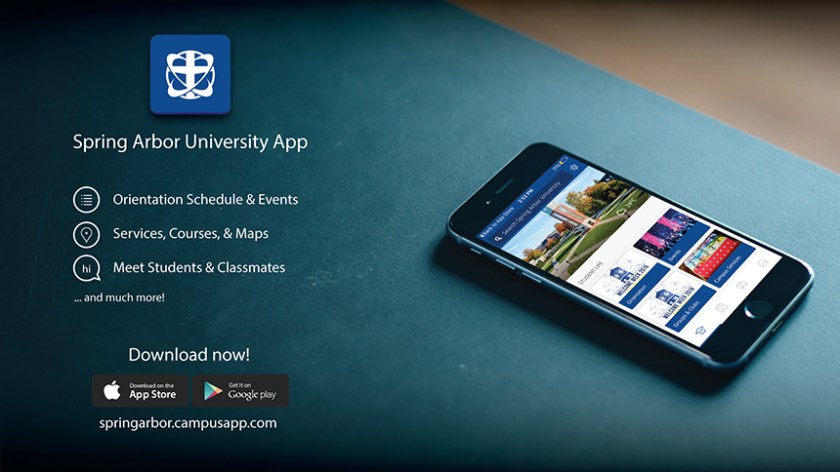
Spring Arbor University (SAU) launched a self-titled app this summer featuring information on all campus activities.

The iOS and Android app is free and available for download for students, staff, and guests alike, so parents or friends can stay connected to campus life. Its many features will improve communication and safety between students and campus groups.

Assistant Dean of Students Bobby Pratt was largely responsible for the development of the app. He said the goal behind its creation is taking information and “putting it in students’ hands.”

With the app, students can find schedules and locations of all campus events. A master calendar is also available from sports events to chapel speakers to club meetings. There is also an option to buy tickets for events such as Homecoming or shows.

Clubs and groups have their own page on the app and can keep students informed about meetings, practices and announcements through notifications by email or straight to a phone. A campus wide feed, similar to Facebook, also includes categories like “Buy & Sell,” “Lost + Found,” “Housing” and “Ride Sharing.”

Under “Campus Services,” students can find office times and locations including the Dining Commons, Cougar Den and Holton Health Center.

sau-app

In the past, Pratt said, communication to the entire campus during potential emergency situations could be difficult and possibly ineffective. Now, the app can send out campus wide notifications at a moment’s notice. The app also allows students to call Campus Safety with a touch of a button.

“It’ll be handy,” says Campus Safety Officer, Alexis Horn. “You can call us straight from the app. It’s a lot easier.”

The app is a continual work in progress, with a plan in place to add coupons from local businesses.

The administration hopes the app will be valuable to students, according to Pratt, they, “hope that it is another element to add to the community.”

Save

New SGA President and VP Q&A (extras)

You may have already seen Joey Dearduff (JD) and Alessandra Varelis’s (AV) interview in the current issue of “The Pulse” (go and pick up a copy if you haven’t yet!). Here a couple of extra questions that didn’t make it past the editing and cutting down process.


The Pulse (TP): What are some of the main goals you want to accomplish as president and vice president?

JD: Our slogan for the campaign and what it will be for SGA as a whole next year, is “Believe, belong, beyond.” Those three words encapsulate what we want to continue on campus and what we want to push for even more next year. Believe is Alessandra’s and my rootedness in Christ’s transformative power and the university’s desire to pursue Him, love Him and serve Him. Our belief in that empowers us to belong and to go beyond. What we desire for this campus next year is to belong, to build support among and between communities. Like Alessandra mentioned, empowering the people who feel as though their voice isn’t heard. To let them know that it is heard. So, belonging. Having people on campus know that they’re loved and taking that fellowship and that love we have for each other and having it transcend outside of these boundaries, outside of the Spring Arbor bubble into the world around us. That looks like service and worshipping not just in Chapel, and inviting the community here and going out and loving the community.

sga

TP: Have Ty and Holly given you guys any advice on what to expect?

AV: We’ve talked a lot with them. They’re great and very encouraging. They’ve said if we have any questions we can call, email or text them; even next year, when they’re gone, if we need any help or advice. I’ve met with Holly and she told me the beginning of the year is super busy so make sure we take the summer and plan and think through things, which is helpful because a lot goes on in the beginning of the year.

JD: Ty has been very encouraging but also very real. He mentioned the campaign and how exhausting it would be and how taxing. When I was elected, he pulled me aside and congratulated me and said, “Hey man, just know that when times get rough, and they will get rough, I’ll be here for you.” I’ve been communicating with Steven Hlatky, who was the student body president my freshman year, and we built a relationship my freshman year. Even Ben Frederick here and there a little bit. It’s been really cool how encouraging, how supportive, and how real current and past presidents and vice presidents have been for us.

By Amber Cekander

Save

Student created petition against trafficking gains support

You might not have noticed it, or ever thought anything of it. But when driving on Interstate 94 heading towards Spring Arbor, it’s almost impossible to miss certain billboards that advertise peculiar services.

Bold yellow and pink letters over a solid black background promote an Oriental Health Massage parlor. While seemingly innocent enough, the strange part comes further down the billboard where it says they are conveniently open seven days a week…until 1 am. Many people in the Jackson and Spring Arbor area know this as blatantly promoting human trafficking.

Currently, a petition with over a thousand signatures on it is being enforced through Change.org. When enough people have signed the petition, Michigan Representative Tim Walberg will receive a letter asking him for the removal of these billboards in Jackson.

“Every time I drive on I-94 I’m reminded that Jackson is a safe place for human trafficking,” said Dr. Matthew Hill, Spring Arbor University (SAU) professor of philosophy. “That sign is a physical reminder that the political leaders in the city of Jackson and Jackson county (many of whom claim to be Christian) are too scared or impotent to do anything about such depravity.” Opinions like these were expressed during one of Dr. Hill’s Ethics classes, which actually sparked the idea for the petition in the first place.

Josh Riddick, Lindsey Fluharty, Caleb Smith, Quinn D’Ascenzo, and Nikki Bonnema pursued the idea in Dr. John Hawthorne’s Spirituality, Faith, and Justice course as an “action” project. According to Riddick, his group was struggling to get things done with their other project ideas until the subject of the billboards came up in Ethics class and they decided to do something about it.

While there is currently no lawful proof that human trafficking takes place in these parlors, there has been questionable activity. Senior Lindsey Fluharty, as part of the action project, tried calling the phone number on the billboard to make an appointment, but reported that they wouldn’t let her do it and insisted she should make an appointment “for her husband” instead.

During further research of the subject, it was also discovered that the massage parlor has a profile on “Naughty Reviews.com.” A website who’s tagline is “Find naughty girls near you.” 

o[1]
A picture of the parlor’s entrance
In past interviews, SAU sociology professor Jeremy Norwood has said “There is no reason that a massage parlor should be open at 1 a.m.; nobody wants to purchase a massage at 1 a.m.”

At the time of this writing, the student-led petition currently has 1,157 out of the 1,500 signatures needed to continue the petition process. Dr. Hawthorne said he has started introducing the action projects to his class because his students said they “wanted to actually do something.” This is exactly what this group of students is doing, and if others continue to sign the petition, they will be too.

To look at and sign the petition, visit this link

By Nate Bortz

Save

Bubble Soccer

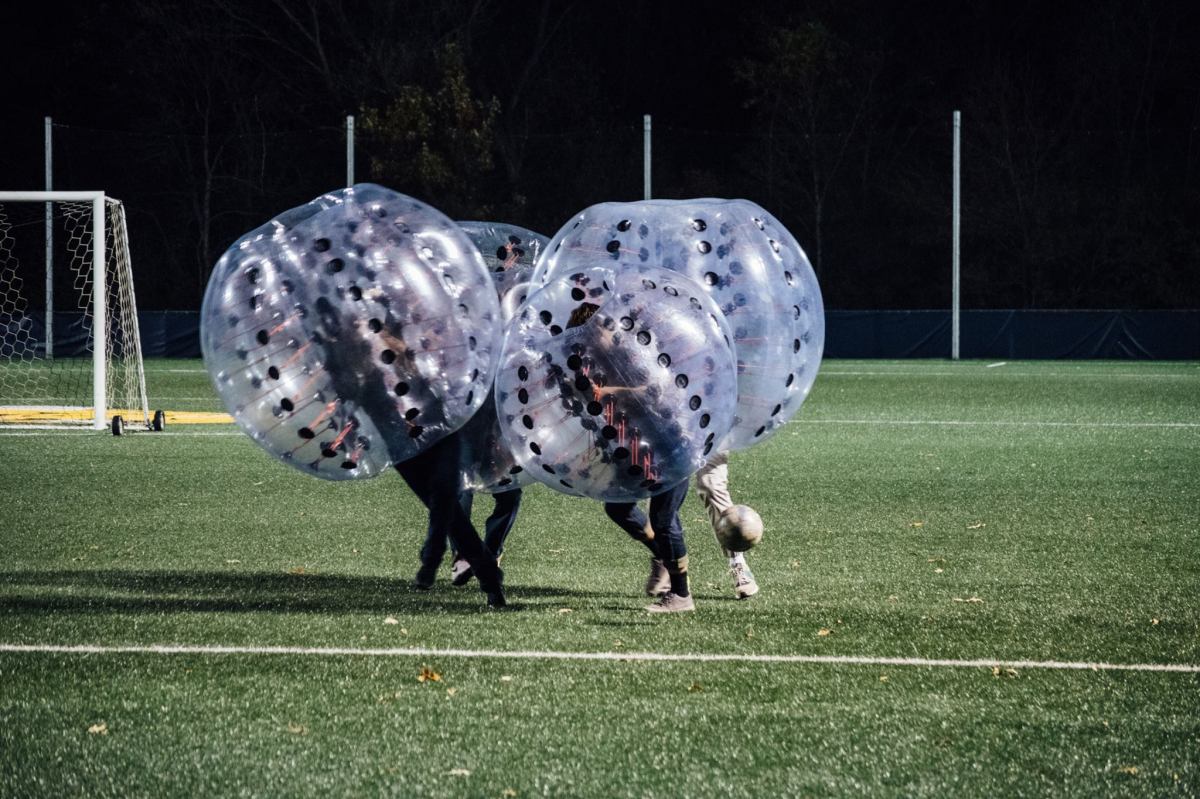
Eight people, inside giant inflatable balls, chasing a soccer ball around and more often than not, knocking each other over and sending the other person bouncing across the floor. Sound amusing? That’s Bubble Soccer, which took place in Dunkel Gym on the 14th. Teams of students who had signed up for the event in the previous weeks faced off in several games during the tournament, which was set up as a double elimination play. Even Student Government president Ty Davis joined the fun, along with several Peer Advisors and other students.

According to Student Government Association Intramural Sports Coordinator Austin Gatza, this is how the game workes:

There are 4 players on a team, and each has his or her own bubble, which is basically a large inflatable ball with an open center tube that the player stands inside, with straps and handholds to keep the bubble from being bounced off if the player is knocked over. The games were timed in two six-minute halves, and teams alternated play in order to give the others a chance to rest.

There were no out of bounds. Balls could be played off the walls and then if it went completely out of play, staff members or spectators just kicked the ball back into the game. I quickly noticed that this rule meant that even sitting on the sidelines was no guarantee of staying out of the action. Stray soccer balls and sometimes even players often bounced in the direction of spectators, and ducking was certainly a common thing to see when a the soccer balls were kicked more wildly than usual.

While the supposed object of the game was to kick the soccer ball into the goal, the game sometimes became more of a human bumper car tournament, as students attempted to bounce into each other hard enough to knock their opponent over. Getting up after being knocked down seemed to be quite a challenge. Players bounced and rolled across the floor trying to find good footing only to be slammed into again seconds after getting up. Some even became wedged in the goals when their bubble was knocked into the net.

Bubble soccer was certainly a very amusing event, both to watch and to be a participant in. This event gave students a fun and more protected way to participate in a sport that they normally do not play.

By Heather Clark

Student uses “reply all” to propose to girlfriend

During a mostly quiet afternoon, the most interesting thing to happen on campus since the silverware incident intruded its way into the lives of students and alumni alike.

Students who don’t check their emails will probably never bother again due to a flaw in the new email system. It is now possible to use “Reply All” on emails sent to the entire campus. Phones buzzing and notification ringtones were heard round the plaza as the entire student and faculty mailing list was set ablaze with tired memes and fabricated “campus news” twitter sources.

From what started as an innocent plea stating,

“This is an advisory email to please avoid hitting “Reply All” to campus-wide emails.”

eventually turned into cries for help including,

“PLEASE REMOVE ME FROM THIS EMAIL STRING!!!”

and

“This has veered wildly from ‘moderately amusing’ into ‘STAHP. PLEASE STAHP.’”

The most powerful words spoken in this email onslaught were

“Why am I getting this?”

In a truly unsurprising turn of events, someone took the liberty of using this newfound platform to propose to his girlfriend using. Getting ahead of #RBS (ring by spring) and hoping the wide audience will lower his chances of rejection, the email said

“Ever since I saw you cut the head off that chicken at Cedar Bend, I knew you were the one I want to pursue life with. (Name withheld), will you marry me?”

The email, soon deleted, was both moving and pathetic in the eyes of the SAU campus.

This incident has undoubtedly inspired people working at IT to get off Reddit and see what they can do to fix this, but until then, the epidemic shall continue.

#SAUFlatline

By Nate Bortz

Writing Center “Promotes Task of Writing”

History

Spring Arbor University’s Writing Center seeks to help students become better writers through individual consultations. According to Associate Professor of English Dr. Jeff Bilbro, “the Writing Center is an opportunity for learning.”  Aside from copy editing, the Writing Center helps students with thesis, organization and clarity.

The Writing Center’s roots are from the former writing assistance program “Write Right. ” Bilbro said before he came to Spring Arbor, the writing program was just a few tutors.  Professor of English and Chair of the Department of English, Dr. Kimberly Moore-Jumonville said “writing is part of life” and the English Department has been working hard in the past few years to improve writing skill and prepare students for life after college.

The English Department developed the required English writing classes as well as the department exams to ensure students are competent. They also created a faculty position where the professor would teach 18 credits and the remaining time would be spent building up a new writing assistance program, now called the Writing Center, instead of teaching the usual 24 credits.

In 2012, Dr. Jeffrey Bilbro was hired to fill this position.  He had experience working in the writing center at Baylor University where he did his graduate work and developed a passion for improving students’ writing. The new Writing Center began in the basement of the student center and moved to their current location on the main floor of the library.

Current

The current Writing Center tutors are different than the Write Right tutors.  Bilbro handpicks them from students in his classes and recommendations from other professors.  Interested students fill out an application and submit two essays to showcase their writing competency. Then Bilbro interviews the students.  Bilbro said he looks for students with strong writing ability and good people skills because they need both to be successful tutors.

Picture 1

[Current Writing Center tutors, left to right, Bethany Hart, Hannah Dennings, Morgan Foster, Erin O’Connor, Carly Thompson, Kayla Chenault.  From The SAU Writing Center Facebook page.]

Once hired, the tutors take a one credit class that teaches writing pedagogy and tutoring theory with Dr. Bilbro.  Each new tutor is paired with a veteran tutor who acts as a mentor and observes tutoring sessions and gives feedback to the new tutor.

The Writing Center tutors handle approximately 600 appointments a year. Kayla Chenault, a senior writing tutor, said a tutor usually has two or three appointments in a day, but she remembers a time last semester when there were three tutors working and they had 41 appointments total that day.  The Writing Center is normally open until 5 p.m. but on that day they stayed until 10 p.m.

Chenault organized both of the Annual Research Symposiums. To take part, students submit 5-10 page research papers.  Chenault removes the names from the papers so submissions are anonymous in the grading process, and copies are made for the other Writing Center tutors to grade and discuss. The papers are graded on precision of language, originality of topic and the actual research.

The Writing Center also provides writing workshops every semester based on the most common problems students have during sessions.  Chenault presented on Critical Reading because many students struggle with knowing what information is important in a text. The other presentations addressed the placement of commas, writing style and thesis composition.

Dr. Moore-Jumonville said Bilbro “promotes the task of writing.”  She is excited to see his newest initiative take off. This year was the first Writing Intensive trip to Cedar Bend, where students and faculty were able to relax, write and offer feedback to each other.  There were 18 participants this year and Moore-Jumonville said she hopes that the trip will have enough funding to become an annual event.

Check the Writing Center out on Facebook.    https://www.facebook.com/TheSAUWritingCenter?fref=ts

By Jenny Croizer

Save

SAU Budget Cuts: What We Know

Photo via arbor.edu
Photo via arbor.edu

Facts:

Spring Arbor University (SAU) has laid off 21 full-time staff members in the wake of a five percent budget cut due to decreased enrollment.

In addition to the 21 full-time positions, several open positions will also not be refilled and some current positions have had hours reduced.

Ellis said over the last five years there was a 10 percent decline in credit hours produced and a six percent reduction in SAU’s net tuition revenue.

In a letter to the student body, Student Government Association (SGA) president, Benjamin Frederick, said there has been an 11 percent drop in revenue over the past three years.

He attributed this drop largely to “SAU global which drives 65 percent of the University budget.”

SAU Global encompasses a variety of online and remote classes. At its creation a statement was released by the university saying, “SAU Global will play a significant role in our service to traditional and nontraditional students seeking face-to-face, online and hybrid educational pathways to their personal and career goals.”

Questions:

A lot of questions have been raised in the wake of the cutbacks and we at “The Pulse” would like to address as many as we can with what we know.

1) Why are we having cutbacks right after building things like the globe statue and new tennis courts?

When people donate to the university there are multiple ways to allocate funds. Creations such as the globe and the new tennis courts came from donations specified for these constructions; essentially the donor said, “I’m giving the school X amount of dollars to build tennis courts.” In such instances it is illegal to use those funds for other purpose.

2) Are those laid off getting severance pay?

Yes, those laid off are being provided with severance pay in accordance with state law and SAU policy.

3) What was considered in deciding who to lay off?

When we at “The Pulse” asked Damon Seacott, SAU Chief of Staff, how the decisions of who to lay off were made he said, “Decisions of cuts were made strategically by the administration.  We considered:  How can we continue to serve our students at the highest level?”