Phishing emails continue to test SAU cyber security

By Kayla Williamson

Every morning, Chief Information Officer Chris Blackstone runs a report that pulls a list of all email accounts that have forwarding rules set up. He then looks at the name of each email account that is forwarded for any clue it might be a fake email.

“The challenge with all this is that it’s kind of like a dam that’s cracking and trying to put your finger in the holes,” Blackstone said. “It’s kind of like playing whack-a-mole.”

On July 31, the first of many phishing emails were sent to hundreds of Spring Arbor University (SAU) students. Over 200 accounts were compromised in this phishing attack. Emails varied from fake Dropbox links, warnings your email is going to be disabled and alerts that an account is over its email quota.

Although these kinds of scams are common with other schools using Microsoft systems, there is not much anyone can do to prevent or to protect against the attacks once they start and have compromised an account. So far the Information Services team has spent over 300 hours trying to fix the problem.

“It’s consumed my August,” Blackstone said. “It’s pretty much all that I’ve been working on in August. I was on vacation and got pulled back into doing stuff. It’s been quite an ordeal.”

Computerwithemail

Unlike hacking, phishing emails do not have access to users’ information unless the users give it away.

Blackstone said it is different from a hack because people give their information willingly, whereas in a hack someone penetrated the network to find information.

Once the phishing source has a student’s information, he or she has access to all of the student’s records. A student’s username and email are just as valuable as a social security number, Blackstone said. But since these attacks were random, no account changes have been reported. But this summer there have been reports of students not receiving financial aid information and faculty not receiving emails for five days.

This is why Blackstone runs a manual report on all email accounts with forwarding rules. Attacks have forwarded emails from an arbor.edu account to a fake email. After 22 accounts were reported not receiving emails, that was the point when Blackstone said they had the potential for significant damage.

The solution: a password reset.

On August 25, all students, alumni and adjunct instructors had to reset their passwords. Since the password reset, there have been less attacks.

“The frustration to me now that we are working hard to lock our stuff down, it’s how many other organizations aren’t,” Blackstone said.

While SAU may be strengthening its own cyber security, a network is only as strong as its weakest link. Groups SAU partners with, like BankMobile, NAIA, Tree of Life and more, can be weak points in the security depending on their own IT precautions.

Blackstone has already reached out to the NAIA and the Commissioner of the Crossroads League because SAU accounts marked emails from them as spam because their system was not configured correctly. After Blackstone reached out to their IT team, the problem was fixed within a day.

While attacks may be slowing down, Blackstone still encourages students, faculty and staff to never click on links or give out login information unless it is through the portal. Because of these attacks, Information Services has updated the portal login. Instead of a pop up asking for a username and password, the portal opens a new login screen with the clock tower on it.

“Knock on wood, we’re seeing fewer of [the email attacks],” Blackstone said. “I think we’ve got greater security in place. Once we turn on the next step of the security, I think that will additionally help keep stuff out.”

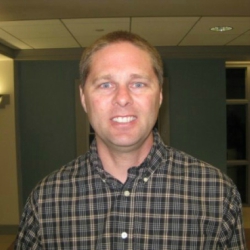
Chemistry and the fingerprints of God: How new chemistry professor found SAU

By Caralyn Geyer

For college students, it can be typical to wonder, “How in the world did I get here?” Many students question life and seek answers to thought-provoking questions, searching for purpose and meaning throughout those first few years. It can leave many students asking themselves, “Does anyone else feel the way that I do?”

Michael Nydegger asked himself these same questions as a college student at Southwest State University in Minnesota. Looking back, he said he never would have pictured himself where he is today as an Associate Professor of Chemistry at Spring Arbor University (SAU). He started his higher education by getting a Bachelor’s degree at Southwest State University, though he did not pick chemistry as a major until his junior year.

“They forced me to pick a major, so I picked chemistry so I could still finish in four years,” Nydegger said.

pic
Michael Nydegger, the new assistant professor of chemistry at SAU.

Nydegger particularly liked physical chemistry, and took many courses in this area his senior year of college. He was also good at math, so a chemistry major seemed like a logical choice to him. His parents also inspired him to pursue chemistry because of each of their differing beliefs concerning evolution and creation.

He continued in his schooling to get a Master’s degree from the University of Nebraska and did his doctoral work at the University of Iowa, focusing on New Probes for 2DIR Spectroscopy for his dissertation. According to NASA, spectroscopy is a scientific measurement technique that measures light emitted, absorbed or scattered by materials, which is then used to study, identify and quantify those materials.

After his schooling, Nydegger began his teaching career by working at community colleges, which eventually led to his job at SAU. Nydegger said he had never wanted to teach at a Christian school before coming to SAU because he wanted to share the gospel with people who have not heard it. But his friends encouraged him to apply to Christian universities, so he decided to apply to SAU.

“[My friends] offered a new perspective and thought that maybe this is where I should be,” Nydegger said.

After working at SAU so far, Nydegger said he enjoys the community the campus brings and feels like his co-workers are his family. Throughout his various classes, Nydegger said his goal is for his students to get outside their comfort zone within the framework of chemistry.

“I want [students] to see the fingerprints of God on the periodic table,” Nydegger said.


Stats and Facts

Favorite Class to Teach: CHEM200, because it is more detailed and the “fingerprints of God” are more visible.

Favorite Experiments: Ammonium fountains and esterification reactions.

Favorite Movies: “Jaws” and the “Lord of the Rings” series.

HobbiesTrout fishing, hunting and traveling.

Something New: He’s trying out making maple syrup for the first time this year.

Something Interesting: He once saw a humpback whale from about twenty feet away while in a sixteen-foot boat.

Sioux spears, Curious George poems and a scary-looking dissertation: an inside look at Carol Green’s office

By Kayla Williamson

Across from the President’s office and past three cubicles lies the office of a Texan who likes snow.

Inside, you can find an array of history books including an intimidating leather binder-bound version of a dissertation. Leaning against the shelves of books sits a Sioux spear. Framed on the desk are pictures of three girls and a Curious George quote about adventuring into the unknown.

After moving from Longview, Texas this summer, the new Vice President of Academic Affairs, Carol Green, found Spring Arbor as a new adventure for her and her family. Last year, she had a feeling God was calling her north, so when she saw Spring Arbor University’s (SAU) job posting, she applied.

New VP of Academic Affairs, Carol Green, speaks about caring for her husband after he was diagnosed with cancer in Convocation.

After working five years at LeTourneau University, Green took a step back from high education to care for her husband who was diagnosed with cancer in 2013. She told her story about her husband and the struggle to work through grief at Convocation.

Although she did apply for more jobs in higher education after her husband John passed away in 2015, she felt like the time was not right to move. Her second eldest daughter, Amanda, had two more years of high school.

“I really felt that the girls needed more stability at that point,” Green said. “They had a really strong youth group. And I had a lot of good friends who were helping me through this too.”

Green journaled a lot during that time, and now four years later, she said she is 80 percent finished with a rough draft of a book about her experiences.

As for Spring Arbor, she has been an official SAU employee for three weeks, and she is still trying to figure out which buildings to go to for meetings.

“There may be funny stories once the snow hits,” Green said. “I think I like the snow, but we’ll see.”

Stats & Facts

Which Hogwarts House would you be in? Gryffindor.

How many years have you taught? 17 years.

What’s your Myers-Briggs? ISFP, though I fall in the middle for most of them.

What’s the last book you read? “The Lighthouse Chronicles” by Flo Anderson. And I reread “Lightning” by Dean Koontz and “Waking the Dead” by John Eldredge.

Last TV show you watched? America’s Got Talent.

Favorite judge? Simon.

Lord of the Rings or Harry Potter? Lord of the Rings.

Anything else? You should probably know I’m very competitive and I love a challenge. I like doing fun, quirky things. I like surprising people too.

New Wi-Fi installed on campus and other tech news

By Kayla Williamson

Over the summer, the Information Services team launched a $1 million project to overhaul Spring Arbor University’s (SAU) Wi-Fi network.

Completely funded by the Information Services budget, this network rebuild replaces every Wi-Fi box on campus and more than doubles the number of access points on campus. This means Wi-Fi signals should range farther and be stronger across campus. The dorms’ boxes have already been replaced, and some are in rooms instead of in the halls. The rest of the residences should have the new Wi-Fi installed by the middle of October.

wifibox
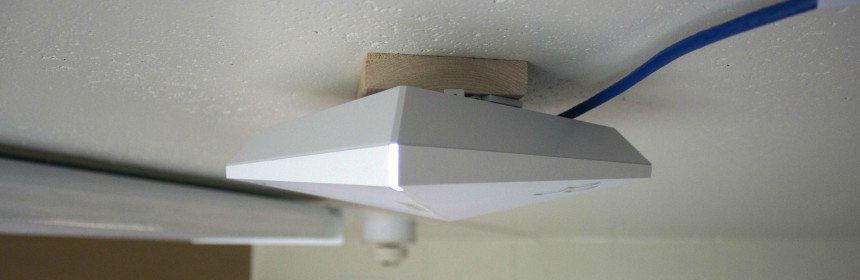
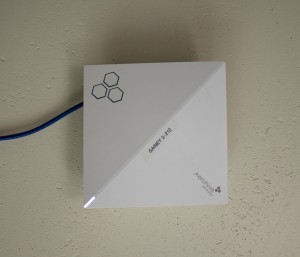
New Wi-Fi boxes installed inside dorm rooms.

The Information Services team, led by Chris Blackstone, hired a third party to conduct a complete survey of campus to find the worst Wi-Fi spots in June. Now there are extra wireless adapters focused on those areas, as well as high-traffic spots like the volleyball courts and the oak tree.

“It’s huge for us,” Blackstone said. “It will give us the first modern, robust wireless networking system pretty much since it was installed.”

The next steps include finishing the villages and apartments and the administration buildings on campus. All of the buildings on campus and at other university sites should be done by Thanksgiving.

If anyone has issues with the Wi-Fi, Information Services wants to know, Blackstone said. Now it is easy to submit issues or suggestions through the new self-service portal. Wondering when your apartment or building will have new Wi-Fi? The My Support portal has a page dedicated to keeping everyone up-to-date on projects like the network rebuild. Look for the link soon on the SAU App.

NewMySupportPortal
What the MySupport link looks like on the mySAU portal homepage.

The new portal also includes how-to articles so students can find answers to accessing their email quarantine, adding their email to their phone or connecting dorm printers to their laptops.

The new Student Health Portal available on the mySAU homepage. Information Services created it over the summer so students can schedule appointments, submit paperwork and more.

“When people are able to answer their own questions, they’ll get to an answer a lot more quickly than when they have to wait for us,” Blackstone said.

Later this fall, students, faculty and staff will have to log in to the Wi-Fi once to access Wi-Fi. Adding authentication allows the Information Services team to give more bandwidth (faster connection) to those staying on campus while the guest Wi-Fi has less bandwidth and access. The entire campus also now has one full gigabyte of bandwidth.

The Information Services team has a lot of projects in the pipeline this year. They have already launched a health portal where students can schedule appointments at the Holton Health Center. Later this fall the team will be rolling out a new mobile-friendly version of the portal as well.

Blackstone’s professional background is in digital marketing and the web, so he wants to make sure tools are built for mobile.

If anyone has any Wi-Fi or computer questions, submit a ticket on the new portal or see the Information Services office in the lower level of Deitzman Hall across from Gainey.

Pranks, Pizza and Preaching: When Faculty were Freshmen

By Luke Richardson and Emily Spencer

Finding out some of our professors went to Spring Arbor University (SAU) as college students is like that time in first grade when you found out your teacher doesn’t actually live at school. Here are some stories from when professors and faculty really did live at school.

Mary Darling, Associate Professor of Communication 


Darling

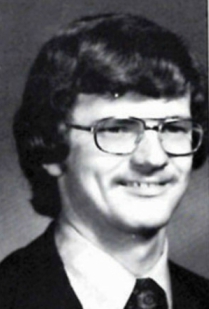
Mary Darling transferred to Spring Arbor for her second year of college and did not know what to expect.

“It was the mid 1970’s at the height of the ‘Jesus Movement,'” Darling said. “Living in a triple on Delta Three in Lowell Hall was a challenge. My roommate thought I wore jeans too much so she put them in the freezer in our room so they would be too cold to wear.”

In addition to her rooming woes, Darling remembers veggie pizza made with veggies left over from the previous week’s meals.

“DC pizza now is so much better,” Darling said. “Just don’t put any cauliflower on mine.”


Ron Kopicko, Chaplain and Instructor in General Studies 

Kopicko

Ron Kopicko originally came to SAU because the man who led him to Christ became the Dean of Students. One of the things he remembers most are the relationships he formed, which still last today.

“There was a real sense of ‘we’re not in this alone,'” Kopicko said.

On the weekends, Kopicko and a friend would hitchhike as far as they could and be back before classes on Monday. They carried a sign with the word “West” on one side and “East” on the other and flipped a coin to see which way they would go. He shared Jesus with people along the way.


Paul Patton, Professor of Communication 

Patton

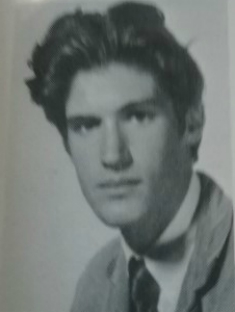
In the fall of 1970, Paul Patton attended Spring Arbor as a freshman baseball player. Patton was assigned to Gamma One in Lowell Hall, the only freshman student on a senior floor.

He did not find out until a year later that his baseball coach from high school warned SAU that Patton might have had a drug problem. The admin agreed the seniors should keep an eye on him, though Patton did not actually struggle with substance abuse.

“Finding out blindsided me,” said Patton. “I felt isolated and alone at first, but I quickly made new friendships, played baseball, and Christ was more alive in me that first year than ever before. I loved it.”


Chuck White, Professor of Christian Thought and History 

Chuck White

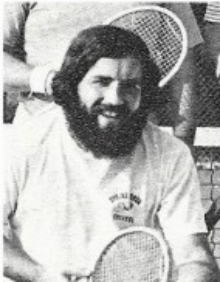
Chuck White knew he would attend SAU since he was about four years old, and campus was quite different when he arrived in 1967 compared to now. Food was served in the basement of Muffit rather than in the Dining Commons, Deitzman was the brand-new library and freshmen students had a 9:30 p.m. curfew designed to encourage studying.

One night while White was a freshman, he was out on the town with some senior friends. Since upperclassmen did not have a curfew, no one was watching the time, and before White knew it, he was out too late. However, White’s RA did not check people’s rooms, instead choosing to leave his door open and listen for those who came in late. Luckily, White’s room was on the corner of the building.

“I climbed up the fire escape and went in through the window,” White said. While other freshmen got caught, White was safe thanks to his alternate entrance.


Dan Runyon, Professor of English and Communication 

Runyon

While many professors viewed college as a privilege, others tended to lean toward feelings of obligation.

“I never wanted to go to college.” Dan Runyon said. “My mind was made up. I wanted to pursue a factory job, but my father wouldn’t hear of it.”

Nevertheless, Runyon loved spending time sitting in his dorm hallway and talking with his floormates. During his time as a student at SAU, Runyon grew in his relationship with Jesus Christ and now encourages his students to do the same.


Jeremy Norwood, Associate Professor of Sociology 

Norwood

The silverware debacle of 2014 was not the first time that students played a prank on the DC.

When Jeremy Norwood was a student at SAU, the DC had cardboard cutouts of cereal mascots on display. Some of Norwood’s floormates decided to kidnap the cardboard cutouts and hide them in the ceiling tiles of their room in Ormston Hall. According to Norwood, the DC was quite upset at the loss of Tony the Tiger and Toucan Sam.

“We would get them out and take pictures of these things in distress,” Norwood said. They would give the mascots speech bubbles and arrange them for the pictures as though they had really been kidnapped. After the pictures were developed, they mailed them to the DC to heighten their frustration even more.

New Microbiology Lab: Weatherwax Foundation Sponsors Upgrade

By Nathaniel Salsbury

The Department of Biology and Chemistry upgraded one of its labs in Whiteman-Gibbs over the summer to create a more modern environment thanks to donors and a grant. Spring Arbor University (SAU) decided a renovation was needed because Whiteman-Gibbs was built nearly 50 years ago.

“The facilities are older than I would like and so I’m rejoicing that we have a refurbishing right now,” Bruce Baldwin, chairperson of the department of biology and chemistry, said.

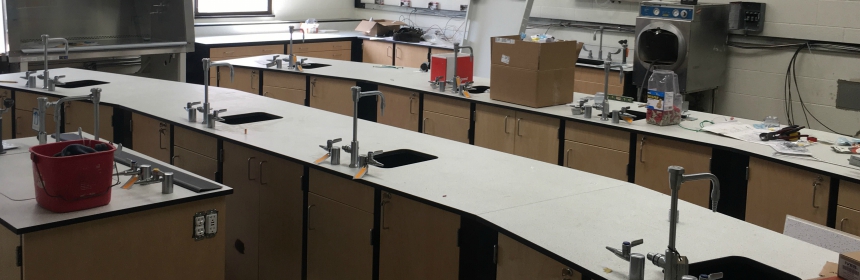
The renovated space, officially named the Weatherwax Microbiology Laboratory, features new equipment for students and new surfaces to work on. The new tables provide more open sightlines for the professors to supervise the students. They will also get to interact more with their instructors as the new tables provide more working and walking space. New lights were also installed and changed from fluorescent to LED. The lights will last longer and are easier and safer to dispose of once they do go out.

Shortly after students finished the school year and moved off campus, the project began. Baldwin said the goal is to finish the renovations before classes begin. However, a backup plan is set in place for the lab’s first classes in case construction is not completed in time for school.

“You can never guarantee when a project is going to finish,” Baldwin said. “It’s a good target and you do your best and then you react if things don’t work out.”

In the middle of the 2016-2017 school year, SAU applied for a grant from the Weatherwax Foundation, the namesake of the new lab, with the hopes of renovating one of the labs in the science department to create a more modern, high-tech microbiology lab.  The Weatherwax Foundation is a Jackson-based organization that provides funding to help strengthen various educational programs in the county.

Chief Financial Officer and Vice President for Finance and Administration Kevin Rose assured that the foundation funded 100 percent of the renovation.

Although the microbiology lab is currently the only space being funded by the Weatherwax Foundation, the plan is to eventually refurbish the other laboratory spaces in the building. Whether these plans will get the funding from the same foundation or elsewhere remains to be seen, but the hope is to receive additional donations after the school is able to demonstrate the functionality of the new lab.

Sand, turf and sweat: Intramural season has arrived

By Celeste Fendt

At Spring Arbor University (SAU), intramurals are not all about winning. They are recreational sports outside of the school’s athletic department meant to bring people together and grow the community.  In addition to the healthy competition, intramurals promote exercise and outreach among students, since students from all grades can participate, including commuters.

“Our goal is to foster community and bring people together from different areas of campus to provide fun and exciting events,” Cecilia (C.C.) Said, the Intramural Director for the Student Government Association (SGA), said.

Teams are determined by SGA and are generally split up by floor, house or wing. However, some sports, like ultimate frisbee and basketball, give students the option of creating a co-ed team. Commuters also have their own team, but an individual commuter student may be drafted by another group. Faculty members, their spouses or even the president can be drafted as well.

Each season typically runs for three to four weeks. One or two weeks at the end are reserved for a single or double elimination tournament, depending on the sport and the student turnout.

Said has been involved with intramurals since her freshman year. For her first two years at SAU, Said took on the role of floor captain for the dorm she lived in.

Because of her love for sports, Said decided to apply for the Intramural Programmer position for her junior year, which is more hands-on.

“[The programmers are] the ones who are out on the field making sure that everything’s going well,” she said.

Now, as a senior, Said is the Director of Intramurals for SGA. Her job consists of creating schedules for all the intramural sports seasons and making sure the intramural mission is carried out.

Said encourages all students to participate. “We’re all there to just have a good time and make new friends,” she said. “Just go for it.”

The first intramural event, the Block Party, includes sand volleyball and basketball tournaments. It will take place on Saturday, Sept. 9. The first day of the sand volleyball season is the following Monday, Sept. 11.

For more information on how to become involved, come to the first volleyball game, visit the SAU app or contact an SGA representative.

Extended SGA President and VP Q&A

By Elise Emmert
This is an extended version of our interview with Richard Harris and Catherine Galloway, the newly-elected SGA President and Vice President.

By Elise Emmert

This is an extended version of our interview with Richard Harris and Catherine Galloway, the newly-elected SGA President and Vice President. To read the rest of the interview, check out page five of The Pulse.

The Pulse (TP): How do you think your involvements in activities on campus, like Enactus and in the Office of Intercultural Relations (OIR), have prepared you for this leadership role?

Catherine Galloway (CG): I feel like being an Intercultural Advisor (IA) has given me a look into what leadership looks like on campus, around events, what weekly meetings look like, and what the structure on campus looks like.

Richard Harris (RH): In Enactus we do a lot of stuff in the Jackson community, so I have that relationship outside of Spring Arbor. That helped me build relationships within the school because not everybody in Enactus is a business major. So that branches me out beyond what I’m studying, and helps me develop more friendships.

TP: What skills do you think you bring to the table, other than what you have learned in Enactus and as an IA?

RH: Personally, I believe our social skills. If you can’t really tell we’re people’s people, and we’re very outgoing. That could actually be a big factor when it comes to standing in advocacy for certain things that the student body wants.

CG: I feel like working for OIR here and doing three and a half years of missions in high school in another country has taught me about what diversity looks like, even on a campus like this, and how to pull it together. (It taught me how to) be able to listen to students and be able to hear what they want and where they’re coming from.

RH: That amplification of diversity is something that we really enjoy, obviously, in ourselves. I’m an African-American male, if nobody knew that (laughs). That’s part of who I am, but that’s literally just one part of who I am. The other sides of who I am, I am a spiritual believer, I have a solid foundation in Christ, I love God with all my heart, mind, and soul, and I plan to radiate that love in this position.

TP: How do you plan to show Christ through your administration?

RH: I would really love to amplify the knowledge of Christian ministries that are here on a Christian university. There’s so many, and I believe the only thing that’s lacking is on the student’s part. There’s a lot of phenomenal ministries, they just need student participation.


Raining Dogs on Your Cat Parade

By Dane Parsons
A look on the divide between cat and dog people.

By Dane Parsons

In most things, there are two types of people in the world. Whether good or evil, Democrat or Republican, to some, the struggle becomes most significant between cats or dogs as a domestic pet. My father liked to claim he was an anomaly—that for him no pets was the best option.

He eventually caved to the constant pestering from his three kids and our mother, and our family welcomed the first (of many) pets which would populate the Parsons’ household. We have had cats, dogs, hamsters, fish, parakeets, turtles, hedgehogs and even opossums. All of this is to give you, dear reader, a good look at the kind of household I grew up in, to hopefully have a better understanding as to my perspective on this issue: one that has plagued our world for generations, the fight between the feline and the canine. It is a truly absurd war when you think about it, being forced to choose between two very different types of animals with different temperaments who could suit people differently depending on their personality type and living situation. But the war rages on, and still we find the divide growing stronger between them.

My goal here is to look at the possibility as to why this divide between people and animals has been created and see if perhaps there can be some reconciliation between these two fronts.

In my own personal experience, it seems to me people are more likely to be judgmental towards cats. Now one might ask where this resentment was born from – but I think all of us have had that one experience with one bad cat. You know, the one that lives at your great aunt’s, and who seems to be the antichrist only contained by a layer of fur and hates everything good or nice in the world. And the thing is, most cats are not like that at all. Though cats perhaps do not crave as much attention from people. In fact most cats still enjoy human affection on a less extreme basis then dogs. So why is it wrong for people to prefer a when it could be a better fit for them personally, regardless of which animal is “better” in their opinion?


web-post-dog-cat-diff-365x252-opt
Photo from thebark.com


On YouTube, a three-part video series made by Fatawesome called “Cat-Friend vs. Dog-Friend” humorously explored what it would be like if your roommates acted like a cat and a dog, overexaggerating on both sides of the spectrum. In the YouTube comments I noticed there was a significant reaction against how cats were being portrayed, complaining about how your cat shouldn’t hate you. There was also a great number of comments about how people shouldn’t fight over which animal is better, and how both animals have good aspects about them.

In closing, I would just like to say whether you are a cat person or a dog person, to recognize it’s okay to accept that not all animals might be right for you or others. It also could be good to think about the qualities as to why someone might prefer one animal to another, and hope live in harmony over this issues. That one day everyone could say every pet has their upsides and downsides. Unless, of course, you’re my dad, who still vehemently argues that all pets only have downsides.

Applying for Community: the reason behind those yellow sheets

By Alex Anhalt
It is time for housing applications again at Spring Arbor University (SAU)

By Alex Anhalt

It is time for housing applications again at Spring Arbor University (SAU).


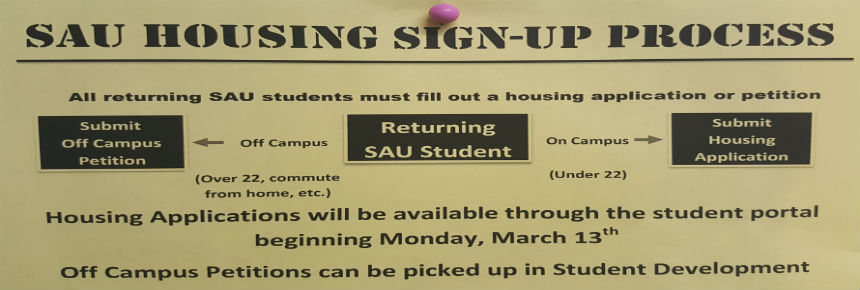
The bright yellow sheets popping up all across campus prompted roommates-to-be to make last-minute plans, and on March 13, the first applications for K-Houses were available. For the next few weeks, students will be matching up with friends and filling out one form that will help determine their living quarters for the 2017-2018 academic year.


When it comes to housing signups, there are many dates to remember, options to consider and intricacies to iron out. However, Associate Dean of Students Bobby Pratt, head of the housing application system, said the complex workings of the application system actually work to the student’s benefit.


Pratt said most schools will leave it “to the luck of the draw.” This lottery system “lets them assign living options in one fell swoop,” Pratt said, but student requests are granted at random.


Pratt believes there are better alternatives that give students more say in where they want to go, even if those methods are “a little bit more work on our end.”


Applications are given priority based on three main categories: seniority, roommate plans and squatter’s rights.


“We start with what we consider upperclassman housing,” Pratt said. He said the K-Houses and villages are designed to give seniors the chance to live more independently, and since they tend to be the most sought-after options, those applications are available first. Priority is also given to students staying in the same place because Pratt thinks they should be rewarded for “what they’ve invested in that community.”


Applicants who suggest a correct number of roommates will also receive priority, Pratt said, since it saves the administration the challenge of partnering students into well-matched groups.


Every time applicants learn whether or not their application was approved, they are given twenty-four hours before the next applications open. That gives students a chance to shuffle roommates and formulate a new housing plan before the next option is available.

IMG_1621
Photo by Alex Anhalt


Pratt said SAU’s housing system is not just designed to cater to the student; it also maximizes community.


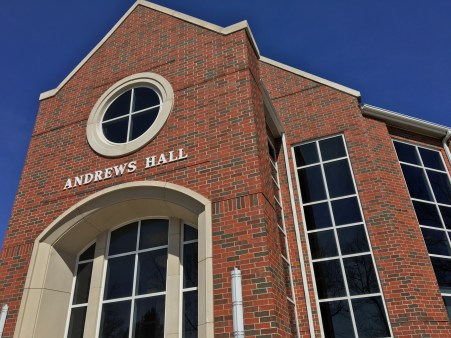
Andrews Hall, a residence hall added to SAU in 2010, is one example of this philosophy. According to Pratt, most universities would avoid building new residence halls with communal bathrooms, but SAU wanted to establish a brand-new community.


Community is also the reason freshmen can’t live in the K-Houses or Villages.


“We want our underclassmen to make a lot of connections and feel like part of the campus,” Pratt said. “We understand that as students get older, they’ve done that, they’ve identified the group that’s going to be their support.”
Village applications close on April 6, and students can opt for any of the residence halls starting April 13.