The SAU Admissions Team has joined TikTok and is creating fun videos to get high schoolers interested in attending the university.
By: Elizabeth Pruitt
If you’re on any social media platform, you’re probably aware of TikTok, the short form video app. While TikTok may be known for its trendy dances and comedic videos, the app has surged in popularity as a marketing platform.
As of September 2020, it is estimated that TikTok has 800 million active users across the globe. It would be foolish to not take the opportunity to create a TikTok account for your business. Spring Arbor University (SAU) is no fool.
This @teamsau TikTok has over 124,000 views, and 15,400 likes and is only their second video posted.
SAU Admissions Office’s TikTok account is @teamsau. On this account, the Admissions Office posts a variety of videos, consisting of the “Why I Choose a Christian University” series, student quiz shows, and roommate challenges. The Admissions Office staff, professors, PAs, SGA staff, donors, and more have all made appearances in the @teamsau TikTok content.
According to Rob Clark, the Director of Admissions at SAU, a majority of TikTok users are high school age individuals from the United States.
“It makes sense that as a team that wants to reach out to high school students and potential SAU students, that we should have a presence on TikTok,” said Clark.
The Admissions Office has been creating content on TikTok for over a month now and has amassed over 2,900 followers and 26,000 likes. The account’s second video currently has over 124,000 views and 15,400 likes. A video of Dr. Chan has over 50,000 views. Clark says that all the video combines have over 300,000 views.
This @teamsau TikTok has over 51,000 views and 1,100 likes.
SAU is no stranger to social media as they have a strong presence on Facebook, Instagram (@teamsau and @springarboru), and Twitter (@springarboru). As TikTok becomes more popular, it only makes sense for SAU to jump in and create an account.
The Admissions Office and the @teamsau TikTok is always on the hunt for new content for their account.
“Going forward, we would love to have more content from students. We would actually encourage them, if they want to reach out to us with ideas of how they can engage potential students, or even send us their videos that they make. We’d be more than happy to share those on the platform,” said Clark.
If you have a video idea or a video you’d like to share with the @teamsau TikTok account, reach out to Rob Clark at 517-435-8796 or rob.clark@arbor.edu. You can also DM @teamsau on Instagram or TikTok.
Here is a brief overview of the information that you will need to know in order to be properly aware of what is going on regarding these 2022 trips.
Emily Selby
Now is the time to start planning what trip you are going to be taking for your cross-cultural experience while you’re at SAU! Unfortunately, the 2021 trips had to be cancelled due to COVID-19 restrictions, but it’s never too soon to start planning ahead for 2022. For those that were planning on a 2021 trip and need to figure out what to do to fulfill that requirement, Diane Kurtz should be reaching out to you. You can always email her at dkurtz@arbor.edu for more information.
Here is just a brief overview of the information that you will need to know in order to be properly aware of what is going on regarding these 2022 trips.
A lot of information can be found in the Cross-Cultural Studies magazine that went out in the SAU mailboxes. If you haven’t received it, check your mailbox! There is also an online version of the magazine as well for easy access for commuters.
What Can I Do Now?
There are several important dates that you need to be aware of in regard to picking your trip and learning about the different destinations that are available to you. Listed below are some of the dates to be aware of and they are coming up very soon!
Important Dates:
CCS Virtual Market Day – A Zoom link will be sent to your email.
This will be an open-house style Zoom event held with the different professors that will give specific information about their current country destination.
Friday, February 5, 2021
10:00 am – 12:30 pm
Form Frenzy by Appointment – 3 week program reservations.
After you enrollment packet is filled out, call 517-750-6415 as early as January 6th, 2021 to schedule an appointment. You are able to call any time between Monday – Friday from 8:30am – 4:00pm.
Each grade gets a specific time slot for appointments. Below are the scheduled times for your Form Frenzy meetings.
Note: Semester abroad students do not sign up at Form Frenzy. See the CCS office or visit the Cross-Cultural website for more information.
Seniors: February 11-12
Juniors: February 16-18
Sophomores: February 22-25
All Students: Any day after March 9th
The tradition of Cross-Cultural trips was started in 1986 and is something that will be helpful in making your education more well-rounded. The focus of these trips will be to understand and learn about the Five Social Institutes, which consist of Government, Economics, Religion, Family Life, and Education. These trips are meant to aid in your understanding of the world around you, which is a very important aspect that SAU strives to implement.
SAU Cross-Cultural Website:
A helpful tool to use regarding all of the information is the SAU Cross Cultural Website found here. This is where you will find information that will be helpful to you while you are choosing your trip and figuring out how to navigate the entire process.
“The best advice to prepare for signing up for 2022 CCS programs is to be sure you have completed all of your childhood immunizations and have those submitted to Holton Health and Wellness for verification, make sure your tuition account is in good standing, attend Market Day and think about 2 or 3 choices of programs that you think would be best for your major or interests. Then complete your forms to get ready for Form Frenzy by appointment.”
Diane Kurtz
*A lot of this information was taken from the cross-cultural magazine that went into the student mailboxes. Since it is being repeated, make sure you are aware of those dates. You do not want to miss them!*
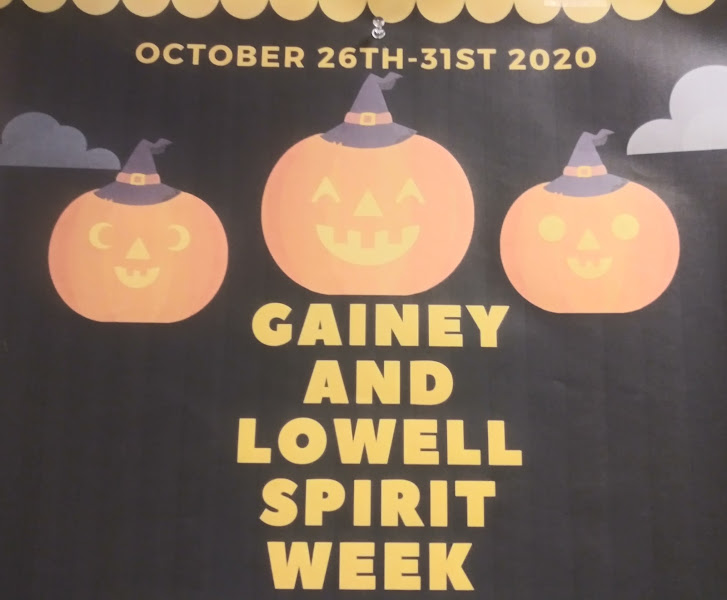
Gainey and Lowell students will dress up in theme related outfits for Spirit Week this Oct 25 to Oct 31.
By: Sarah Williams
This picture was taken by Sarah Williams.
Gainey and Lowell students will dress up in theme related outfits for Spirit Week this Oct 25 to Oct 31.
Spirit Week was Gainey R.A., Anika Eenigenburg’s, idea. Her inspiration was her high school spirit week. She thought it would be fun and easy to do because students can participate individually.
“I always felt that it somehow brought the whole community of our high school together for that week …,” said Eenigenburg. “And I thought why not try this for Gainey and see if it unites Gainey as a community more.”
According to Lowell R.A., Kaitlyn Van Kampen, Spirit Week was decided a month ago at a R.A. meeting. Each day has its own events.
At the meeting, each R.A. wrote down possible events and then they voted for their favorites. Each hall would wear different outfits based on their Decades day on Wednesday and Color Wars day on Thursday. They can get their colors from their R.A.
Lowell’s Spirit Week
Monday
Flannel
Tuesday
Twin
Wednesday
Decades Day
Thursday
Color Wars
Friday
Halloween Costumes
Gainey’s Spirit Week
Monday
Mix Match Day
Tuesday
Twin With Roommate
Wednesday
Decades Day
Thursday
Color Wars
Friday
SAU Colors Day
Saturday
Halloween Costumes
There have been changes to the schedule, due to the rise of COVID and students quarantined on campus.
According the Eenigenburg, Gainey isn’t sure what they will do instead. She will attend a meeting this week where it will be decided. Halloween costumes will still be worn on Saturday for Gainey.
She also said there was a tie dye shirt event on Tuesday that was switched to twin day. Some students who went home due to COVID, had already bought shirts. Eenigenburg wanted to do tie dying later to give them time to join.
Kampen said they had planned for students to wear costumes on Saturday and go “Trunk or Treating”. The students would trick or treat at cars between Gainey and Lowell.
Students in Lowell will now wear their costumes on Friday. R.A.s will go to each room and pass out candy.
“The people I talked to seemed excited,” Kampen said.
On October 14th, the Spanish Club hosted a dance to get students out of their dorms and get them moving.
By: Emily Selby
On October 14th, the Spanish Club hosted an event to get students out of their dorms and get them moving. Dr. Carpenter taught some fast-paced and exciting Latin dances and the whole event was filled with excitement and learning.
Students at this riveting event learned Latin dances such as bachata, merengue, and many more. The organizers of the event were well prepared to ensure everyone was safe and following SAU’s Covid-19 guidelines. Special candy and snacks were available as well, making this a fun way to celebrate Spanish Heritage Month.
While most students are still worried about the national pandemic, the Spanish Club wants to ensure you that they are taking every precaution necessarily to make sure that everyone will be safe at these events. They hope to host more dance events soon once things get back under control regarding Covid-19.
After weeks of keeping the virus at a low rate, Spring Arbor University has seen an influx of positive COVID-19 cases since early October, which numbers reaching up to 29 students testing positive and 172 people in quarantine.
By: Elizabeth Pruitt
Spring Arbor – After weeks of keeping the virus at a low rate, Spring Arbor University has seen an influx of positive COVID-19 cases since early October. On October 12, the SAU community was notified through an email that three student-athletes had tested positive for the virus. As of October 17, 29 students and 2 staff had tested positive and were in isolation and 172 students and 9 personnel were in quarantine. 35 of those students quarantined on campus and the rest quarantined at home.
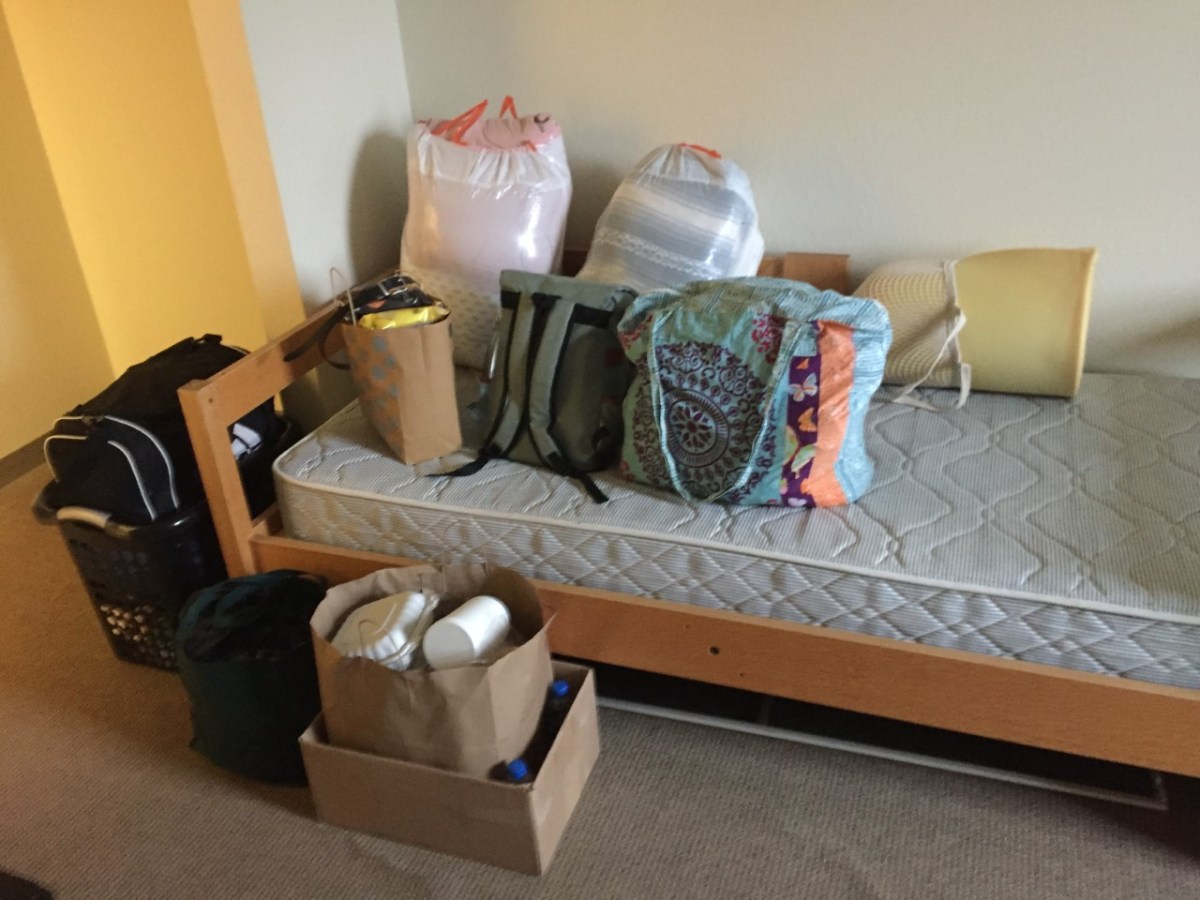
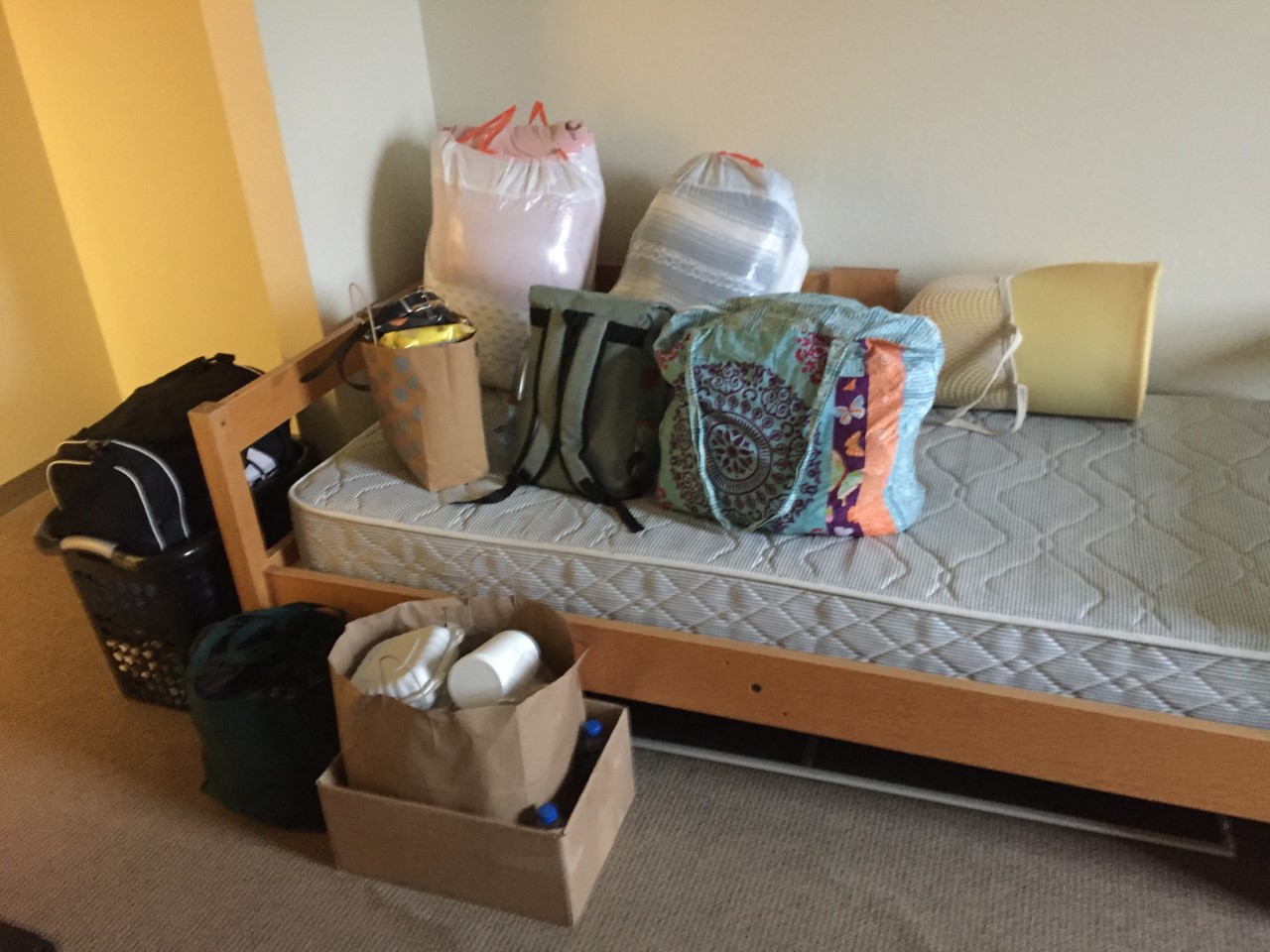
What Hale was able to bring with her to quarantine housing.
One of these students in quarantine was junior Emma Hale. Hale, an art major at SAU, was forced to move into SAU quarantine housing after being in close contact with her roommate, who had tested positive for the virus.
Hale was placed in quarantine due to contact tracing. Because the initial positive students were part of an athletic team, contact tracing was easy. There were a few students who were not members of an athletic team who had come in contact with a positive student or faculty, and this is where the contact tracing becomes more difficult.
According to Corey Ross, Vice President for Student Development and Success and Chair of the Coronavirus Planning time, contact tracing looks at who the COVID positive person has been in close contact with since 48 hours before they show symptoms. Close contact has been defined by the CDC as being with a person for 15 minutes, either consecutively or cumulatively. Class schedules, practice and game schedules, and the QR code scannings have been helpful to aide the process of contact tracing.
“Basically you look back at 48 before the student was symptomatic. If they were symptomatic on Wednesday and didn’t get the test until Thursday because they didn’t think it was a big deal, and we get the results Friday. Then we find out they’re positive so we’re going all the way back to Monday. It’s hard for people to remember what they were doing, who they were with, when they weren’t even thinking about it,” Ross said.
Once contact tracing is complete, students are moved into their designated quarantine housing as quickly as possible.
“I was notified Wednesday, October 7th that I needed to quarantine, I got a call from Holton Health while I was at work at the library. They told me I needed to return to my dorm immediately and start packing,” said Hale.
The food Hale was brought each day.
Quarantine housing on campus started as just two of the Villages not currently inhabited by students. Due to the increase in cases, Delta 1 in Lowell Hall was added. If there is an influx in cases again and more housing is needed, Michindoh Conference Center, located in Hillsdale, Michigan about 35 minutes away, is being looked at as another option.
Two hours after being notified, Hale had packed her things and moved into one of the villages, where she would remain for the next two weeks. Hale said the experience was lonely and difficult. Ross said the Student Development Staff, University Chaplain Brian Kono, and the counselors of Holton Health have reached out to students to make sure they were doing well physically, spiritually, and mentally.
While in quarantine, students are delivered meals and snacks and must attend all classes virtually. For some, like Hale, virtual classes are not ideal.
“I had very little motivation for schoolwork. I attended all my zoom classes and did the minimal amount of work, but online school is really not my thing,” said Hale.
Hale and a friend enjoyed socially distanced movie nights to pass time in quarantine.
Being alone for two weeks can be a blessing or a curse for some people. Hale said her quarantine experience was mainly just about survival. She tried to find things to do to occupy her time and make her experience more enjoyable.
“The best part of the day was when they brought us our food packages and my roommate and I, who was quarantined in the room across from me, propped open our doors and had a little picnic together. Overall, it was just not the ideal situation and I was just trying to make it through. I did however have more free time to draw, so that was nice,” Hale said.
SAU’s quarantine efforts have helped slow the spread of COVID on campus. As of Friday, October 23, there are 14 COVID positive students and 150 in quarantine. If there are no new positive cases, Ross has said there should be only 84 students in quarantine on October 26, and 7 or 8 students in quarantine on October 28.
Things are looking up for SAU in terms of COVID-19. Students and staff should not be discouraged by the recent influx of COVID cases. However, students and staff should stay diligent with social distancing, wearing their masks, and washing their hands, to prevent another spread.
Students, faculty, and staff are encouraged to continue practicing the SAU Safe 8, which consists of baseline testing, completing a daily health screening, social distancing, limiting large gatherings, wearing face coverings in outdoor and public spaces, attendance tracking, practicing hand and respiratory hygiene, and enhanced cleaning.
For more information on COVID-19 at SAU visit the Coronavirus Updates and Resources page, linked here, and the COVID Case Count page, linked here.
Campus Vote Project stated the new generation has a lower voting rate because they miss the deadline or lack information.
By: Sarah Williams
Australia Smith went to the Secretary of State after turning 18. She intended to get her State ID, but she was also given donor forms and an application for voting registration. She said the application had basic questions and she filled it out quickly. She was registered to vote after 10 minutes. She had to wait hours for her ID.
Smith is now 21 and a junior at Spring Arbor University. She plans on voting next Election Day, November 3, 2020.
What are the deadlines?
According to Michigan Voter Information Center, the deadlines are:
Register to vote
Person: November 3
Online/Mail: October 19
Request for Absentee Ballot
Online/Mail/Person: 5pm Friday, October 30
Send in Absentee Ballot
Online/Mail/Person: 5pm Friday, October 30
How do you register to vote?
SAU sophomore student Makiya Owens registered to vote last summer. She said she registered online and plans on voting.
Michigan.gov stated to register to vote a person needed to be:
• A resident of Michigan
• A resident of the city or township for 30 days when they vote
• A United States citizen
• At least 18 years old
• Not currently serving a sentence in jail or prison
People can register in person, online, or mail.
If applying by online or mail, voters need to complete the application. Then, mail it to their city or township clerk, which can be found on MVICs page.
Registering by mail requires entering their driver’s license number on the form or sending in a photocopy of their driver’s license, personal ID, or paycheck stub, utility bill, bank document or government document with both your name and address.
If applying in person, voters would need documents to prove where they live.
Where do you go to vote?
People can vote at the polls or with Absentee ballots. After registering on MVIC, a page will show the voter’s poll and clerk location. Those already registered can locate their poll location again on the MVIC’s page.
What will be on the ballot?
People can see sample ballots on the MVIC’s page. MVIC stated the ballot is made up of many sections and proposals and they vary depending on place of register. A sample ballot from a precinct in Jackson County has a partisan section which has the presidential options. There is the congressional section with the senator options. There are also sections for legislative, state board, regent of the university of Michigan, trustee of Michigan state university, governor of Wayne state university, county, sheriff, and more.
There are also two proposals. The proposals state their purpose, what the constitutional amendment would do, and asks, “Should this proposal be adopted?”.
How do you register for an absentee ballot?
Smith said she plans on voting by Absentee ballot but has yet to register.
SAU student junior Ryan Northup registered to vote in Ohio. He plans on voting by Absentee Ballot by mailing out the ballot before the election.
Voters who can’t make it to the polls can vote by mail through Absentee ballots.
MVIC stated all registered Michigan voters can use an absentee ballot before Election Day. They don’t need an excuse or reason. They can apply online, mail, or in person.
The completed ballot must be received by the city or township clerk before 8 pm on Election Day. It is advised to mail in Absentee ballots as soon as possible.
All registered voters can track their ballots on MVIC’s page.
How many college students vote?
National Study of Learning, Voting, and Engagement (NSLVE) did a report on college and student voting in 2017. NSLVE created a database of 9,511,711 and 9,784,931 students enrolled at the time of the 2012 and 2016 election. These students attended higher education institutions across the U.S. They used this database to yield data on students’ turnout. The results resemble the approximately 20 million college students in U.S.
NSLVE’s students voted about three percent more at 2016 than 2012. In 2012, 45.1% of the nearly 10 million students voted. In 2016, 48.3% voted. This means half of the college students population voted.
Campus Vote Project stated the new generation has a lower voting rate because they move frequently, are less likely to have a driver’s license, are less likely to be contacted directly by political campaigns then older age groups, missed a deadline, or lacking other information.
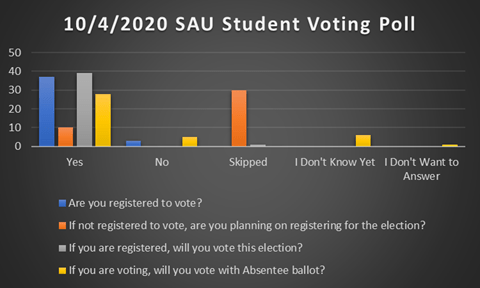
In a poll done at SAU, out of 40 participating students, 37 are registered to vote. There are 39 students planning on voting and 28 students planning on voting with Absentee ballot.
Why should college students vote?
“I want to take responsibility for America,” said Owens.
“I think it is a really important election for a lot of reasons,” Northup said, “so I wanted to be able to put my vote in because I think it will really matter,”.
“We are in a climate right now where a lot of things are happening” Smith said, “so if you want change to progress you have to go and vote”.
Thirty students have the chance to win cash prizes in the Cougar Den’s Pumpkin Decoration Contest.
By: Sarah Williams
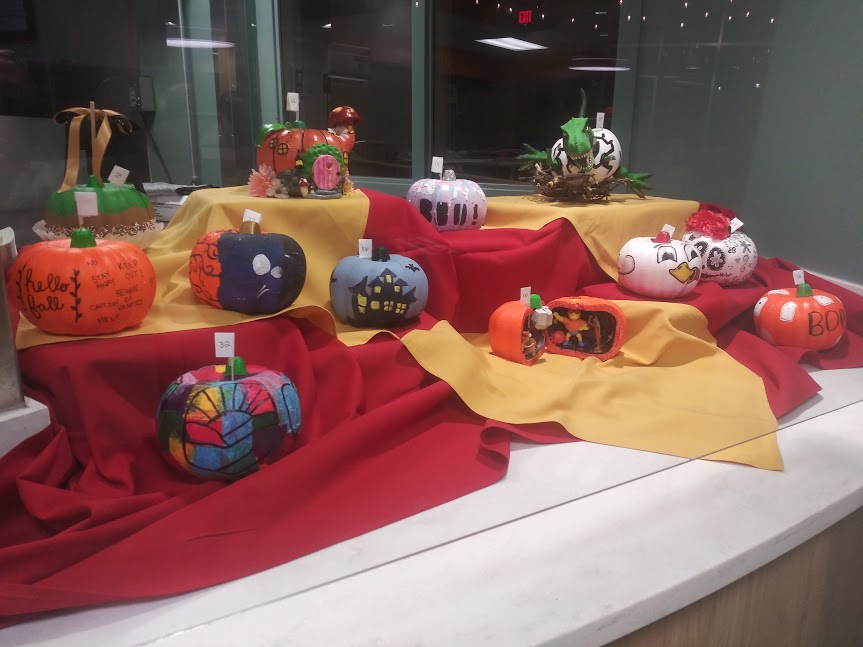
Photo of returned pumpkins. Taken by Sarah Williams.
The Cougar Den is holding a pumpkin decoration contest this year and thirty students have the chance to win some cash prizes.
Cougar Den manager Barbie said she bought 30 Styrofoam pumpkins from Dollar Tree for the contest. In three days, all the pumpkins were gone.
The deadline was originally Oct. 16th, but Barbie extended it to Oct. 30th. She wanted to give the quarantine students a chance to participate. Voting will be between Nov. 2nd and 9th.
The prize for first place is 50 dollars to the bookstore, second place is 20 dollars of Cougar Cash/SAU Dollars, and third place is five dollars to Sacred Grounds.
On December 4, a group of five faculty members from various schools in the region will visit Spring Arbor University (SAU) to evaluate the school and decide whether or not it will maintain its regional accreditation.
On Monday, October 16, a student leadership meeting was held to inform students about SAU’s upcoming evaluation. Professor of Sociology John Hawthorne, alongside a team of other faculty members, has been working on the required paperwork for the visit. The document, at the time of the meeting, consisted of 28,456 words of the maximum 30,000 words and featured information on how the institution is doing academically and spiritually. Hawthorne said the project, which has taken up much of his time since March, is mostly ready to be reviewed by the visiting board, although it is still going through changes.
“I was really excited Saturday when I put what I thought were the last edit passes in to say, ‘Oh good, now we’ve got this thing put to bed,'” Hawthorne said. “I got about seven emails between 5:30 and 10:30 on Sunday morning, so then I went back in and I’ve been working on that since.”
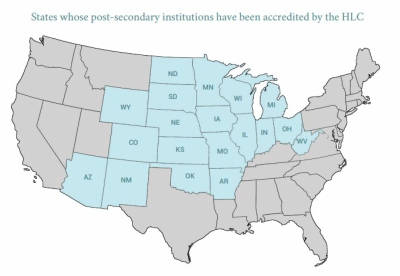
The document will then be assessed by the five faculty members that are chosen to evaluate SAU. These members will come from schools in the North-Central region of the country, which is comprised of schools from 19 states. This region is also known as the Higher Learning Commission (HLC).
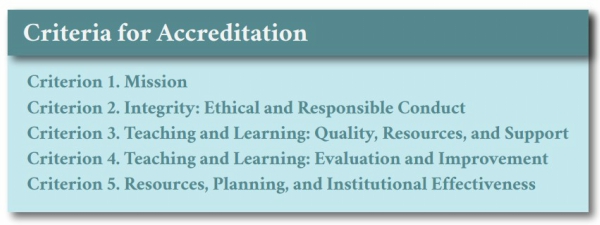
To remain accredited, five criteria must be met as listed on the HLC’s official website. The surveyors need to make sure:
1) The institution’s mission is clear and articulated publicly; it guides the institution’s operations.
2) The institution acts with integrity; its conduct is ethical and responsible.
3) The institution provides high quality education, wherever and however its offerings are delivered.
4) The institution demonstrates responsibility for the quality of its educational programs, learning environments, and support services, and it evaluates their effectiveness for student learning through processes designed to promote continuous improvement.
5) The institution’s resources, structures, and processes are sufficient to fulfill its mission, improve the quality of its educational offerings, and respond to future challenges and opportunities. The institution plans for the future.
Not only will the HLC be looking for those five criteria to be met during their visit, they will also be sitting down with various students to evaluate what campus life is like. Hawthorne said students should be honest about their thoughts on the school, although they should not take this as an opportunity to voice complaints about such things as the limited parking availability.
“We are not a perfect institution,” Hawthorne said. “The institutions that our visitors will come from are not perfect institutions. So, if you should say, ‘There’s an area that we think we’re working on as an institution and I wish we did more of that,’ I want you to be honest in that conversation.”
During the meeting, students can expect to hear questions such as, “What’s it like to go to school here?” and, “How your major classes are going?” Hawthorne, who is occasionally asked to be a part of the HLC when evaluating other schools, said he would not directly ask about advising, but there might be questions to ensure students know what classes they need to take and that there is a strong support system of faculty members for the student to come to with any problems.
Hawthorne said he assured the president that although SAU is being evaluated, there is almost nothing that anybody could say in the visit that would cause the school undue harm or prompt the accreditation to be taken away. The visit is a procedure that every accredited institution must go through every few years. In particular, the HLC typically evaluates schools once every seven to ten years, and this year marks ten years since SAU was last evaluated. Once accreditation takes place, it gives the school the opportunity to receive Title IV funding from the Department of Education, which means the school will receive federal financial aid funds.
The HLC will spend most of Monday, December 4 on campus, as well as some of Tuesday, December 5. The five members will then draft their assessment of the school to decide whether or not SAU will remain an accredited institution.
Every morning, Chief Information Officer Chris Blackstone runs a report that pulls a list of all email accounts that have forwarding rules set up. He then looks at the name of each email account that is forwarded for any clue it might be a fake email.
“The challenge with all this is that it’s kind of like a dam that’s cracking and trying to put your finger in the holes,” Blackstone said. “It’s kind of like playing whack-a-mole.”
On July 31, the first of many phishing emails were sent to hundreds of Spring Arbor University (SAU) students. Over 200 accounts were compromised in this phishing attack. Emails varied from fake Dropbox links, warnings your email is going to be disabled and alerts that an account is over its email quota.
Although these kinds of scams are common with other schools using Microsoft systems, there is not much anyone can do to prevent or to protect against the attacks once they start and have compromised an account. So far the Information Services team has spent over 300 hours trying to fix the problem.
“It’s consumed my August,” Blackstone said. “It’s pretty much all that I’ve been working on in August. I was on vacation and got pulled back into doing stuff. It’s been quite an ordeal.”
Unlike hacking, phishing emails do not have access to users’ information unless the users give it away.
Blackstone said it is different from a hack because people give their information willingly, whereas in a hack someone penetrated the network to find information.
Once the phishing source has a student’s information, he or she has access to all of the student’s records. A student’s username and email are just as valuable as a social security number, Blackstone said. But since these attacks were random, no account changes have been reported. But this summer there have been reports of students not receiving financial aid information and faculty not receiving emails for five days.
This is why Blackstone runs a manual report on all email accounts with forwarding rules. Attacks have forwarded emails from an arbor.edu account to a fake email. After 22 accounts were reported not receiving emails, that was the point when Blackstone said they had the potential for significant damage.
The solution: a password reset.
On August 25, all students, alumni and adjunct instructors had to reset their passwords. Since the password reset, there have been less attacks.
“The frustration to me now that we are working hard to lock our stuff down, it’s how many other organizations aren’t,” Blackstone said.
While SAU may be strengthening its own cyber security, a network is only as strong as its weakest link. Groups SAU partners with, like BankMobile, NAIA, Tree of Life and more, can be weak points in the security depending on their own IT precautions.
Blackstone has already reached out to the NAIA and the Commissioner of the Crossroads League because SAU accounts marked emails from them as spam because their system was not configured correctly. After Blackstone reached out to their IT team, the problem was fixed within a day.
While attacks may be slowing down, Blackstone still encourages students, faculty and staff to never click on links or give out login information unless it is through the portal. Because of these attacks, Information Services has updated the portal login. Instead of a pop up asking for a username and password, the portal opens a new login screen with the clock tower on it.
“Knock on wood, we’re seeing fewer of [the email attacks],” Blackstone said. “I think we’ve got greater security in place. Once we turn on the next step of the security, I think that will additionally help keep stuff out.”
Over the summer, the Information Services team launched a $1 million project to overhaul Spring Arbor University’s (SAU) Wi-Fi network.
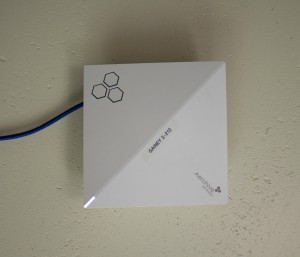
Completely funded by the Information Services budget, this network rebuild replaces every Wi-Fi box on campus and more than doubles the number of access points on campus. This means Wi-Fi signals should range farther and be stronger across campus. The dorms’ boxes have already been replaced, and some are in rooms instead of in the halls. The rest of the residences should have the new Wi-Fi installed by the middle of October.
New Wi-Fi boxes installed inside dorm rooms.
The Information Services team, led by Chris Blackstone, hired a third party to conduct a complete survey of campus to find the worst Wi-Fi spots in June. Now there are extra wireless adapters focused on those areas, as well as high-traffic spots like the volleyball courts and the oak tree.
“It’s huge for us,” Blackstone said. “It will give us the first modern, robust wireless networking system pretty much since it was installed.”
The next steps include finishing the villages and apartments and the administration buildings on campus. All of the buildings on campus and at other university sites should be done by Thanksgiving.
If anyone has issues with the Wi-Fi, Information Services wants to know, Blackstone said. Now it is easy to submit issues or suggestions through the new self-service portal. Wondering when your apartment or building will have new Wi-Fi? The My Support portal has a page dedicated to keeping everyone up-to-date on projects like the network rebuild. Look for the link soon on the SAU App.
What the MySupport link looks like on the mySAU portal homepage.
The new portal also includes how-to articles so students can find answers to accessing their email quarantine, adding their email to their phone or connecting dorm printers to their laptops.
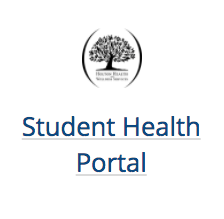
The new Student Health Portal available on the mySAU homepage. Information Services created it over the summer so students can schedule appointments, submit paperwork and more.
“When people are able to answer their own questions, they’ll get to an answer a lot more quickly than when they have to wait for us,” Blackstone said.
Later this fall, students, faculty and staff will have to log in to the Wi-Fi once to access Wi-Fi. Adding authentication allows the Information Services team to give more bandwidth (faster connection) to those staying on campus while the guest Wi-Fi has less bandwidth and access. The entire campus also now has one full gigabyte of bandwidth.
The Information Services team has a lot of projects in the pipeline this year. They have already launched a health portal where students can schedule appointments at the Holton Health Center. Later this fall the team will be rolling out a new mobile-friendly version of the portal as well.
Blackstone’s professional background is in digital marketing and the web, so he wants to make sure tools are built for mobile.
If anyone has any Wi-Fi or computer questions, submit a ticket on the new portal or see the Information Services office in the lower level of Deitzman Hall across from Gainey.











 “I was really excited Saturday when I put what I thought were the last edit passes in to say, ‘Oh good, now we’ve got this thing put to bed,'” Hawthorne said. “I got about seven emails between 5:30 and 10:30 on Sunday morning, so then I went back in and I’ve been working on that since.”
 “We are not a perfect institution,” Hawthorne said. “The institutions that our visitors will come from are not perfect institutions. So, if you should say, ‘There’s an area that we think we’re working on as an institution and I wish we did more of that,’ I want you to be honest in that conversation.”