Squirrels and Spiritual Life: SAU’s New Biology Professor Katie Weakland

By Grace Archer

Spring Arbor University’s (SAU) newest associate professor of biology Cathy (Katie) Weakland has arrived, bringing with her an enthusiasm for both spiritual life and the campus squirrels.

While serving as a professor at Bethel College in Indiana, Weakland was involved in projects like landscape ecology, studying owls and fox squirrels. She often spent her class periods trapping and tagging the squirrels to find the density of their species on campus. She also spent time incorporating discipleship into her lessons and participating spiritually in the campus.

“I was involved in the spiritual atmosphere and I loved going to chapel,” Weakland said. “In fact, I went to every single one.”
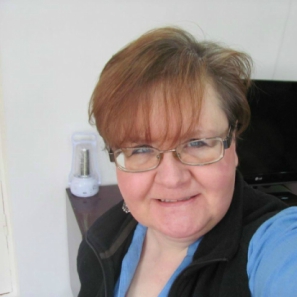
KathyWeakland
Katie Weakland. From Facebook.

After teaching at Bethel College for ten years, she decided to take a break from teaching and follow God’s call for her life in Tajikistan, where she lived for three and a half years. Eventually, she found and joined a Non-Governmental Organization (NGO), researching and proposing projects to raise funds for the group.

“I always wanted to live overseas and learn a new culture and language,” Weakland said.

Although Weakland spent a great deal of time overseas and away from home, she had always taken an interest in Michigan. In her time at Bethel College, she often took camping trips up to Michigan on the weekends as a getaway.

One thing that attracted Weakland to the task of teaching at SAU was the spirituality on campus.

“I appreciate a campus that has chapel,” Weakland said. “I love that I can talk about Jesus in class and do devotions all while incorporating science and research.”

Weakland is excited to teach Environmental Science. In it, she hopes to expand on views of evolution and creationism and other diverse views on that topic. She wants to look at what Scripture says about evolution as well as ideas outside of Christianity and compare the two.

“I see God’s fingerprints all over creation and I encourage students to take a step back (from) what they’re observing and stand in awe of it,” Weakland said. “Creation is how God reveals himself to us.”


Stats and Facts:

According to her: The owls she studied at Bethel sounded like “women screaming.” Sounds spooky.

Not her first time in the state: While at Bethel, she took weekend camping trips up to Michigan as a getaway.

A goal as a teacher: to challenge students as image bearers and stewards of creation and their responsibilities as followers of Christ.
“A Meeting in Munich” Review

By Elise Emmert

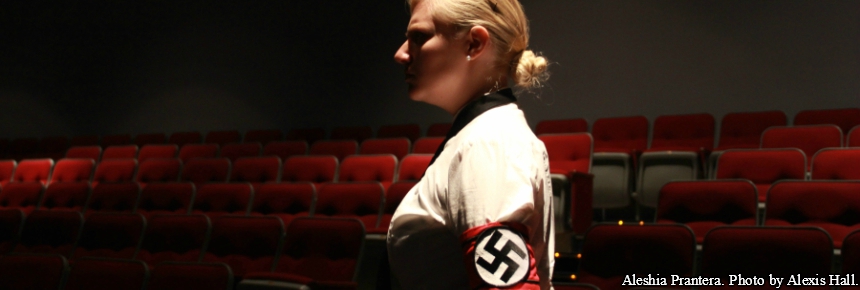
I went to “Meeting in Munich” by Paul Patton knowing only that it was a discussion between church members about whether or not they should listen to the Fuhrer and reform their youth groups to Hitler Youth. But it was so much more than that.

liz
Elizabeth Pence and Logan Thorne. Photo by Alexis Hall.

There was more at stake in the church in Munich than the fate of their youth group. It’s a boiling point where congregants on both sides of the issue come together and clash, fighting each other on which outlook, which way of living, is objectively right.


I watched friends in period clothing, some pleading with others for the right to raise their children in the church without the state as their watchdog, and others in SS uniforms with swastika bands around their arms raising their hands to perform the Hitler salute and commending the Fuhrer for his dedication to building Germany up on the church.

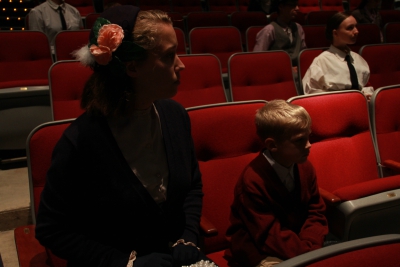
These actors sat among the audience members, and it made the conflict and history feel so much more present than it does when reading a textbook about what led to the second world war and the horrors that happened in Germany. The actors walked beside my chair and cried out their beliefs at each other, dealing with core values that would make or break Germany’s future in WWII. They have no idea what’s coming.

And it made me sob.

old lady and austin
Faith Dever and Austin Slater. Photo by Alexis Hall.

I cried for the fact that this happened – that anti-Semitic sentiments were rationalized, that a country was so torn and desperate that something like Nazism could rear its ugly head, that so many people lost their lives in such horrible ways because of hate and the belief that Hitler had the plan to make everything right again, to bring the country back to its former glory.

It’s difficult to identify the most heart-wrenching moment in the play, but one in particular rises above the many: when Margaret Lubosch (played by Erin Couch) says the hate being spread will put rocks in the hands of the children. In response to the Hitler supporters’ laughter, she asks her young daughter, Eva (played by Emma Brugger), to tell the congregation what has been happening at school. And Eva, in a trembling voice, rattles off the names of children in the class who aren’t allowed to talk to the others, who are pulled to the front of class and ridiculed for their mistakes, and who are afraid to go to recess because they are being spit on.

Does any of this sound familiar?

Confederate flag posters with cotton buds were posted around the American University campus last week. The “Unite the Right” rally in Charlottesville, which many state leaders condemned as a “white supremacist” meeting, ended with one civilian killed and many others injured. An improvised explosive device was set off at the Dar Al-Farooq Islamic Center in Minnesota.

tearful goodbye
A tearful goodbye. Photo by Alexis Hall.

Hate is festering, and people are acting on it. It could lead us down a very dangerous path if we choose to forget how situations can escalate from a small spark to an engulfing blaze if they are not stopped before they run beyond control.


It’s easy for us to look back on history and say we would have been on the right side; we would have stood for justice even in the face of death. But history is not simply the past. It is our present. Every second that passes becomes the history that our children and grandchildren will read about. If we do not do something about this hate, future generations may have the opportunity to ask of us: Why didn’t they do something? Didn’t they know that was wrong?

I have heard it said that theater is not done to make us forget or escape the world outside, but to help us remember it. In “Meeting in Munich,” we remember the past – we remember the hatred and divisiveness that tore apart this church and its country – but we also remember the present. And I weep for both.

Education professor and basketball coach: John M. Williams IV

By Crisilee DeBacker

To a Spring Arbor University (SAU) student, the name “John Williams” could mean two things: “Associate Professor of Education” John Williams Jr (also known as Biggs), or “that guy who composed the Star Wars soundtrack” John Williams. Now, there is a third.

John M. Williams IV fills three roles at SAU. He is the Coordinator of Elementary Education, an Assistant Professor of Education and the Assistant Womens Basketball Coach. Despite not wanting to come to SAU at first, he says he is a proud SAU alumnus.

“It was just a good, safe, familiar place,” he said, concerning why he finally committed to SAU.

During his time at SAU, he studied music, pre-med and elementary education and played on the soccer team for two seasons. After he completed his undergraduate program, he continued studying at SAU, and went on to get his master’s in education and then a post-graduate certification in K-12 administration. After he was certified, he worked seven years as an elementary school principal.

JohnandCarrieWilliams
Williams IV and his wife, Carrie. From Facebook.

“Being an elementary school principal, there’s always something crazy going on,” he said.

He also coached basketball, and worked with the same girls from fifth grade on. Seeing them grow and improve as high schoolers was something he said he loved, especially since one of his players is now a freshman here at SAU and is serving alongside him as the manager of the womens basketball team.

Williams briefly taught math and science classes before he was a principal. When he was a principal, he evaluated teachers regularly, so to him, evaluating students in class is not much different.

Williams’ faith is something he strives to model to his students. He begins every class with a time for prayer requests and a short devotional, and concentrates on being a good example for his students and living “unapologetically Christian.”

“Before talking about prayer, you have to live and model faith first,” he said.

He also focuses on faith outside of the classroom by taking it to the basketball court. Currently, the whole basketball team is reading the book “Love Does” by Bob Goff. He says it is a great example of putting both faith and love into action and illustrates the message, “don’t be afraid to love extravagantly.”

Through both the teaching and the modeling of faith, Williams hopes to influence his students for their future.

“I’m making them prepared before they’re on their own,” he said.


Stats and Facts:

Hogwarts House: Gryffindor

Favorite TV shows: Stranger Things, Longwire and Madame Secretary

Favorite classes to teach: “Math and Science Methods for Upper Elementary and Middle School Teachers” and “Effective Classroom Management Assessment and Instruction”

Fun Fact: When he was a principal, he let students duct tape him to a wall to raise money for a local child with cancer.

He’s Not Done Yet: He’s currently in a doctorate program with Trevecca Nazarene University.

If you didn’t already know: He’s married to Carrie Williams, the director of student success and first year programming at SAU.

Phishing emails continue to test SAU cyber security

By Kayla Williamson

Every morning, Chief Information Officer Chris Blackstone runs a report that pulls a list of all email accounts that have forwarding rules set up. He then looks at the name of each email account that is forwarded for any clue it might be a fake email.

“The challenge with all this is that it’s kind of like a dam that’s cracking and trying to put your finger in the holes,” Blackstone said. “It’s kind of like playing whack-a-mole.”

On July 31, the first of many phishing emails were sent to hundreds of Spring Arbor University (SAU) students. Over 200 accounts were compromised in this phishing attack. Emails varied from fake Dropbox links, warnings your email is going to be disabled and alerts that an account is over its email quota.

Although these kinds of scams are common with other schools using Microsoft systems, there is not much anyone can do to prevent or to protect against the attacks once they start and have compromised an account. So far the Information Services team has spent over 300 hours trying to fix the problem.

“It’s consumed my August,” Blackstone said. “It’s pretty much all that I’ve been working on in August. I was on vacation and got pulled back into doing stuff. It’s been quite an ordeal.”

Computerwithemail

Unlike hacking, phishing emails do not have access to users’ information unless the users give it away.

Blackstone said it is different from a hack because people give their information willingly, whereas in a hack someone penetrated the network to find information.

Once the phishing source has a student’s information, he or she has access to all of the student’s records. A student’s username and email are just as valuable as a social security number, Blackstone said. But since these attacks were random, no account changes have been reported. But this summer there have been reports of students not receiving financial aid information and faculty not receiving emails for five days.

This is why Blackstone runs a manual report on all email accounts with forwarding rules. Attacks have forwarded emails from an arbor.edu account to a fake email. After 22 accounts were reported not receiving emails, that was the point when Blackstone said they had the potential for significant damage.

The solution: a password reset.

On August 25, all students, alumni and adjunct instructors had to reset their passwords. Since the password reset, there have been less attacks.

“The frustration to me now that we are working hard to lock our stuff down, it’s how many other organizations aren’t,” Blackstone said.

While SAU may be strengthening its own cyber security, a network is only as strong as its weakest link. Groups SAU partners with, like BankMobile, NAIA, Tree of Life and more, can be weak points in the security depending on their own IT precautions.

Blackstone has already reached out to the NAIA and the Commissioner of the Crossroads League because SAU accounts marked emails from them as spam because their system was not configured correctly. After Blackstone reached out to their IT team, the problem was fixed within a day.

While attacks may be slowing down, Blackstone still encourages students, faculty and staff to never click on links or give out login information unless it is through the portal. Because of these attacks, Information Services has updated the portal login. Instead of a pop up asking for a username and password, the portal opens a new login screen with the clock tower on it.

“Knock on wood, we’re seeing fewer of [the email attacks],” Blackstone said. “I think we’ve got greater security in place. Once we turn on the next step of the security, I think that will additionally help keep stuff out.”

Chemistry and the fingerprints of God: How new chemistry professor found SAU

By Caralyn Geyer

For college students, it can be typical to wonder, “How in the world did I get here?” Many students question life and seek answers to thought-provoking questions, searching for purpose and meaning throughout those first few years. It can leave many students asking themselves, “Does anyone else feel the way that I do?”

Michael Nydegger asked himself these same questions as a college student at Southwest State University in Minnesota. Looking back, he said he never would have pictured himself where he is today as an Associate Professor of Chemistry at Spring Arbor University (SAU). He started his higher education by getting a Bachelor’s degree at Southwest State University, though he did not pick chemistry as a major until his junior year.

“They forced me to pick a major, so I picked chemistry so I could still finish in four years,” Nydegger said.

pic
Michael Nydegger, the new assistant professor of chemistry at SAU.

Nydegger particularly liked physical chemistry, and took many courses in this area his senior year of college. He was also good at math, so a chemistry major seemed like a logical choice to him. His parents also inspired him to pursue chemistry because of each of their differing beliefs concerning evolution and creation.

He continued in his schooling to get a Master’s degree from the University of Nebraska and did his doctoral work at the University of Iowa, focusing on New Probes for 2DIR Spectroscopy for his dissertation. According to NASA, spectroscopy is a scientific measurement technique that measures light emitted, absorbed or scattered by materials, which is then used to study, identify and quantify those materials.

After his schooling, Nydegger began his teaching career by working at community colleges, which eventually led to his job at SAU. Nydegger said he had never wanted to teach at a Christian school before coming to SAU because he wanted to share the gospel with people who have not heard it. But his friends encouraged him to apply to Christian universities, so he decided to apply to SAU.

“[My friends] offered a new perspective and thought that maybe this is where I should be,” Nydegger said.

After working at SAU so far, Nydegger said he enjoys the community the campus brings and feels like his co-workers are his family. Throughout his various classes, Nydegger said his goal is for his students to get outside their comfort zone within the framework of chemistry.

“I want [students] to see the fingerprints of God on the periodic table,” Nydegger said.


Stats and Facts

Favorite Class to Teach: CHEM200, because it is more detailed and the “fingerprints of God” are more visible.

Favorite Experiments: Ammonium fountains and esterification reactions.

Favorite Movies: “Jaws” and the “Lord of the Rings” series.

HobbiesTrout fishing, hunting and traveling.

Something New: He’s trying out making maple syrup for the first time this year.

Something Interesting: He once saw a humpback whale from about twenty feet away while in a sixteen-foot boat.

Sioux spears, Curious George poems and a scary-looking dissertation: an inside look at Carol Green’s office

By Kayla Williamson

Across from the President’s office and past three cubicles lies the office of a Texan who likes snow.

Inside, you can find an array of history books including an intimidating leather binder-bound version of a dissertation. Leaning against the shelves of books sits a Sioux spear. Framed on the desk are pictures of three girls and a Curious George quote about adventuring into the unknown.

After moving from Longview, Texas this summer, the new Vice President of Academic Affairs, Carol Green, found Spring Arbor as a new adventure for her and her family. Last year, she had a feeling God was calling her north, so when she saw Spring Arbor University’s (SAU) job posting, she applied.

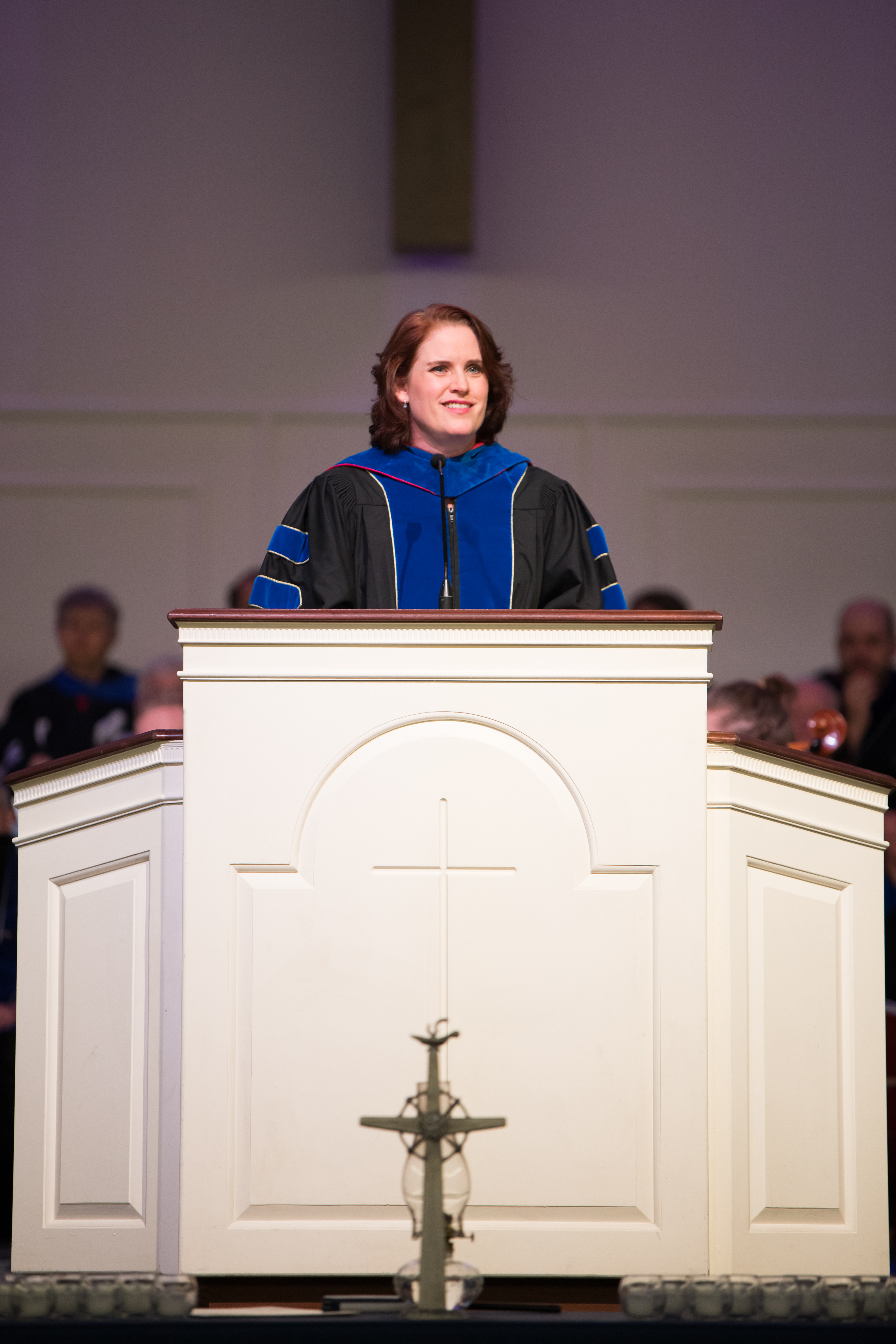
New VP of Academic Affairs, Carol Green, speaks about caring for her husband after he was diagnosed with cancer in Convocation.

After working five years at LeTourneau University, Green took a step back from high education to care for her husband who was diagnosed with cancer in 2013. She told her story about her husband and the struggle to work through grief at Convocation.

Although she did apply for more jobs in higher education after her husband John passed away in 2015, she felt like the time was not right to move. Her second eldest daughter, Amanda, had two more years of high school.

“I really felt that the girls needed more stability at that point,” Green said. “They had a really strong youth group. And I had a lot of good friends who were helping me through this too.”

Green journaled a lot during that time, and now four years later, she said she is 80 percent finished with a rough draft of a book about her experiences.

As for Spring Arbor, she has been an official SAU employee for three weeks, and she is still trying to figure out which buildings to go to for meetings.

“There may be funny stories once the snow hits,” Green said. “I think I like the snow, but we’ll see.”

Stats & Facts

Which Hogwarts House would you be in? Gryffindor.

How many years have you taught? 17 years.

What’s your Myers-Briggs? ISFP, though I fall in the middle for most of them.

What’s the last book you read? “The Lighthouse Chronicles” by Flo Anderson. And I reread “Lightning” by Dean Koontz and “Waking the Dead” by John Eldredge.

Last TV show you watched? America’s Got Talent.

Favorite judge? Simon.

Lord of the Rings or Harry Potter? Lord of the Rings.

Anything else? You should probably know I’m very competitive and I love a challenge. I like doing fun, quirky things. I like surprising people too.

New Wi-Fi installed on campus and other tech news

By Kayla Williamson

Over the summer, the Information Services team launched a $1 million project to overhaul Spring Arbor University’s (SAU) Wi-Fi network.

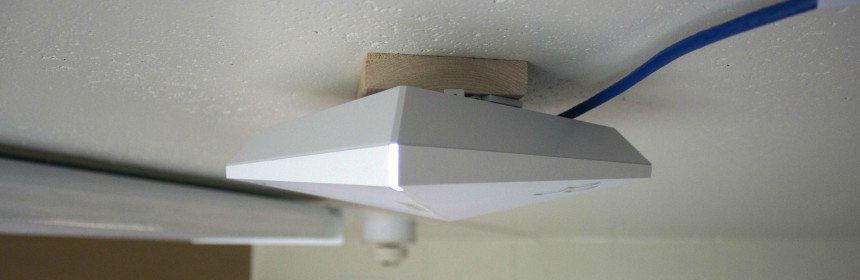
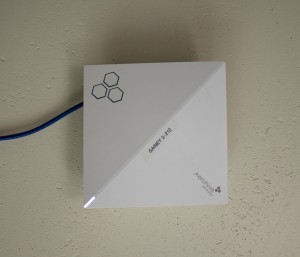
Completely funded by the Information Services budget, this network rebuild replaces every Wi-Fi box on campus and more than doubles the number of access points on campus. This means Wi-Fi signals should range farther and be stronger across campus. The dorms’ boxes have already been replaced, and some are in rooms instead of in the halls. The rest of the residences should have the new Wi-Fi installed by the middle of October.

wifibox
New Wi-Fi boxes installed inside dorm rooms.

The Information Services team, led by Chris Blackstone, hired a third party to conduct a complete survey of campus to find the worst Wi-Fi spots in June. Now there are extra wireless adapters focused on those areas, as well as high-traffic spots like the volleyball courts and the oak tree.

“It’s huge for us,” Blackstone said. “It will give us the first modern, robust wireless networking system pretty much since it was installed.”

The next steps include finishing the villages and apartments and the administration buildings on campus. All of the buildings on campus and at other university sites should be done by Thanksgiving.

If anyone has issues with the Wi-Fi, Information Services wants to know, Blackstone said. Now it is easy to submit issues or suggestions through the new self-service portal. Wondering when your apartment or building will have new Wi-Fi? The My Support portal has a page dedicated to keeping everyone up-to-date on projects like the network rebuild. Look for the link soon on the SAU App.

NewMySupportPortal
What the MySupport link looks like on the mySAU portal homepage.

The new portal also includes how-to articles so students can find answers to accessing their email quarantine, adding their email to their phone or connecting dorm printers to their laptops.

The new Student Health Portal available on the mySAU homepage. Information Services created it over the summer so students can schedule appointments, submit paperwork and more.

“When people are able to answer their own questions, they’ll get to an answer a lot more quickly than when they have to wait for us,” Blackstone said.

Later this fall, students, faculty and staff will have to log in to the Wi-Fi once to access Wi-Fi. Adding authentication allows the Information Services team to give more bandwidth (faster connection) to those staying on campus while the guest Wi-Fi has less bandwidth and access. The entire campus also now has one full gigabyte of bandwidth.

The Information Services team has a lot of projects in the pipeline this year. They have already launched a health portal where students can schedule appointments at the Holton Health Center. Later this fall the team will be rolling out a new mobile-friendly version of the portal as well.

Blackstone’s professional background is in digital marketing and the web, so he wants to make sure tools are built for mobile.

If anyone has any Wi-Fi or computer questions, submit a ticket on the new portal or see the Information Services office in the lower level of Deitzman Hall across from Gainey.

Pranks, Pizza and Preaching: When Faculty were Freshmen

By Luke Richardson and Emily Spencer

Finding out some of our professors went to Spring Arbor University (SAU) as college students is like that time in first grade when you found out your teacher doesn’t actually live at school. Here are some stories from when professors and faculty really did live at school.

Mary Darling, Associate Professor of Communication 


Darling

Mary Darling transferred to Spring Arbor for her second year of college and did not know what to expect.

“It was the mid 1970’s at the height of the ‘Jesus Movement,'” Darling said. “Living in a triple on Delta Three in Lowell Hall was a challenge. My roommate thought I wore jeans too much so she put them in the freezer in our room so they would be too cold to wear.”

In addition to her rooming woes, Darling remembers veggie pizza made with veggies left over from the previous week’s meals.

“DC pizza now is so much better,” Darling said. “Just don’t put any cauliflower on mine.”


Ron Kopicko, Chaplain and Instructor in General Studies 

Kopicko

Ron Kopicko originally came to SAU because the man who led him to Christ became the Dean of Students. One of the things he remembers most are the relationships he formed, which still last today.

“There was a real sense of ‘we’re not in this alone,'” Kopicko said.

On the weekends, Kopicko and a friend would hitchhike as far as they could and be back before classes on Monday. They carried a sign with the word “West” on one side and “East” on the other and flipped a coin to see which way they would go. He shared Jesus with people along the way.


Paul Patton, Professor of Communication 

Patton

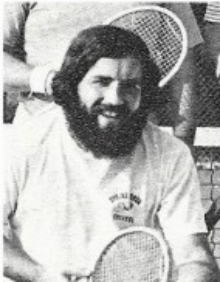
In the fall of 1970, Paul Patton attended Spring Arbor as a freshman baseball player. Patton was assigned to Gamma One in Lowell Hall, the only freshman student on a senior floor.

He did not find out until a year later that his baseball coach from high school warned SAU that Patton might have had a drug problem. The admin agreed the seniors should keep an eye on him, though Patton did not actually struggle with substance abuse.

“Finding out blindsided me,” said Patton. “I felt isolated and alone at first, but I quickly made new friendships, played baseball, and Christ was more alive in me that first year than ever before. I loved it.”


Chuck White, Professor of Christian Thought and History 

Chuck White

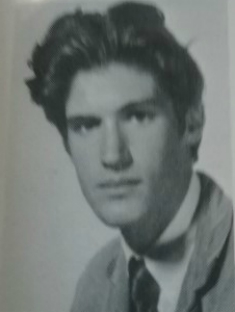
Chuck White knew he would attend SAU since he was about four years old, and campus was quite different when he arrived in 1967 compared to now. Food was served in the basement of Muffit rather than in the Dining Commons, Deitzman was the brand-new library and freshmen students had a 9:30 p.m. curfew designed to encourage studying.

One night while White was a freshman, he was out on the town with some senior friends. Since upperclassmen did not have a curfew, no one was watching the time, and before White knew it, he was out too late. However, White’s RA did not check people’s rooms, instead choosing to leave his door open and listen for those who came in late. Luckily, White’s room was on the corner of the building.

“I climbed up the fire escape and went in through the window,” White said. While other freshmen got caught, White was safe thanks to his alternate entrance.


Dan Runyon, Professor of English and Communication 

Runyon

While many professors viewed college as a privilege, others tended to lean toward feelings of obligation.

“I never wanted to go to college.” Dan Runyon said. “My mind was made up. I wanted to pursue a factory job, but my father wouldn’t hear of it.”

Nevertheless, Runyon loved spending time sitting in his dorm hallway and talking with his floormates. During his time as a student at SAU, Runyon grew in his relationship with Jesus Christ and now encourages his students to do the same.


Jeremy Norwood, Associate Professor of Sociology 

Norwood

The silverware debacle of 2014 was not the first time that students played a prank on the DC.

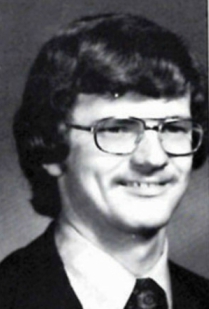
When Jeremy Norwood was a student at SAU, the DC had cardboard cutouts of cereal mascots on display. Some of Norwood’s floormates decided to kidnap the cardboard cutouts and hide them in the ceiling tiles of their room in Ormston Hall. According to Norwood, the DC was quite upset at the loss of Tony the Tiger and Toucan Sam.

“We would get them out and take pictures of these things in distress,” Norwood said. They would give the mascots speech bubbles and arrange them for the pictures as though they had really been kidnapped. After the pictures were developed, they mailed them to the DC to heighten their frustration even more.

New Microbiology Lab: Weatherwax Foundation Sponsors Upgrade

By Nathaniel Salsbury

The Department of Biology and Chemistry upgraded one of its labs in Whiteman-Gibbs over the summer to create a more modern environment thanks to donors and a grant. Spring Arbor University (SAU) decided a renovation was needed because Whiteman-Gibbs was built nearly 50 years ago.

“The facilities are older than I would like and so I’m rejoicing that we have a refurbishing right now,” Bruce Baldwin, chairperson of the department of biology and chemistry, said.

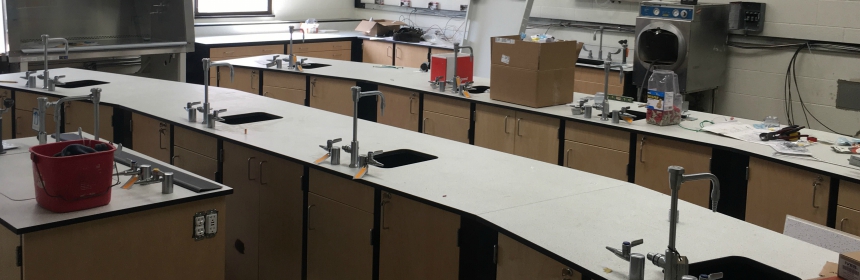
The renovated space, officially named the Weatherwax Microbiology Laboratory, features new equipment for students and new surfaces to work on. The new tables provide more open sightlines for the professors to supervise the students. They will also get to interact more with their instructors as the new tables provide more working and walking space. New lights were also installed and changed from fluorescent to LED. The lights will last longer and are easier and safer to dispose of once they do go out.

Shortly after students finished the school year and moved off campus, the project began. Baldwin said the goal is to finish the renovations before classes begin. However, a backup plan is set in place for the lab’s first classes in case construction is not completed in time for school.

“You can never guarantee when a project is going to finish,” Baldwin said. “It’s a good target and you do your best and then you react if things don’t work out.”

In the middle of the 2016-2017 school year, SAU applied for a grant from the Weatherwax Foundation, the namesake of the new lab, with the hopes of renovating one of the labs in the science department to create a more modern, high-tech microbiology lab.  The Weatherwax Foundation is a Jackson-based organization that provides funding to help strengthen various educational programs in the county.

Chief Financial Officer and Vice President for Finance and Administration Kevin Rose assured that the foundation funded 100 percent of the renovation.

Although the microbiology lab is currently the only space being funded by the Weatherwax Foundation, the plan is to eventually refurbish the other laboratory spaces in the building. Whether these plans will get the funding from the same foundation or elsewhere remains to be seen, but the hope is to receive additional donations after the school is able to demonstrate the functionality of the new lab.

Sand, turf and sweat: Intramural season has arrived

By Celeste Fendt

At Spring Arbor University (SAU), intramurals are not all about winning. They are recreational sports outside of the school’s athletic department meant to bring people together and grow the community.  In addition to the healthy competition, intramurals promote exercise and outreach among students, since students from all grades can participate, including commuters.

“Our goal is to foster community and bring people together from different areas of campus to provide fun and exciting events,” Cecilia (C.C.) Said, the Intramural Director for the Student Government Association (SGA), said.

Teams are determined by SGA and are generally split up by floor, house or wing. However, some sports, like ultimate frisbee and basketball, give students the option of creating a co-ed team. Commuters also have their own team, but an individual commuter student may be drafted by another group. Faculty members, their spouses or even the president can be drafted as well.

Each season typically runs for three to four weeks. One or two weeks at the end are reserved for a single or double elimination tournament, depending on the sport and the student turnout.

Said has been involved with intramurals since her freshman year. For her first two years at SAU, Said took on the role of floor captain for the dorm she lived in.

Because of her love for sports, Said decided to apply for the Intramural Programmer position for her junior year, which is more hands-on.

“[The programmers are] the ones who are out on the field making sure that everything’s going well,” she said.

Now, as a senior, Said is the Director of Intramurals for SGA. Her job consists of creating schedules for all the intramural sports seasons and making sure the intramural mission is carried out.

Said encourages all students to participate. “We’re all there to just have a good time and make new friends,” she said. “Just go for it.”

The first intramural event, the Block Party, includes sand volleyball and basketball tournaments. It will take place on Saturday, Sept. 9. The first day of the sand volleyball season is the following Monday, Sept. 11.

For more information on how to become involved, come to the first volleyball game, visit the SAU app or contact an SGA representative.