Chemistry and the fingerprints of God: How new chemistry professor found SAU

By Caralyn Geyer

For college students, it can be typical to wonder, “How in the world did I get here?” Many students question life and seek answers to thought-provoking questions, searching for purpose and meaning throughout those first few years. It can leave many students asking themselves, “Does anyone else feel the way that I do?”

Michael Nydegger asked himself these same questions as a college student at Southwest State University in Minnesota. Looking back, he said he never would have pictured himself where he is today as an Associate Professor of Chemistry at Spring Arbor University (SAU). He started his higher education by getting a Bachelor’s degree at Southwest State University, though he did not pick chemistry as a major until his junior year.

“They forced me to pick a major, so I picked chemistry so I could still finish in four years,” Nydegger said.

pic
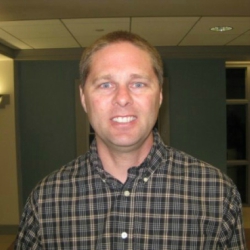
Michael Nydegger, the new assistant professor of chemistry at SAU.

Nydegger particularly liked physical chemistry, and took many courses in this area his senior year of college. He was also good at math, so a chemistry major seemed like a logical choice to him. His parents also inspired him to pursue chemistry because of each of their differing beliefs concerning evolution and creation.

He continued in his schooling to get a Master’s degree from the University of Nebraska and did his doctoral work at the University of Iowa, focusing on New Probes for 2DIR Spectroscopy for his dissertation. According to NASA, spectroscopy is a scientific measurement technique that measures light emitted, absorbed or scattered by materials, which is then used to study, identify and quantify those materials.

After his schooling, Nydegger began his teaching career by working at community colleges, which eventually led to his job at SAU. Nydegger said he had never wanted to teach at a Christian school before coming to SAU because he wanted to share the gospel with people who have not heard it. But his friends encouraged him to apply to Christian universities, so he decided to apply to SAU.

“[My friends] offered a new perspective and thought that maybe this is where I should be,” Nydegger said.

After working at SAU so far, Nydegger said he enjoys the community the campus brings and feels like his co-workers are his family. Throughout his various classes, Nydegger said his goal is for his students to get outside their comfort zone within the framework of chemistry.

“I want [students] to see the fingerprints of God on the periodic table,” Nydegger said.


Stats and Facts

Favorite Class to Teach: CHEM200, because it is more detailed and the “fingerprints of God” are more visible.

Favorite Experiments: Ammonium fountains and esterification reactions.

Favorite Movies: “Jaws” and the “Lord of the Rings” series.

HobbiesTrout fishing, hunting and traveling.

Something New: He’s trying out making maple syrup for the first time this year.

Something Interesting: He once saw a humpback whale from about twenty feet away while in a sixteen-foot boat.

Sioux spears, Curious George poems and a scary-looking dissertation: an inside look at Carol Green’s office

By Kayla Williamson

Across from the President’s office and past three cubicles lies the office of a Texan who likes snow.

Inside, you can find an array of history books including an intimidating leather binder-bound version of a dissertation. Leaning against the shelves of books sits a Sioux spear. Framed on the desk are pictures of three girls and a Curious George quote about adventuring into the unknown.

After moving from Longview, Texas this summer, the new Vice President of Academic Affairs, Carol Green, found Spring Arbor as a new adventure for her and her family. Last year, she had a feeling God was calling her north, so when she saw Spring Arbor University’s (SAU) job posting, she applied.

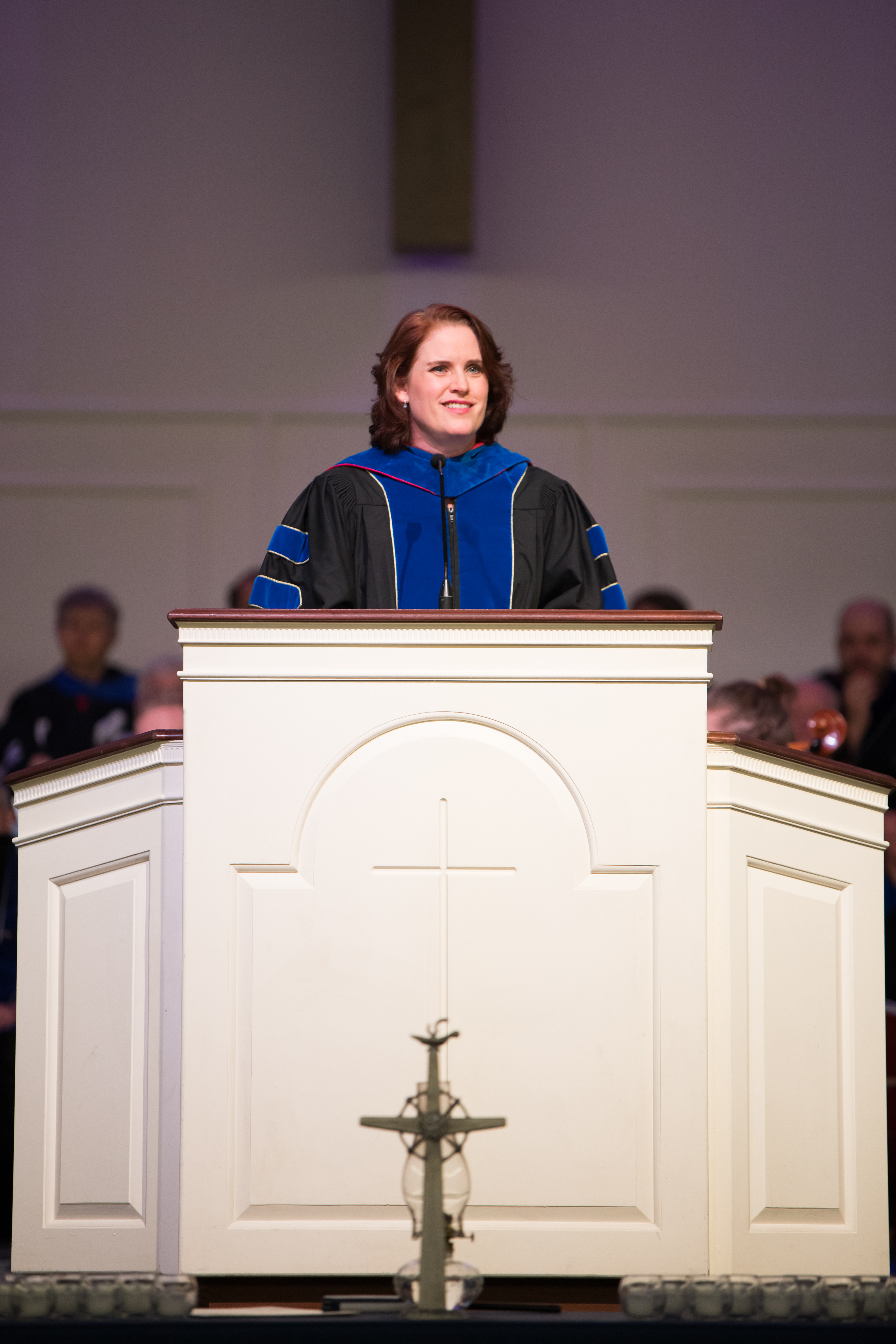
New VP of Academic Affairs, Carol Green, speaks about caring for her husband after he was diagnosed with cancer in Convocation.

After working five years at LeTourneau University, Green took a step back from high education to care for her husband who was diagnosed with cancer in 2013. She told her story about her husband and the struggle to work through grief at Convocation.

Although she did apply for more jobs in higher education after her husband John passed away in 2015, she felt like the time was not right to move. Her second eldest daughter, Amanda, had two more years of high school.

“I really felt that the girls needed more stability at that point,” Green said. “They had a really strong youth group. And I had a lot of good friends who were helping me through this too.”

Green journaled a lot during that time, and now four years later, she said she is 80 percent finished with a rough draft of a book about her experiences.

As for Spring Arbor, she has been an official SAU employee for three weeks, and she is still trying to figure out which buildings to go to for meetings.

“There may be funny stories once the snow hits,” Green said. “I think I like the snow, but we’ll see.”

Stats & Facts

Which Hogwarts House would you be in? Gryffindor.

How many years have you taught? 17 years.

What’s your Myers-Briggs? ISFP, though I fall in the middle for most of them.

What’s the last book you read? “The Lighthouse Chronicles” by Flo Anderson. And I reread “Lightning” by Dean Koontz and “Waking the Dead” by John Eldredge.

Last TV show you watched? America’s Got Talent.

Favorite judge? Simon.

Lord of the Rings or Harry Potter? Lord of the Rings.

Anything else? You should probably know I’m very competitive and I love a challenge. I like doing fun, quirky things. I like surprising people too.

Pranks, Pizza and Preaching: When Faculty were Freshmen

By Luke Richardson and Emily Spencer

Finding out some of our professors went to Spring Arbor University (SAU) as college students is like that time in first grade when you found out your teacher doesn’t actually live at school. Here are some stories from when professors and faculty really did live at school.

Mary Darling, Associate Professor of Communication 


Darling

Mary Darling transferred to Spring Arbor for her second year of college and did not know what to expect.

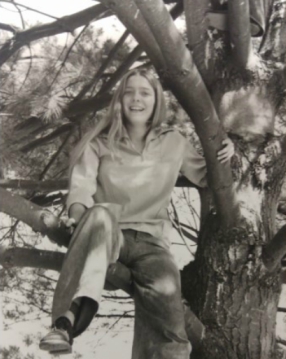
“It was the mid 1970’s at the height of the ‘Jesus Movement,'” Darling said. “Living in a triple on Delta Three in Lowell Hall was a challenge. My roommate thought I wore jeans too much so she put them in the freezer in our room so they would be too cold to wear.”

In addition to her rooming woes, Darling remembers veggie pizza made with veggies left over from the previous week’s meals.

“DC pizza now is so much better,” Darling said. “Just don’t put any cauliflower on mine.”


Ron Kopicko, Chaplain and Instructor in General Studies 

Kopicko

Ron Kopicko originally came to SAU because the man who led him to Christ became the Dean of Students. One of the things he remembers most are the relationships he formed, which still last today.

“There was a real sense of ‘we’re not in this alone,'” Kopicko said.

On the weekends, Kopicko and a friend would hitchhike as far as they could and be back before classes on Monday. They carried a sign with the word “West” on one side and “East” on the other and flipped a coin to see which way they would go. He shared Jesus with people along the way.


Paul Patton, Professor of Communication 

Patton

In the fall of 1970, Paul Patton attended Spring Arbor as a freshman baseball player. Patton was assigned to Gamma One in Lowell Hall, the only freshman student on a senior floor.

He did not find out until a year later that his baseball coach from high school warned SAU that Patton might have had a drug problem. The admin agreed the seniors should keep an eye on him, though Patton did not actually struggle with substance abuse.

“Finding out blindsided me,” said Patton. “I felt isolated and alone at first, but I quickly made new friendships, played baseball, and Christ was more alive in me that first year than ever before. I loved it.”


Chuck White, Professor of Christian Thought and History 

Chuck White

Chuck White knew he would attend SAU since he was about four years old, and campus was quite different when he arrived in 1967 compared to now. Food was served in the basement of Muffit rather than in the Dining Commons, Deitzman was the brand-new library and freshmen students had a 9:30 p.m. curfew designed to encourage studying.

One night while White was a freshman, he was out on the town with some senior friends. Since upperclassmen did not have a curfew, no one was watching the time, and before White knew it, he was out too late. However, White’s RA did not check people’s rooms, instead choosing to leave his door open and listen for those who came in late. Luckily, White’s room was on the corner of the building.

“I climbed up the fire escape and went in through the window,” White said. While other freshmen got caught, White was safe thanks to his alternate entrance.


Dan Runyon, Professor of English and Communication 

Runyon

While many professors viewed college as a privilege, others tended to lean toward feelings of obligation.

“I never wanted to go to college.” Dan Runyon said. “My mind was made up. I wanted to pursue a factory job, but my father wouldn’t hear of it.”

Nevertheless, Runyon loved spending time sitting in his dorm hallway and talking with his floormates. During his time as a student at SAU, Runyon grew in his relationship with Jesus Christ and now encourages his students to do the same.


Jeremy Norwood, Associate Professor of Sociology 

Norwood

The silverware debacle of 2014 was not the first time that students played a prank on the DC.

When Jeremy Norwood was a student at SAU, the DC had cardboard cutouts of cereal mascots on display. Some of Norwood’s floormates decided to kidnap the cardboard cutouts and hide them in the ceiling tiles of their room in Ormston Hall. According to Norwood, the DC was quite upset at the loss of Tony the Tiger and Toucan Sam.

“We would get them out and take pictures of these things in distress,” Norwood said. They would give the mascots speech bubbles and arrange them for the pictures as though they had really been kidnapped. After the pictures were developed, they mailed them to the DC to heighten their frustration even more.

Mix and Match: the process of building an individualized major

By Collin Caroland
“If you were to throw a rock at a group of 10 college students, the odds are good you would hit one of the eight students who has changed or will change their major, according to the National Center for Education Statistics.”

By Collin Caroland | Online Writer

If you were to throw a rock at a group of 10 college students in the United States, the odds are good you would hit one of the eight students who has changed or will change their major, according to the National Center for Education Statistics. Of that same group of students, most are more than likely to have a major that is a course-load advertised by their school. There are, however, some students who have taken it upon themselves to create their own special courses of study- these courses are often referred to as individualized majors.

Each student has their own reason for choosing s specialized study, Alec Cross cited his primary reason as marketability and practicality.

“I’m studying adolescent spirituality,” Cross said. “It’s basically a youth ministry major, I just pulled out a couple of classes that are more administration and other classes that conflict with my spiritual formation minor and just added them to my major.” Cross’ main concern with making a major was nobody would understand what it meant, but professors and advisors told him the major was fine and would make him more marketable.

Nick Lemerand has a similar story about his own personalized major. Lemerand decided one week before his sixth semester at Oklahoma University he would rather be studying ministry, with a focus on helping adolescents and young adults, than meteorology, so he checked with Spring Arbor, who worked with him so he could combine urban ministry and youth ministry to make college ministry major, and transferred here.

The individual major is unique for each student, and therefore not for everyone. While it may make the student more marketable, it can be difficult to set up.

“I had to look at the semester offerings of each course in all of the related departments myself,” Cross said when asked if the individualized major was a program that had no down sides. “I had to sit down by myself one day and decide which courses could work best, and then get them approved by the overseeing faculty and when they were finally approved, I had to get a form from the registrar and I needed to get six or so signatures from a lot of different people.” From the logistical standpoint, according to Cross, it can be a nightmare to set up. Lemerand advised those looking into it to be wary of the practicality of the individual major.

“You definitely have to have some idea of what you want to do with it,” Lemerand said.

Courses were pulled from a variety of different programs for both Cross and Lemerand, with special thought put into each course so as to make their majors truly their own. Cross and Lemerand both would encourage any student who is looking at an individualized major to talk with their advisors and faculty to determine if an individualized major would be suited for the student’s goals and aspirations.

The Origin of Halloween

By Celeste Fendt
The Halloween celebration we know today can be traced back over 2000 years to the ancient Celtic festival Samhain.

Photo by Celeste Fendt

The Halloween celebration we know today can be traced back over 2000 years to the ancient Celtic festival Samhain. Although our modern holiday and Samhain both took place on the last day of October, the festivities involved in these celebrations differ greatly. In this festival the Celtic people paid tribute to the dead by gathering together for ceremonial bonfires and banquets. They oftentimes dressed in disguises in an effort to scare away unwanted spirits from their celebrations.

Christianity spread to the Celtic lands of what are now Ireland, the United Kingdom and France at the beginning of the ninth century. Shortly after, the Church declared November 2 as All Souls’ Day, a similar celebration to the Celtic Halloween because of its dedication to honoring the dead.

In addition to the ritualistic bonfires and masquerades, this Christian holiday included a practice called “souling.” Souling was a time for poor people to knock on the doors of the wealthy in hopes of receiving a pastry called a soul cake. Children later joined in on this tradition, asking wealthy families for sweets or spare coins. Thus emerged the “treating” side of the Halloween tradition we know as trick-or-treating.

Similar All Souls’ Day practices arose in Scotland and Ireland. Children dressed in costumes to go “guising” and performed small tricks for the homeowners in exchange for treats. The Irish people brought this tradition with them to America in the nineteenth century as they fled from Ireland’s potato famine. American children, however, preferred pranks over the traditional innocent performances in exchange for treats.

Spring Arbor University (SAU) freshman Cassidy Crim loved participating in Halloween traditions as a child.

“I used to double-hit houses for candy and I would turn my cape inside out or do something a little bit different,” Crim said.

As she grew older, Crim also enjoyed passing out candy to other trick-or-treaters.

“I climbed up in the tree, dressed up like a cat, and I would throw candy at the kids trying to get it in their bags,” Crim said.

In 2016, Americans are predicted to spend $8.4 billion on Halloween candy alone. Skittles became America’s favorite candy in the summer of 2016. Approximately 171 million people will celebrate the holiday this year, whether it be dressing up in homemade costumes or throwing candy at children passing by.


Willkommen in Deutschland!

By Carly Thompson
Adventures on my semester abroad

Embarking on an Adventure

It is impossible to accurately put into words just how incredible my semester abroad in Germany was, except to say I have gained a second home in Europe.

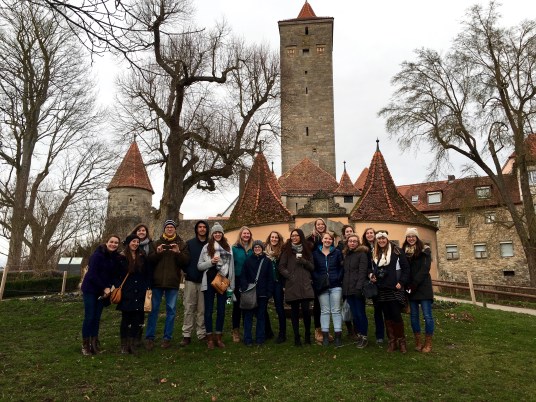
On January 15, senior Allie Herkenroder and I embarked on a three-month journey in Germany for the AMBEX (American Bavarian Exchange) semester. I had never flown before, let alone been outside of the United States We had no idea what to expect and barely knew each other. Here we were, with 14 students from colleges on the west coast, trying to figure out a new life together.

Everything was new. Picture New Student Orientation (NSO) week, but thousands of  miles across the ocean in Germany. Picture 15 people you’ve never met who you have to live and room with. Now, picture an unfamiliar culture, language and time difference. It was NSO on steroids.
The semester was structured in two week periods, the first week being orientation in Nürnberg. We then moved to Regensburg for the duration of the semester.
We had five two-week classes: Christian Worldview, Reformation Theology, Modern European Literature, Art History and German Culture and Geography. Following each two week class was either a free week to travel elsewhere in Europe (we had three of these), or an academic tour week (one was a Reformation tour through cities in Germany and the other was in Austria and Italy studying art). It sounds like a lot to do in three months—it was, but it was the adventure of a lifetime.
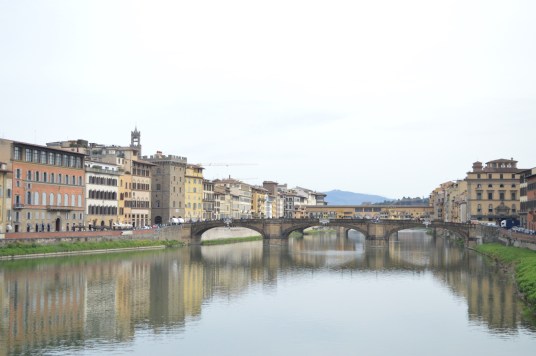
florence-italy
Florence, Italy (Photo by Carly Thompson)


Exploring Europe
During the first of three independent travel weeks I went to Greece, where we climbed up to the Acropolis and took in the view of ancient Greek ruins paired with the panoramic view of the entire city of Athens. We ate a gyro a day and swam in a cave lake with tiny fish that tried to suck on our toes.
My second travel week was spent in Barcelona, Spain. We visited the Futbol Stadium and the locations of the Cheetah Girls 2 film: the natural history museum where I held colored pigeons, the fountain and Park Güell with mosaic benches.
garmisch-germany-2
Photo by Carly Thompson
Our final independent travel week was my favorite. It was the week of my birthday, which I spent in England and Ireland. We toured London in a single day. We awoke at 6:00 a.m. and saw the Sherlock Holmes Museum, Buckingham Palace, Big Ben and Westminster Abbey. We took a tour of the locations used in filming the Harry Potter movies– our tour guide dressed to look just like Hagrid. We finished the day by watching the musical “Wicked” at the Apollo Theater, my dream come true, and taking pictures at Platform 9¾ in King’s Cross Station.
We took a ferry over to Ireland for the rest of the week, staying in Dublin, Killarney and Galway. We stayed in both the countryside, with brilliant green grass and sheep, and in bustling cities. We visited the Cliffs of Moher, took meandering walks through the countryside and experienced the city life of street performers and Irish music while celebrating my birthday in Galway.
A New Home
We always returned home to Regensburg after our excursions. Living in Germany was like living in a storybook. Every cobblestone street, narrow alley and red-roofed building took us back in time to a history preserved tangibly in their culture. Regensburg is a quaint little town on the Danube River, with storybook Bavarian architecture, unmistakable red roofs, cathedrals and home to the royal Thurn and Taxis family living in their elaborate palace.
We lived in one wing of our Jungendherberge (hostel) in rooms that resembled standard dorms, except the windows didn’t have any screens.
On our trip we had 15 girls and one guy, so girls got to rotate roommates while poor Jonah was by himself.
germany
Photo by Carly Thompson
Our classes took place in a conference room in our hostel down the hall from our rooms, and we would usually meet from 8:00 a.m. until lunchtime for class every day for two weeks. After lunch we had free time for the rest of the day to do “homework,” which meant explore the city.
Most days we would frequent cafes and listen to the locals converse while eating delectable pastries. In the winter, most of our exploring involved food. Bavarian pretzels, chocolate and gelato were staples every day. If we didn’t like the food at the hostel, our favorite meal
to grab was döner kebabs (pita stuffed with shaved meat, cabbage, cucumbers, onions and special sauce) and dürum (which is everything inside döner but stuffed into a wrap). Our spring explorations took us on walks down the river on paths lined with hundreds of wild flowers, or up the hill to a small chapel where we climbed into the largest tree I had ever seen. Every day was an adventure.
On one of our adventures at the ice skating rink I met my dear German friend, Maike. We were brought together by her longing to be back in America and my longing for a local friendship.
We skated and talked the entire night about our love of books, writing and cultural differences. Maike also attended Lifestream church where we went on Sundays, an independent “free” church which met in a bar. The congregation was so hospitable and friendly. Although the services were conducted in German, we were connected by our faith. Whether we sang in English or German, we were united in one language—God’s language. Regensburg will forever have a piece of my heart.

Follow the money and see where it goes

Ever wonder how the school makes money and where tuition money goes? President Ellis answers all your questions.

How does the school generate income? And where does our tuition go?

Kayla Williamson | Editor-in-Chief

One of President Brent Ellis’ priorities when he took the leadership role was fundraising and increasing endowment (the school’s savings and investments.) While the budget for Ivy League university Harvard is $78 billion and Spring Arbor University (SAU)’s rival, Indiana Wesleyan’s, 2016-17 budget is $178 million, Spring Arbor’s revenue and contributions in 2014 totaled $72 million.

As SAU continues to grow and expand, donor contributions, tuition and other supplementary projects are key sources of income, Ellis said.

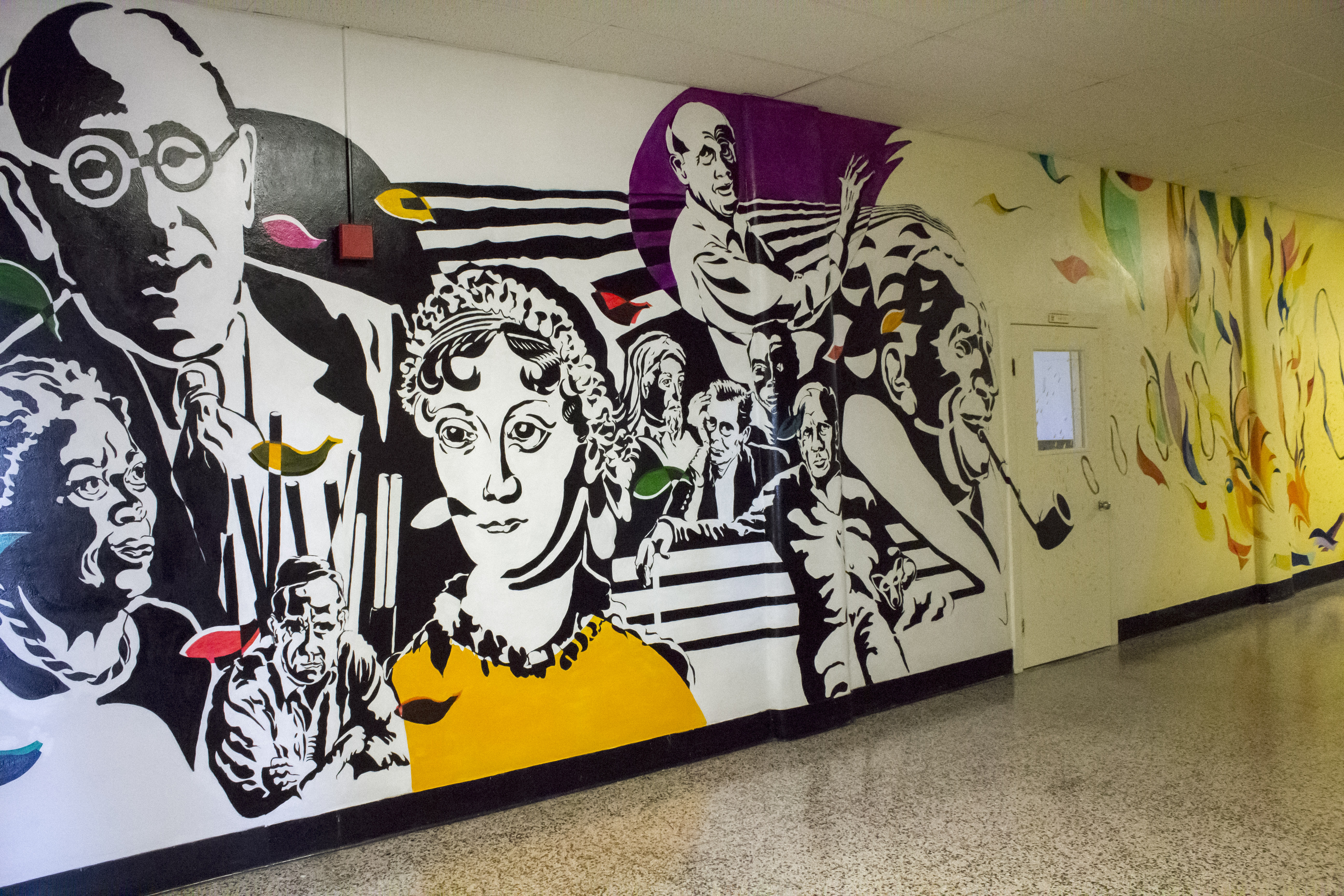
The recent additions to campus–the new tennis courts, the E.P. Hart memorial for SAU’s founder, renovated locker rooms, English mural and nursing program–were all contributed by donors.

“Part of what you do within these donor relationships is people fall in love with the university and they have interests and they have passions that are focused in certain areas, so you really want to empower people to be involved in things they’re passionate about,” Ellis said. “I think every one of these gifts really is a manifestation of the person’s passion for Spring Arbor University.”

Ever wonder how the school makes money and where tuition money goes? President Ellis answers all your questions.

The Pulse (TP): You’ve actually worked in fundraising before you were president in Advancement right?

President Brent Ellis (PE): Yes I did. I still work in fundraising. (laughs) But for four years while Chuck Webb was president, I was the Vice President of Advancement. The chief fundraiser at the time.

TP: How do donations work? Do you go out and find donors for specific projects or do they come to you with projects?

PE: Both. At times projects are driven by the institution based on its needs. At times projects are driven by donors who have certain ideas of what they want to do, and then at times, like with the Kauffman Center, it’s, “I want to do something to honor Ken Kauffman, what could we do?” Really, it runs the gamut. And there are times we say no. I’ll just throw out a hypothetical. If someone says, “Brent we’re going to give you $20 million to build a science building, but we want you to teach these certain components of stem cell research” or something that could be controversial, we generally will say no. If it’s consistent with what we have set for priorities for the institution and allows us to fulfill our mission in greater ways, then by all means we’ll accept it. We will do that in a manner that it doesn’t impact student tuition, and we don’t divert tuition funds towards those projects.

TP: What does tuition actually go towards?

PE: The operations of the institution. Our operational budget is in the neighborhood of $70 million and tuition funds a portion of that broader operational budget. Tuition does not cover the full cost of running the institution. We have endowment dollars. We raise money. There are a variety of different things we do to have the income necessary to run the institution. The majority of the operational budget is personnel. Salary and benefits. It pays for our faculty and staff. The other big portions of it would be some of our licenses (i.e. Blackboard), computers we provide and infrastructure.

TP: Like Wi-Fi?

PE: Yeah, Wi-Fi. Athletic teams and coaches, it’s all through tuition dollars. Anything that is a consistent recurring cost on an annual basis, that is what tuition goes to, and nothing outside of that. I think tuition covers 85 percent of our operational funds. About 15 percent of our operational budget is outside of tuition dollars.

TP: One of the incomes of the school would be donors and tuition, and where does the rest come from?

PE: Endowment. It’s investments people make. We draw four or five percent on an annual basis from endowment to fund operational expenses. And then there are other auxiliary enterprises, like summer camps and leasing facilities.

TP: So tuition would be directly correlated with enrollment, and so as enrollment goes up or down the operational budget would go up and down?

PE: Yes.

TP: And so that affects how many professors we can hire or facilities we can update?

PE: Right. Some of the operational dollars go to what we call broadly deferred maintenance. It takes on different projects that would be helpful for maintaining facilities throughout their lifespan.

TP: How do you predict the budget? Do you know at the beginning of the year how many students come?

PE: We base our budgets on three year averages. So right now we already know what next year’s budget is going to be because we know what we’ve enrolled this year. Our new student class is up 20 students from a year ago, which is great. That then becomes the target for their recruiting efforts the following year.

TP: So it really depends on admissions, too.

PE: Absolutely. Enrollment is significant. Schools like Spring Arbor are often times referred to as tuition driven. We say we’re tuition dependent. Because we do depend on tuition dollars to run the institution. If all the students left, we wouldn’t have access to funds to be able to maintain the institution. There are some schools that would have significant endowments that say we’re really not tuition dependent. It doesn’t really matter what we charge, like Princeton or Yale or Harvard, they can charge whatever they want. Their endowments are so big that they can live off of their investments. It doesn’t matter. If they had years where they had zero students they could continue to operate. We couldn’t. We have to adjust our budgets based on our enrollments.

TP: So endowment is a really important part of your job as fundraising?

PE: Endowment is an enormous focal point to what we’re doing. When I came here seven years ago, our endowment was just under seven million dollars and our expectancies (potential future donations through wills) were about 18 million. Now our endowment has more than doubled, so it’s over 15 million, and our expectancies have gone from about 18 million to about 55 million which is great. We’re on our way, but part of the problem was, if you go back into the mid 80s, our endowment was about $250,000. There was a mentality for a lot of Christian institutions to say if you build endowment, you were removing your dependency on God to provide you on an annual basis what it takes to survive. I think God can provide endowment to provide, it’s still His provision. Whether it’s tuition dollars or endowment, it’s all God’s money. So I don’t agree with that philosophy so we’ve put a strong emphasis to try to build the endowment. The more we raise the better job we can do to keep tuition low. And I know it doesn’t seem that way. In the last several years the  average increase has been at 3.5-5 percent, which is lower than the national average. I know it’s expensive, but we are in the bottom quartile of institutions. There are more than 75 percent of private Christian institutions that have higher tuition rates than Spring Arbor. We do intentionally try to stay in that bottom quartile to try and make it as affordable as possible.

TP: Why does it increase every year? Is it inflation?

PE: The primary driver to that is healthcare. It’s an issue institutions face outside of higher education as well. We don’t pay the highest salaries, so we try to provide more significant benefits. So, that’s what has been done. We know what our budget as far as targets for enrollment next year goes. We have no idea what the increase in our health care premium is going to be. So, all of that becomes very difficult to predict. That and technology are the two main culprits. As technology becomes better it costs more and people’s expectations of that increases. What was really rare and uncommon 15 years ago (i.e. Wi-Fi) is now expected.

TP: One last question, so all of these five dedications, they have nothing to do whatsoever with parking passes and paying $50.

PE: Absolutely zero have to do with that.

TP: So the $50 goes straight to campus safety and the new parking lot?

PE: Nope, has nothing to do with the new parking lot. The $50 only goes towards campus safety budget and allows them to have some funds to make sure that we are a safe campus.

TP: So where does the new parking lot come from?

PE: That was part of the tennis court project. One of the things that we were required to do by Spring Arbor Township is to replace the parking lot that we lost. That was part of the project cost.

Where the money for the five dedications comes from

Ever wondered why there’s a 30,000 lbs rock at the front front of the school? Or how these donors discovered Spring Arbor when some of them are not alumni? President Brent Ellis explains the stories behind each facility.

Kayla Williamson | Editor-in-Chief

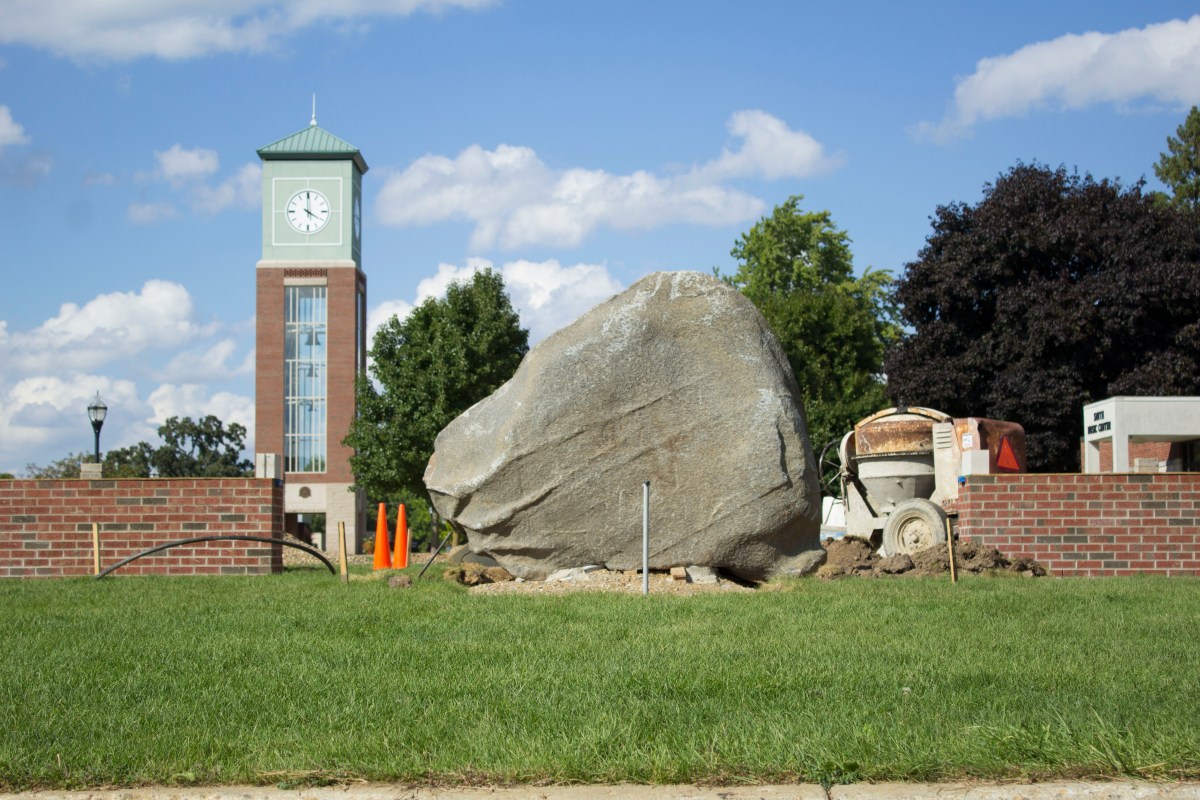
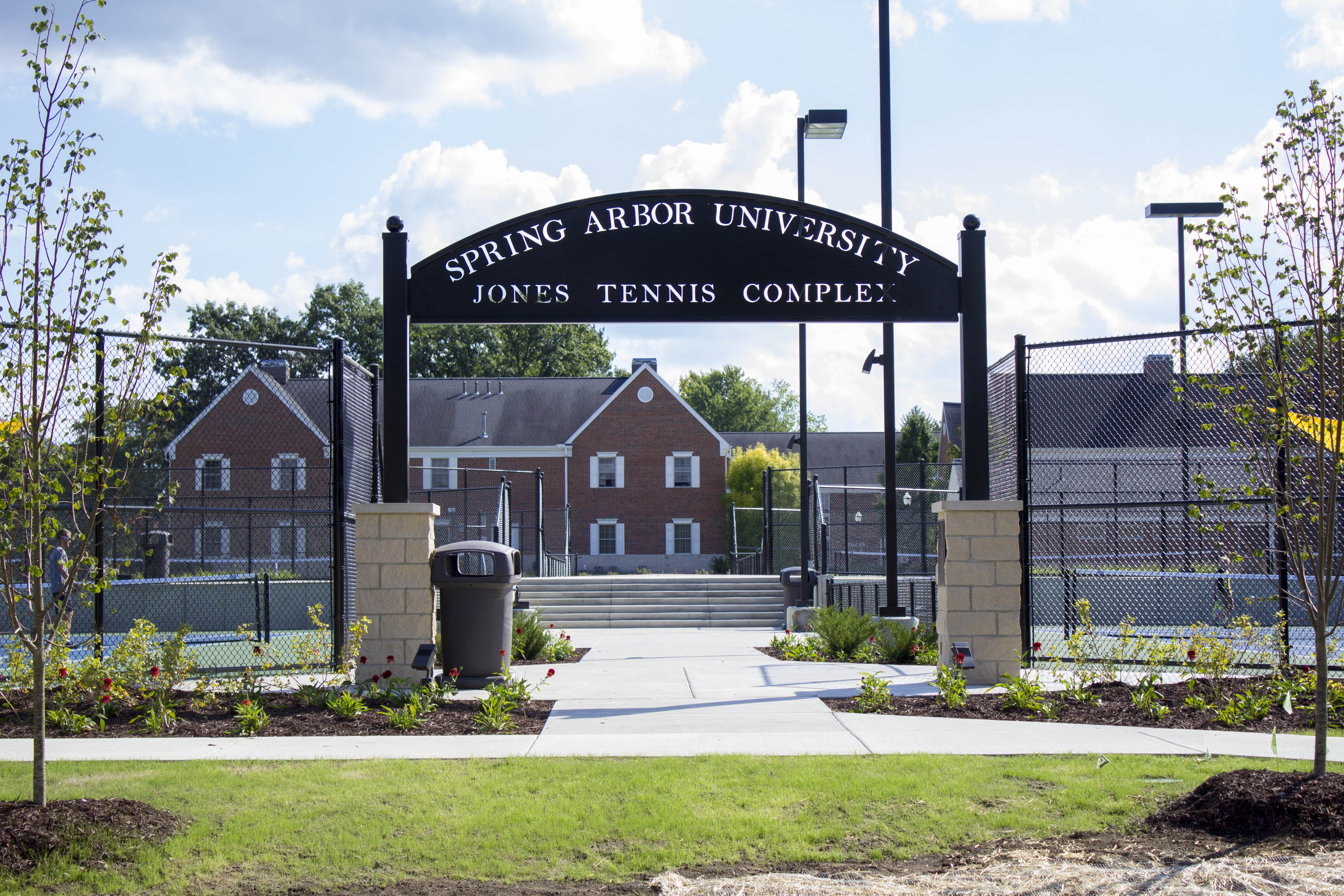
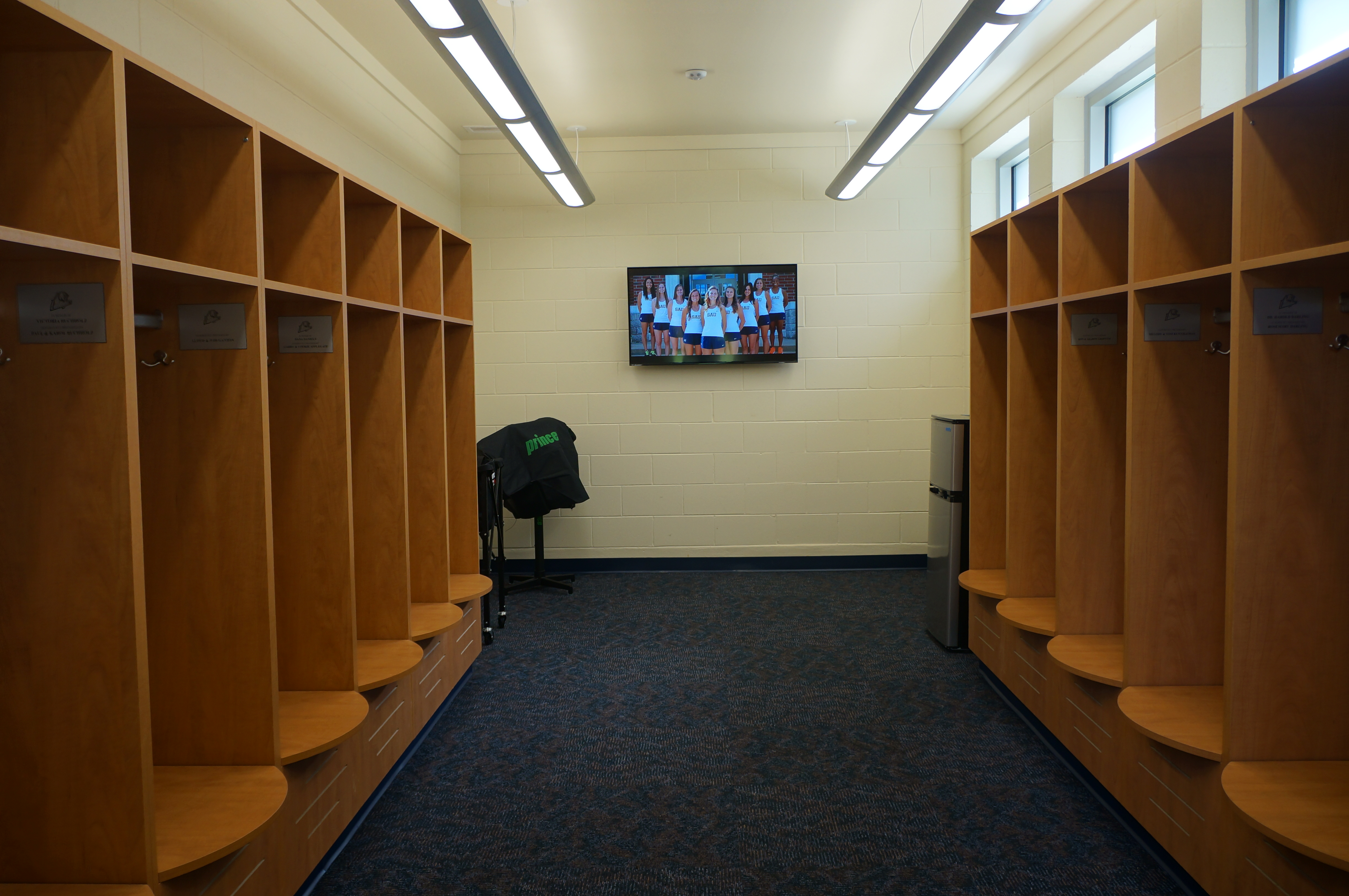
The new tennis complex, renovated locker rooms, upstairs Sayre-Decan mural, rock entrance and nursing lab officially opened on Homecoming Day, Oct. 1.

Almost 100 percent of these five dedicated facilities were paid by donors, people who want to show their love and appreciation towards the school. None of the money to build these came from tuition.

Ever wondered why there’s a 30,000 lbs rock at the front front of the school? Or how these donors discovered Spring Arbor when some of them are not alumni? President Brent Ellis explains the stories behind each facility.

The Jones Tennis Complex

Jones Tennis Complex

Who: Ron & Marvelle Jones and other donors

What: $1.3 million tennis courts and $250,000 in scholarships

Where: North of Ogle Villages

The Story: “Ron Jones, a new board member for SAU, and his wife love tennis and  have a long history with SAU tennis alumni. That began to influence their interest in Spring Arbor. It was a real natural gift.” – President Brent Ellis

Varsity Locker Rooms for Basketball and Volleyball

Locker Rooms

Who: Faith Small (women’s locker rooms) and anonymous donors (men’s locker rooms)

What: $185,000 to renovate locker rooms

Where: Fieldhouse

The Story: “Trent Allen, who the men’s locker rooms are named for, had a relationship with the donor couple, and he passed away, which is why it is named for him. The women’s locker rooms were funded by Faith Small who was a board member who just passed away. It was eight or 10 months before she died that she had given the funds to renovate the women’s locker rooms.” – President Brent Ellis

“Word & Image” Mural

Mural

Who: Joel Varland, Roger Varland’s brother

What: Donated labor to paint a mural highlighting some of the influential authors of the Christian faith

Where: Upstairs Sayre-Decan Hall

The Story: “Joel heard that we were doing [the DC] mural a couple years back. He worked with Kimberly Moore-Jumonville and the faculty in the department of English and came up with who would make the wall and who wouldn’t make the wall.” – President Brent Ellis

E.P. Hart Circle

EP Hart Circle Rock

Who: Hal Munn, board of trustees, and anonymous donors

What: $40,000 memorial for EP Hart, the founder of SAU

Where: EP Hart Circle

The Story: “Hal Munn was one of the catalysts for the memorial when it was first raised in 2003. Two weeks prior to Hal’s death, I went to go see him just to pay my respects and he said, Brent I need you to promise me two things: first thing have a tenure of more than 20 years, be the president for more than 20 years. I said well that’s going to be up to our board. And he was like yes—you be committed. I said I am committed to this place. I’m glad I’m here and I believe in what this place is and he said the second thing is I want to give a legacy gift to complete the construction of the EP Hart circle. I said Hal, we’ll find a way to get it done. He made a very generous gift from his family. That gave us almost what we needed to get it done. We’ve gone out and raised and additional 15-20k to fund that circle as well. It’s not just going to be a memorial, but also an entrance, and that’s why you see the brick façade that says Spring Arbor University, lights, when you come into that entrance, you’ll now where you are. It also will serve as a nice welcome, entrance into the university, which I don’t think we have a entrance, where’s the front gate, where the front door. Now that will be the front door to the university.” – President Brent Ellis

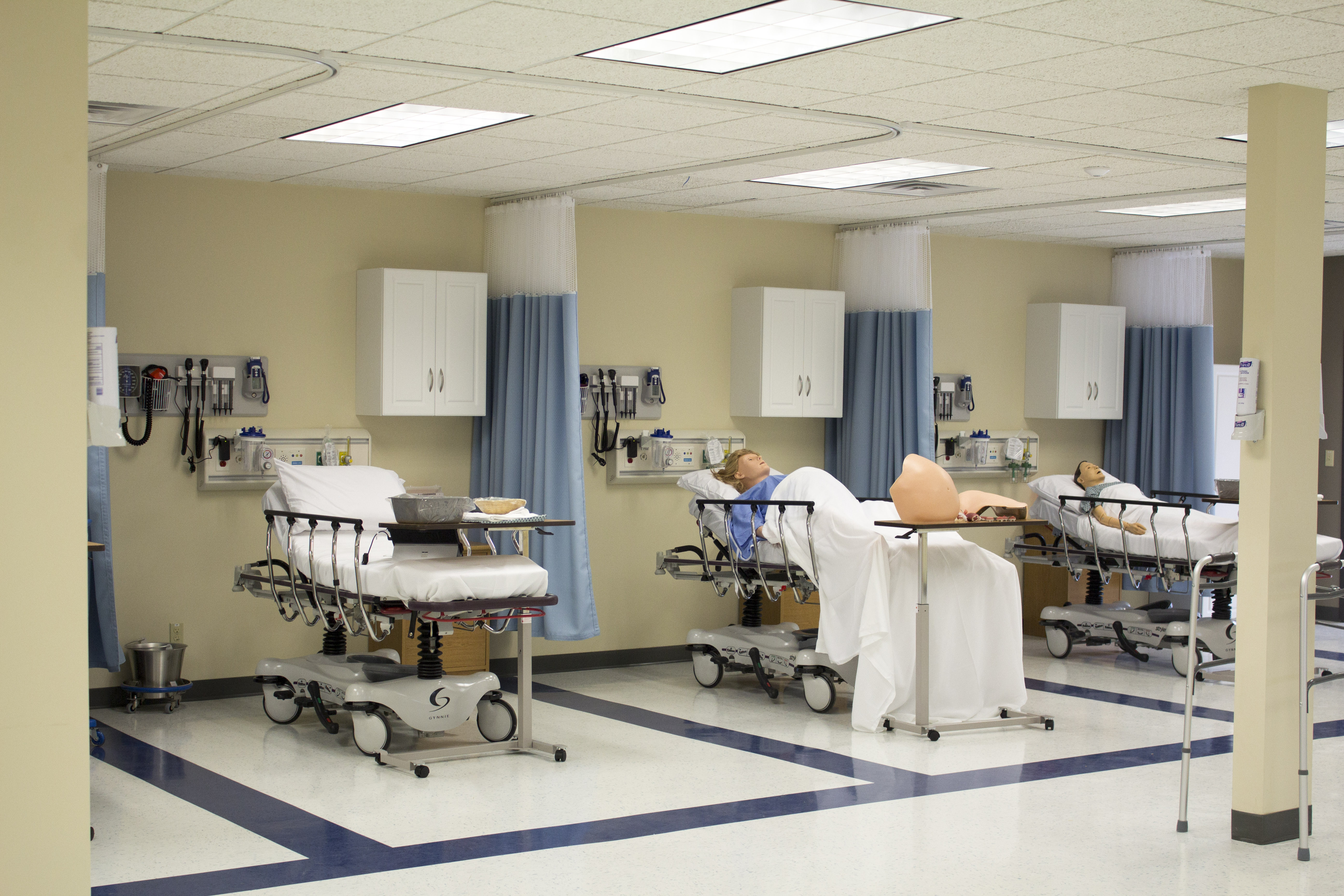
Jaworski Clinical Simulation Center and Physical Therapy & Sports Medicine Service Clinic

Nursing Lab

Who: Joe Jaworski, retired professor of biology

What: Clinical space (labs) to kickstart a residential nursing program

Where: Across M-60 in the old Physical Plant

The Story: “As we’ve been doing market research and where we’re losing students, nursing continued to be a place where we continued to lose students because people wanted a nursing degree from a Christian university, so we were losing students to Indiana Wesleyan, Huntington, etc. I could name 10 people that I know that did not go here because of the nursing program. One of our professors, Joe Jaworski, a 30+ year faculty member in Biology, left a significant portion of his estate to the university with the caveat that it would go towards benefiting the sciences. Through conversations with our science faculty arrived at the idea if we started a nursing program that would provide a consistent stream of students into biology and into chemistry and allow us to recruit some students that we’d been losing.” – President Brent Ellis

Save

Our Ocean Conference 2016

By Amber Cekander
The Pulse had an opportunity to participate in a national conference call about the annual Our Ocean conference.

The Pulse recently had an opportunity to participate in a national conference call with other student publications from campuses across the country. The call was hosted by Judith Garber,  who works in Washington D.C. as the assistant secretary of state for oceans, international environmental and scientific affairs. The focus of the call was to bring attention to the annual Our Ocean conference which gathers nations across the globe to discuss ocean conservation. Our Ocean was held Sept. 15 and 16 in Washing D.C. and included keynote talks from Secretary of State John Kerry, President Barack Obama and actor Leonardo DiCaprio.

“Secretary Kerry is fond of saying that nothing connects all of us but the ocean,” Garber said in the call.

After a brief introduction about the purpose of the event, the call was opened up to the students to ask questions about the conference and its goals.

Sarah Antozzi from the Marlin Chronicle at Virginia Wesleyan College asked Garber to communicate the one main takeaway she would like students to have from the call.

“That our ocean is under threat, that solutions are possible, and it’s all of our responsibility to take action to help our ocean,” Garber said.

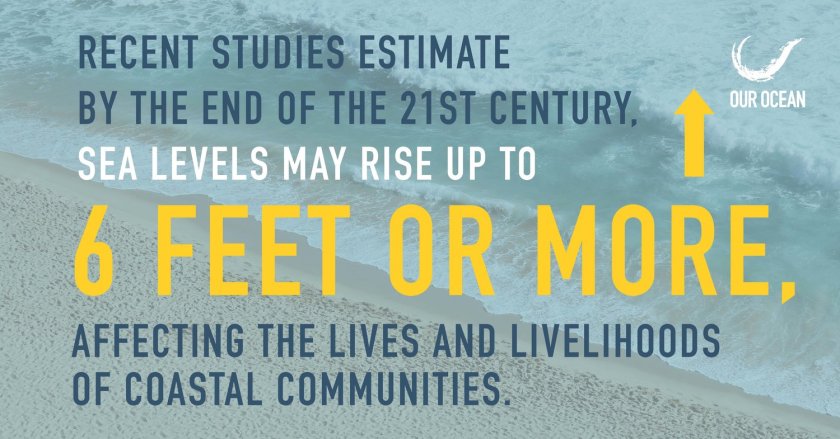
oceans_factsv5_page_11a
Graphic from ourocean2016.org

The main focus areas of the conference were centered around marine protected areas, climate, sustainable fisheries and marine pollution. Different solutions and ideas were proposed at the conference along with monetary donations and commitments to aid in those solutions.

Since the international conference was focused on what countries as a whole can do for ocean conservation, Katie Gagliano from the Daily Reveille at Louisiana State University asked what role the national administration was encouraging states to play.

Garber responded by confirming that some states were actually participating at the conference. “This is an issue that can’t just be solved by governments or international organizations. It is something that needs state and local communities. We are trying to do outreach at every level,” she said.

But what about states like Michigan that aren’t bordering an ocean? Spring Arbor University’s Professor of Biology Chris Newhouse said that, in terms of effects from ocean pollution, there would be “relatively few negative impacts” on the Michigan and the Great Lakes.

5-ouroceanplastic
Graphic from ourocean2016.org

Both Garber and Newhouse mentioned the role plastic plays in ocean pollution. According to Garber, the “ocean is suffering from massive quantities of plastic waste.”

Newhouse said, “We can make plastics bio-degradable. Or we can do a better job of recycling plastics. If we can figure out how to remove them in the ocean most of the those [solutions] could be applied to the Great Lakes.”

More information from the conference can be found on the website ourocean2016.org

Save

Roommates Choose Each Others Outfits: Day 5

Three Spring Arbor University (SAU) students decided to let their roommates pick their outfits for this week. Naturally, “The Pulse” is tagging along to see what happens. If you haven’t read the introduction post yet, click here to do so!


Day 5: Double-Teamed

Instead of just one roommate choosing the others, Friday was a day of combined forces. Two roommates teamed up to choose the third’s outfits, combining all three roommate styles.


Bekah

20160415_131310

Today was (finally) the last day of this particular adventure. Today we did things slightly differently. Instead of Bri or Jessica picking my outfit, they did it together. I was thrilled to be back in my favorite black skinny jeans, which was casually paired with a purple t-shirt. I added the cardigan because, well, I’m always cold.

When people ask me about this week, I’m never really sure what to say. There were days where it was fun and I really enjoyed it, and there were days where I was eagerly waiting for Friday. Thursday night, the only thought going through my head was, “I am so over this.” However, I am glad we did it. This experience has encouraged me to start going outside my comfort zone and try new things (when it comes to clothes anyway). I feel much more confident in trusting my friends’ opinions on outfits, even when I’m not so sure about it. Will I do anything like this again? Probably not. That doesn’t mean, however, that I regret the experience. It was really… interesting.


Bri

IMG_3530

I’M DONE, I’M DONE, I’M DONE! But really, this week has been one-of-a-kind and while I have no plans on letting someone else pick my clothes out anytime soon, it really was a good experience.

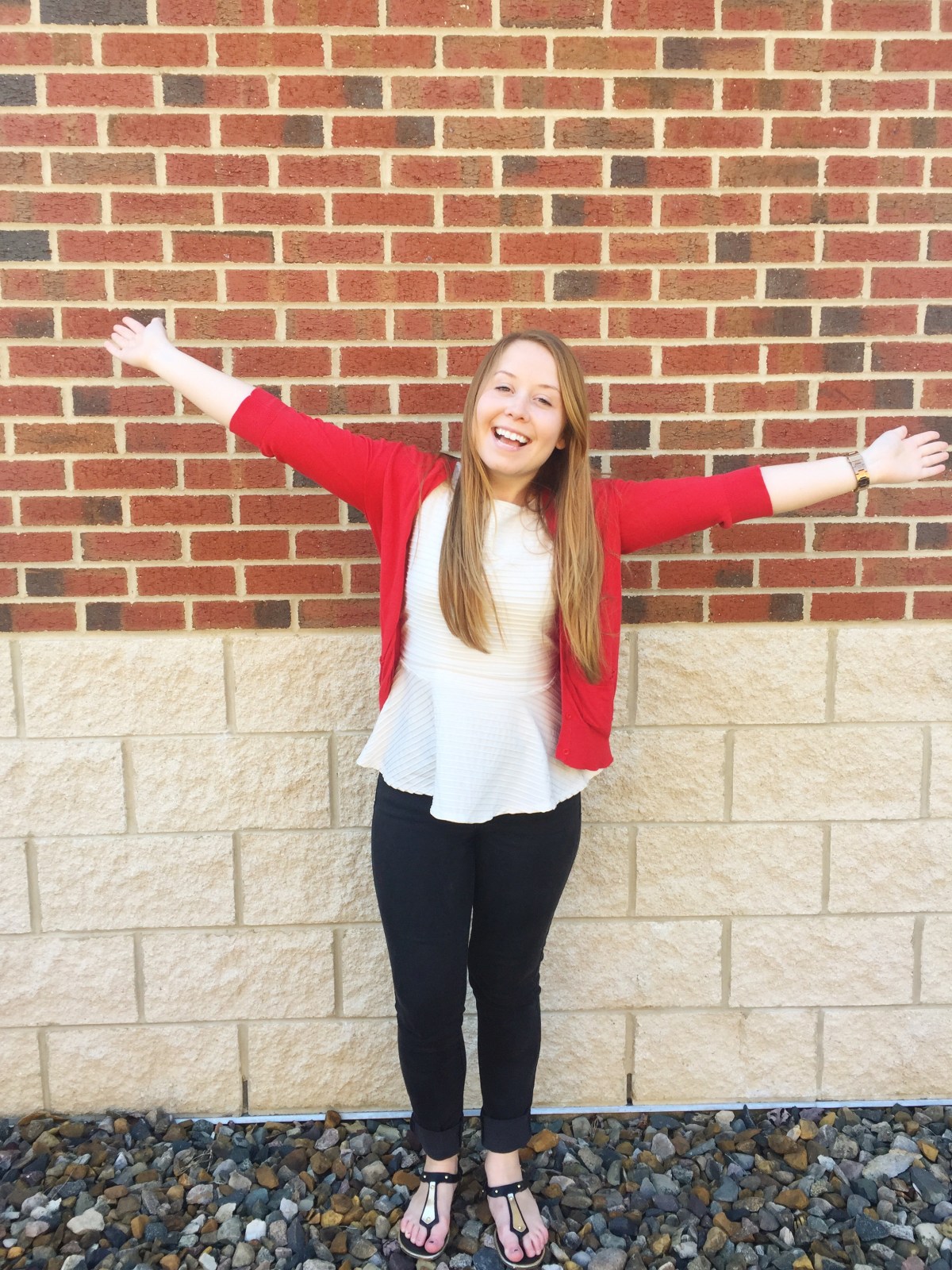
But more importantly, I FINALLY got to wear my black jeans! Let’s just say, I’ve missed them. As far as the outfit goes, I was pleasantly surprised! I don’t usually wear red, but I really liked the cardigan.

I think my favorite part of the whole experience was getting to see how Bekah and Jess incorporated their own style into what they picked out for me. While they used my clothes, they mixed and matched them in ways that very accurately represented who they are as individuals; and I love this. It reminded me of just how expressive and revealing of one’s personality clothes can be.


Jess

IMG_3477

It’s the final day and I am happy to report, I am wearing leggings. This outfit is the closest representation to what I wear every day. Bri and Bekah both had a part in picking this outfit and all I can say is “thank you.” Originally, they picked out a pair of Bekah’s white flip flops for me to wear, which were a tad small, but I love it with the nude flats. I don’t really have anything negative to report, but I may have to steal Bekah’s cardigan (don’t tell her!)

Overall, this week was not terrible. I will enjoy being able to choose my own outfits again, but combating that with being able to choose my roommate’s outfits really helped. A couple of the outfits weren’t exactly my style. Although, I have to admit, I think my roommates dressed me betterthan I dress myself. I’m glad we had this experience.

By Bekah Kinney, Bri Loomis and Jessica Tower

Edited by Amber Cekander


The week is finally complete! Leave a comment below about how this experience influenced you? Are you going to try the experiment with your roommates? Or hold tightly to your personal style with all your might?

*all photos provided by the participants and used with permission*

Save