Why You Should Join the Pulse: A Staff Perspective by Sarah Williams

Why should you consider joining the Pulse? Staff writer, Sarah Williams, gives a few reasons why.

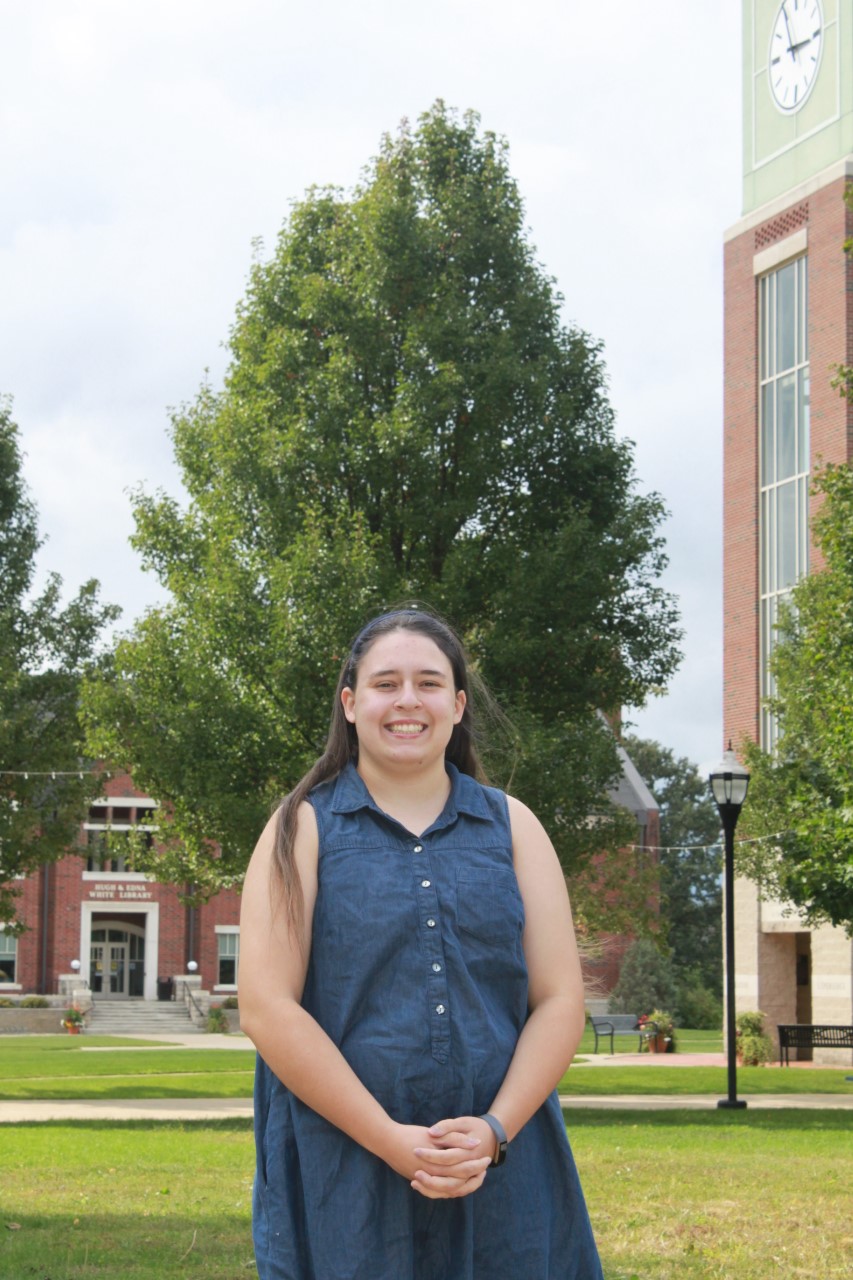
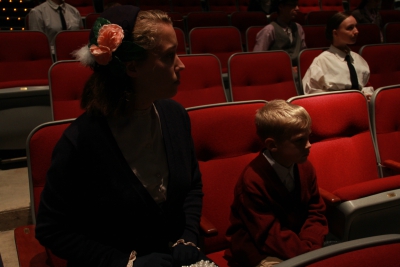
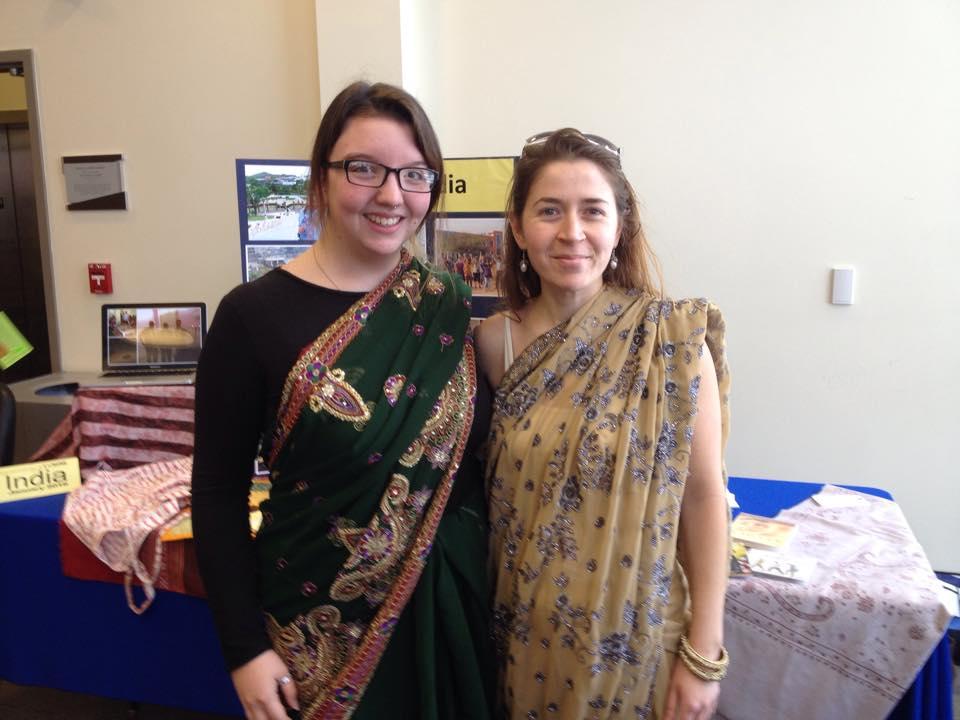
Image of me!

You should join the Pulse for all the wonderful opportunities it provides! The Pulse can give students experience in writing, editing, photography, and more. Since the club is student led, members can experience leadership and responsibility and know that all the club’s accomplishments are because of their hard work. This makes the Pulse look great on a resume. Students don’t need to join with previous experience, the other members help teach newcomers and provide a fun environment during meetings.

Fellow member’s voices are very important to the Pulse. Everyone is encouraged to give their opinions, ideas, or ask for help. When I joined, I was a bit anti-social and quiet. I was encouraged to give my thoughts during meetings. After so many interviews with sources, I grew confident in using my voice. I know I can do stories on topics I feel are important. The Pulse helped me to feel like I was being heard.

The Pulse has offered me opportunities that I might not have had otherwise. I have always been interested in writing fiction, but I fell in love with writing non-fiction pieces after joining the Pulse. The experience of being a campus news reporter has made me consider the career of a journalist after graduating. The Pulse is always finding new ways to surprise me!

By: Sarah Williams

Why You Should Join the Pulse: A Staff Perspective by Merry Castle

Read some reasons why you should join our Pulse staff.

  1. Why should you join the Pulse?

I recommend joining the Pulse because it is an excellent opportunity to hone your writing skills, make new friends, and meet new people. Writing for the Pulse has also allowed me to become more involved on campus — I attend more events, speak to more people, and am generally more attentive to what is going on around campus. Plus, joining the Pulse is a great way to gain experience that can spruce up your resume and help you land a job in the future.

  1. How has the Pulse helped you to use your voice?

The Pulse has been a great opportunity for me to use my voice. As a freshman, I used to feel like my voice didn’t really matter or that I didn’t have anything worthwhile to say. Joining the Pulse has made me realize that my voice does matter and that I can use it to elevate and share others’ stories.

  1. Feeling heard is so important. How does working on the Pulse make you feel heard?

Feeling heard is incredibly important, and the Pulse definitely gives me an opportunity to discuss the topics I find important and relevant. More importantly, I feel that the Pulse helps me allow other’s voices to be heard. I get to share people’s personal stories, their passions, their convictions, and their hopes and dreams. I get the genuine pleasure of being a mouthpiece so that other people’s voices and stories can be heard.

  1. What opportunities has the Pulse given you that you might not have had otherwise?

The Pulse has given me amazing opportunities that I might not have had otherwise. I am an English major with a professional writing minor, so I tend to be an introverted bookworm. Since joining the Pulse, I have gained confidence in my writing abilities and stepped outside of my comfort zone to interview my fellow students as well as professors and staff. Additionally, it has helped me build my writing portfolio, publish my work, make connections, and learn more about journalism as a profession. I am learning to simplify my writing, edit my work and the work of others, communicate in a professional setting, and work on a deadline. Overall, the Pulse has helped to gain real experience that will prepare me for the future regardless of what career I choose.

By: Merry Castle

Willy Wonka and Valentine’s Day themed Contest Ends Quickly

The contest was meant to last till Valentine’s day, but the cookies were too amazing.

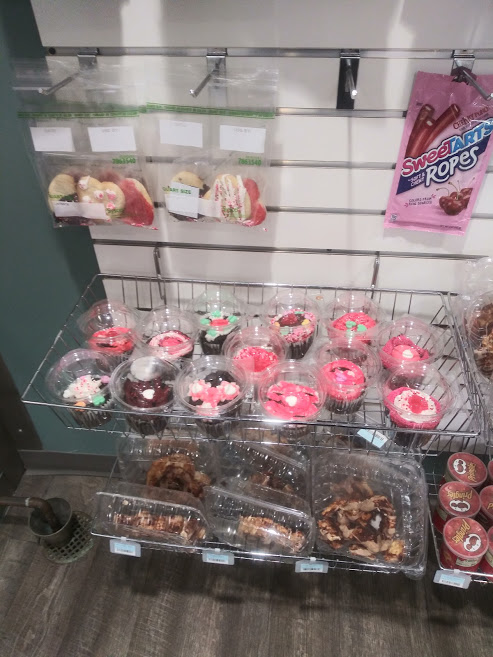
All 10 golden tickets for the Cougar Den Sweetheart Ticket contest had been found sooner than expected. The contest had started at the beginning of spring semester and lasted to the start of February.

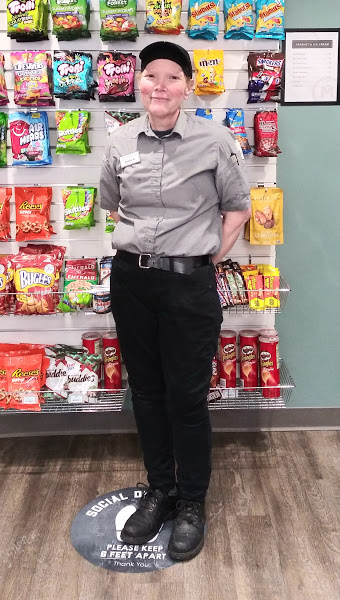
Image of Cougar Den’s hardworking manager: Barbie

Cougar Den manager, Barbie, said she thought the contest would last until Valentine’s day. She had named it “Sweetheart Tickets” because of that. The supplies of cookies and cupcakes sold out. After all the tickets were found and the cinnamon rolls were left, she gave the rolls out as extras for the meal exchanges in the Cougar Den.

She was asked to do a couple of specials by their directors. Barbie created the contest after being inspired by Willy Wonka’s golden ticket. In containers of cookies, cinnamon rolls, or cupcakes, there was a ticket. Either it said “Sorry, try again” or it was a winner.

Barbie said the winners had to bring her their tickets and she gave them a $10 gift card to Sacred Grounds.

This photo of Bray Austin was supplied by Bray Austin for this amazing story.

One of the winners was Bray Austin who won on his second try. Austin had been hanging out in his favorite spot, the Cougar Den, around dinner. He wanted some snacks and Barbie told him about the contest. He bought a cinnamon roll. When he didn’t win, he thought “those cookies look pretty good.” He bought one and opened it up to find a ticket stating ‘congratulations’.

Austin said it felt very rewarding to win because he goes to the Sacred Grounds often. He had already spent half of the prize on a Caramel Macchiato with extra caramel. He is waiting for the right time to spend the rest.

Out of all the desserts, Austin said his favorite was the sugar cookies.

“I know Barbie makes all her deserts homemade, so it made me feel at home, which is nice. The sugar cookies and the cookies in general were just amazing,” Austin said.

John Kappler won multiple times. He had given his extra ticket to one of his friends. Rachel Penning found a winning ticket in a cinnamon roll.

Barbie doesn’t know if the contest will be done next year. It will depend on who her director is.

By: Sarah Williams

Farewell Tribute and Senior Spotlight from The Pulse Leaders

Caralyn Geyer

As a senior that would have “graduated” last week, I look back fondly on my time as a Cougar, English major, and member of The Pulse. Many nights were long and I cried a lot of tears over Brent Cline’s classes, but when I look back on my four years, I don’t see those exhausting, sleepless nights. Instead, I remember the times like winning Arbor Games, eating pizza with my Alpha 1 floor at 1 a.m., seeing the elephant on the library roof while walking to class, the first Almost Chapel video, getting hit in the face by a hotdog at Porchfest and so much more. It brings tears to my eyes knowing that the next stage of life does not include Spring Arbor University (SAU) anymore, but what I’ve learned from this place, the professors and my friends will never leave my head nor my heart.

At first, I struggled to figure out why embracing new beginnings was so hard and realized that this time, it was because moving out meant moving on too. Moving on means change, and personally, that’s not something I do very well with. This year, it means a real, full-time job (which I still do not have), more expenses, a working schedule, less free time, and not seeing the people I have made such deep friendships with every day. But changes like these, whether big or small, aren’t always a bad thing. While I’ll miss being able to lead newspaper meetings and eat cinnamon pizza during Pulse production nights while laughing at nerdy English jokes, I’ve been prepared by the entire campus in some way to go on and make an impact in another place. Staying would mean not embracing this fully, and as hard and scary as it is to go, I cannot live life in my comfort zone.

While times may be uncertain and the future is unclear for now, I leave you with the reminder that we do not need to fear the what-ifs. If Jesus says “do not be afraid” 365 times in the Bible, we really don’t need to worry about the future when we are only able to see such a fraction of the overall perspective. I want to give my sincere thanks to every faculty member, fellow student I never knew personally, every Dining Commons worker, and especially every one of The Pulse leaders, whether I worked with you or not over the last four years. I have been shaped in some way by your influence and I leave changed because of you. Thank you, SAU.


Jared Boekenhauer

I am not a graduating senior. I am a transferring sophomore, so do not think I’m trying to steal the attention of graduating seniors. I congratulate all who are graduating this year, and will be praying for your future jobs, further education or whatever else you plan to do. However, I would like to put a few thoughts out there to those facing transition decisions, as I have, while I still have this platform.

First, transferring is not a failure move. It does not mean you have made some wrong and costly mistake that will haunt you your whole life. Transferring means you have decided your college education will be better continued elsewhere. That is why I am transferring. The SAU community has nourished me and given me personal confidence in my ability to question God and the universe. Dr. Moore’s World Literature class has given me a passion for old books, like the Odyssey and the Aenied. I have even kept every book from that class to return to at some point in life. Chuck White’s J-term New Testament class (yes, I took that class) was challenging and exhausting, but taught me so much about the Bible, and gave me a new found love for the books of Acts and Roman. I could go on, but the point is, SAU transformed me into a more thoughtful person, teaching me ideas and practices that I will take with me to my next destination.

Second, we learn best from the people we disagree with. I came to SAU with the mindset that people would disagree with me on many political issues, and I was right. Instead of ignoring these people, I challenged them, and they challenged me. Through this, I developed a better understanding of other people’s opinions. Also, this practice doesn’t just have to be political, it can be about anything. If you are Protestant Lutheran, talk to a Roman Catholic. The point is to challenge each other and see why someone believes what they believe. This creates empathy and understanding. It will make debating less personal, and more issue driven, and you will be friends with those whom you couldn’t personally agree with about anything.

Last, don’t be afraid of change. Change can force us to rely on God because it is uncomfortable. If you are unsure of if God is calling you to change, pray, fast and read your Bible, but also question your motives and perceived outcome. Having a perceived outcome will give you steps, and lay out a map for you. My choice to transfer did not come without long nights of thought, but God was calling me to that choice.

The long nights working to edit and design the Pulse were stressful, but they confirmed that I was going in the right direction. Thank you to the Editor-in-Chief, Caralyn Geyer, for working long and hard to assure this magazine would be published timely. Thank you to Dr. Baker and Dr. Moore for helping me enjoy old books. Thank you to Dr. Dan Runyon for making my writing better (no matter how frustrating it got), and to Mark Edwards for your well-taught history courses that contributed to my understanding of thought and analysis.

Editorial- Helping From Home With a Christian Attitude

 Co-written by Caralyn Geyer and Jared Boekenhauer

Covid-19, or the coronavirus, is dominating the news cycle and has put a halt on a large portion of the international economic system. The United States recently took the lead in confirmed coronavirus cases, with Spain and Italy close behind. 

South Korea has flattened the curve. According to CNBC, flattening the curve means lowering the amount of confirmed coronavirus cases and thus avoiding overwhelming a healthcare system. According to the New York Times, South Korea has done this through a jump start in testing and treatment, restrictions on people with confirmed cases  including an app that can tell when coronavirus-positive patients have left quarantine  and fines for those who leave quarantine after testing positive.  

Polls have shown an overall support and respect by the South Korean people for the efforts of their government to combat this illness. 

While in the United States, cases are still rising as many people are racing out to aid medical workers, the most vulnerable and the sick. Some have worked to make face masks for doctors and nurses, others are coming out of retirement from careers in medicine to fill the need for nurses and doctors among shortages. Others are taking up jobs at grocery stores to handle the larger crowds and make extra money during an increase in job loss. Even some plants that would normally make different products have temporarily stopped production in order to accommodate greater needs and produce things like hand sanitizer and masks. These are all honorable and positive acts that benefit society in its present dilemma.  

Unfortunately, organizations like some churches have chosen to stay open and worship in crowded spaces, directly violating the temporary law banning larger public gatherings. Some Christians have cited that the banning of public worship is “oppression” and “Christian persecution.” The belief that temporary government intervention on daily life is oppression, even though it is in order to prevent the spread of a pandemic, is wrong. Following the law, and avoiding public gatherings for now, is what a Christian should do.  

The Bible teaches to follow the law, as long as the law is not leading one to sin. “Everyone must submit himself to the governing authorities, for there is no authority except that which God has established. The authorities that exist have been established by God,” (Romans 13:1, New International Version).  

With bans on public gatherings in place, the government is not telling Christians to avoid worshipping, it is telling Christians to specifically avoid public gatherings. To stay in accordance with the law, many churches now worship, preach and run Bible studies online. Just because Christians cannot worship in the ways they have before does not mean it has to be limited. It just means that different measures must be taken in order to go along with the temporary laws set in place, which are ultimately for the safety of everyone. 

The Bible also says to aid the poor and sick. Quarantine and social distancing especially help the sick and vulnerable. Though it may seem to be an inconvenience for the time being, doing these two things actually help prevent spreading to those who could be more susceptible to the virus. Christians should be thinking with others in mind, especially those who are more at risk.  

While it may seem like this is government oppression of Christianity, this is not what is happening. True oppression would prevent any form of worship by law; temporarily pausing social activities to prevent the spread of a pandemic is not oppression.  

What Christians can do during this time of uncertainty is encourage those who are struggling to deal with or understand the pandemic, and follow local and national ordinances. Create prayer teams through Zoom or Webex, send out letters to people and continue to think positive. In a time where so many questions lie unanswered, the most we can do is not try to answer them, but point those to the one who can. 

Black History Month

The following are two excerpts written by Spring Arbor University (SAU) members sharing their feelings about Black History Month:

I believe that it’s important to intentionally expose our community to African American culture and achievement throughout the year and not just during the month of February.  We are working to do that through various events and chapel speakers throughout the year.  During the month of February, we want to educate our campus community on the history and achievement of African Americans in the United States. It is also a time for us to recognize Spring Arbor’s African American alumni and their achievements and contributions to society and the building of God’s kingdom. –Kevin Brown, Chief Diversity Officer 

I believe Black History Month is the one time of the year where education, celebration and inspiration of black culture is a given. Black people embrace the culture to its fullest in February. For other racial groups learning about black culture may end at the end of February, if it even was talked about to begin with. However, for Black people we are always black and we try to celebrate our melanin as much as possible or even allowed. We need to always remind ourselves that we can achieve, that we are beautiful and that we are Kings and Queens, because we live in a world that tells us otherwise. Black history continues for us in conversations, affirmations, celebrations and more. Here at SAU it may seem like we haven’t done much for Black History Month, but our Black population has celebrated it every day this month in the form of community celebration and self-love. Office of Intercultural Relations wanted to take this month to educate others on black experience, but in reality we do that every day of our lives in and out of school. As I said earlier, the month may be another month to everyone else and it ends for them March 1st. But for Black people we are making new history to be learned.            Australia Smith, Sophomore Student 

“A Meeting in Munich” Review

By Elise Emmert

I went to “Meeting in Munich” by Paul Patton knowing only that it was a discussion between church members about whether or not they should listen to the Fuhrer and reform their youth groups to Hitler Youth. But it was so much more than that.

liz
Elizabeth Pence and Logan Thorne. Photo by Alexis Hall.

There was more at stake in the church in Munich than the fate of their youth group. It’s a boiling point where congregants on both sides of the issue come together and clash, fighting each other on which outlook, which way of living, is objectively right.


I watched friends in period clothing, some pleading with others for the right to raise their children in the church without the state as their watchdog, and others in SS uniforms with swastika bands around their arms raising their hands to perform the Hitler salute and commending the Fuhrer for his dedication to building Germany up on the church.

These actors sat among the audience members, and it made the conflict and history feel so much more present than it does when reading a textbook about what led to the second world war and the horrors that happened in Germany. The actors walked beside my chair and cried out their beliefs at each other, dealing with core values that would make or break Germany’s future in WWII. They have no idea what’s coming.

And it made me sob.

old lady and austin
Faith Dever and Austin Slater. Photo by Alexis Hall.

I cried for the fact that this happened – that anti-Semitic sentiments were rationalized, that a country was so torn and desperate that something like Nazism could rear its ugly head, that so many people lost their lives in such horrible ways because of hate and the belief that Hitler had the plan to make everything right again, to bring the country back to its former glory.

It’s difficult to identify the most heart-wrenching moment in the play, but one in particular rises above the many: when Margaret Lubosch (played by Erin Couch) says the hate being spread will put rocks in the hands of the children. In response to the Hitler supporters’ laughter, she asks her young daughter, Eva (played by Emma Brugger), to tell the congregation what has been happening at school. And Eva, in a trembling voice, rattles off the names of children in the class who aren’t allowed to talk to the others, who are pulled to the front of class and ridiculed for their mistakes, and who are afraid to go to recess because they are being spit on.

Does any of this sound familiar?

Confederate flag posters with cotton buds were posted around the American University campus last week. The “Unite the Right” rally in Charlottesville, which many state leaders condemned as a “white supremacist” meeting, ended with one civilian killed and many others injured. An improvised explosive device was set off at the Dar Al-Farooq Islamic Center in Minnesota.

tearful goodbye
A tearful goodbye. Photo by Alexis Hall.

Hate is festering, and people are acting on it. It could lead us down a very dangerous path if we choose to forget how situations can escalate from a small spark to an engulfing blaze if they are not stopped before they run beyond control.


It’s easy for us to look back on history and say we would have been on the right side; we would have stood for justice even in the face of death. But history is not simply the past. It is our present. Every second that passes becomes the history that our children and grandchildren will read about. If we do not do something about this hate, future generations may have the opportunity to ask of us: Why didn’t they do something? Didn’t they know that was wrong?

I have heard it said that theater is not done to make us forget or escape the world outside, but to help us remember it. In “Meeting in Munich,” we remember the past – we remember the hatred and divisiveness that tore apart this church and its country – but we also remember the present. And I weep for both.

Diversity, the Indigenous and the Limits of Being Human

By Taylor Reed

It’s impossible to say how many cultures there are on Earth. Lines of division blur, the sheer number of people groups make accuracy impossible and the dynamic nature of societies presents a moving target. What can be said, however, is that distinct social systems are disappearing as trends in globalization indicate shifts toward homogenization.

Which is progress, right? A simpler world is easier to handle. It’s especially helpful if cultures have much to offerpolitical and religious freedom, career opportunities for economic security,civil infrastructure to protect the safety and rights of humans, so on and so forth. These are conceptions often thought to be inherent in Western societies.
The prolific and enigmatic 20th century environmentalist, David Brower, compressed four and a half billion years of Earth’s history and that of its inhabitants into Genesis’ six-day creation.When that time frame is considered, it isn’t until 4:00 p.m. on the last day that dinosaurs walk the Earth. By 9:00 p.m., these dinosaurs are extinct. At 11:57 p.m., humans appear on the scene.Jesus is born forty-five seconds later. The Industrial Revolution occurs 1/40th of a second before midnight. Since this moment of innovation, more resources have been extracted and consumed than by the rest of the people who’ve ever lived combined. 
Brower states, “There are people who think what we’ve been doing for the last fraction of a second can continue indefinitely. They are considered reasonable people, but they are stark raving mad!
Humans have existed for a long time, yet it wasn’t until recently they began to alter the planet and its ecological balances as significantly and seriously as they do now. It’s no coincidence that 95 percent of the areas identified by the World Wildlife Fund Global 200 as harboring exceptional biodiversity are home to indigenous peoples. This isn’t to paint pre-industrial societies as utopian. Survival entails struggle, and bouts of starvation and disease aren’t to be considered lightly. Today, we think we have answers for these. We think we have answers for everything. We’ve essentially circumvented natural selection. But despite—or perhaps due tothis feat, creation groans.
Lack of clean water, food, medicine and decent sanitation threaten many today. This is well understood. The solution cannot, however, be to bring all into the same conditions that we as Westerners live in today. This “flourishing” is literally impossible, as it would require four Earths to support the world’s population living as Americans, as according to the Global Footprint Network. Developing technology is often brought up as an answer, but gambling on things that do not, and may not exist, may not be the wisest or most responsible choice,especially as it is in our collective power now to make changes with positive repercussions among humanity and creation.
We must lower our conception of ourselves to the point where we can consider that necessary changes, developments and the shaping of lives very well might ask the transformation of ourselves as much as it does others. How do we use technology responsibly? How do we love,interact with and learn from those who live differently than us? And, most importantly, and possibly all encompassing, how do we humble ourselves before God, and find ourselves back in the correct order of creation? We have been given much. We are responsible for much. And for the many cultures, perspectives and ideologies, we are thankful. We have a lot to learn.  

De Graaf, J. (2015). Black Friday is Buy Nothing Day. Retrieved February 29, 2016, fromhttps://www.prforpeople.com/news/black-friday-buy-nothing-day
Indigenous and Traditional Peoples of the World and Ecoregion Conservation (p. 28,Publication). (2000). Gland, Switzerland: WWF International- Terralingua.
United States of America. (n.d.). Retrieved February 29, 2016, from http://www.footprintnetwork.org/en/index.php/GFN/page/trends/united_states_of_america/

Stamina, Sanity and Spirituality: Extended Version

There is a meme floating around the Internet that presents three choices to the college student: good grades, a social life and enough sleep. It gives the reader instructions to “choose two.” Similar in nature, it seems, are the aspects of college students’ health: from spiritual, physical, mental and social health, it is as if we have to “choose two.” But is this really a choice we should have to make?

I recently had the opportunity to speak with a few faculty members who had some practical advice on how busy students can stay healthy without having to “choose two.” Here’s what they had to say:

Spiritual Health

Deb Varland, assistant professor of health, human performance and recreation at Spring Arbor University (SAU), believes that physical, mental, social and spiritual health are all interconnected, but that Christ is the most important part of a healthy life.

“A lot of wellness models will have physical fitness in the middle, but for me, having the cross at the center is really important,” said Varland.

To Mary Rick, nurse practitioner at SAU’s Holton Health and Wellness Center, a person’s spiritual life is paramount, as well. “A healthy life begins with a healthy spiritual life,” said Rick.

Ron Kopicko, SAU’s chaplain, emphasized the importance of a commitment to four different things in order for a person to grow spiritually: time management, people, the spiritual disciplines and fellowship. He also explained his definition of spiritual growth: “Spiritual growth is not just [about] what I believe, but it’s also understanding God’s relationship with me, my relationship with him and being consistent with those two things,” as well as “seeing myself the way God sees me and wanting him to see me as being faithful regardless of what I feel.”

Kopicko said that time management is also important, because spiritual growth does not simply happen on its own. Whether or not a person feels like it, it is essential to work at growing spiritually. “Success is predicated upon the cost that you pay when you do something when you don’t feel like it,” said Kopicko.

Furthermore, relationships with others are part of a healthy spiritual life. Jesus instructed his followers to “love one another even as I have loved you” (John 13:14, NASB). Kopicko suggested a person ask him or herself, “How can I contribute to what God is doing in this person’s life?”

Additionally, Kopicko recommended consistency in the spiritual disciplines of prayer and reading the Bible.

Rick explained that what motivates her to meditate and read the Bible is the idea that “God delights in us.”

Finally, Kopicko used an example from Acts 2 to demonstrate what Christian fellowship should look like: the 3,000 people who put their faith in Christ “committed themselves to the apostles’ teaching and to prayer and to the breaking of bread and to sharing with anyone who was in need.”

Physical Health

Getting seven to nine hours of sleep per night—as Terry Darling, professor of psychology, recommended—is both desirable for virtually all college students and beneficial to their physical health.

Rick’s suggestion to help students fall asleep is practicing “good sleep hygiene,” or having a routine that consists of “gentle things,” like prayer, meditation, reading, listening to music and taking a hot shower.

Varland said that students should go to bed and get up at about the same time every day so as not to interfere with their bodies’ natural rhythms. In addition, she explained that, on top of a good night’s sleep, resting during the day is important. “We don’t often take time for Sabbath or even for daily rest, daily reflection and time spent with God,” said Varland.

In terms of diet, Rick recommended one that is rich in protein, fruits and vegetables, adding that students need to eat a good breakfast—such as eggs or a high-protein bar, perhaps with milk. Furthermore, students should always carry a snack—carrot or celery sticks work well, along with a source of protein, like peanuts or cheese—to keep their blood sugar stable.

According to Rick, we should exercise for at least 30 minutes a day, five days per week. Ideally, this exercise will include both aerobics and weight training.

Varland recommended that students try new forms of exercise, such as intramural sports, walking the P-Loop by campus or using the indoor track or weight room and the cardio equipment in the gym.

“No one should leave Spring Arbor University without having a complete physical,” said Rick, noting that the health center offers physicals, including lab work, to both insured and uninsured students. She additionally emphasized the importance of students seeking medical attention when they need it.

Students can visit the health center for reasons other than physicals, too. For instance, the health center offers flu shots during the fall. Ultimately, in visiting the health center, students need not be afraid of getting in trouble; everything is confidential.

“Come to the health center for anything,” said Rick. “It is the best deal in health care you’ll get.

Mental Health

“The freshman year of college can create a lot of anxiety and stress for the new student,” said Carrie Dashner, director of counseling services.

Dashner and Varland both recommended getting acquainted with other people. Varland explained that talking with someone helps with stress. “It’s really important to develop relationships with someone that we feel secure with,” said Varland. Then, a “sharing of ideas” can occur that can help a person work through his or her problems.

Dashner suggested Core instructors, peer advisers, resident assistants/directors and Ron Kopicko as people that freshman students can feel comfortable talking to. “It is really important for the freshman student to feel connected and supported,” said Dashner.

Incoming students should know that confidential counseling—for any reason—is available to them through the health center. Rick noted that there can be a “stigma” attached to counseling, but added, “There should not be a stigma. It’s health-seeking behavior.”

Dashner said that, in seeking out counseling, “you are actually being proactive in dealing with your struggles, issues and feelings before they become unmanageable.”

Dashner also explained that students can stress less by practicing organizational skills. “I would recommend that all assignments, projects and exams be entered into a planner to stay organized,” she said. “Often, students find it helpful to color code their classes to distinguish between them. Staying organized, prioritizing, making lists and following a schedule will all help reduce anxiety and stress.”

Social Health

Bonnie Holiday, assistant professor of social work, provided some suggestions for practicing good social health.

First and foremost, “get involved in something.” It may be uncomfortable, but “it’s awkward and weird for everybody,” said Holiday, noting that it may take a while to really make friends, but that that’s okay and normal.

More important than being best friends with our roommates, said Holiday, “is that you can live together in harmony.”

For homesick students, Holiday recommended doing something nice for another person: “It usually makes us feel better when we do something nice for somebody else, which of course is biblical.”

“Do one thing every day that you enjoy,” Holiday advises students, “and do one thing every day that’s outside your comfort zone,” such as being intentional about meeting a new person.

“There’s no perfect freshman,” said Holiday, encouraging students to keep in mind that our experiences will be a little different from everyone else’s.

In the end, the components of spiritual, physical, mental and social health connect and overlap with each other. So, instead of asking whether we have to “pick two,” or even whether we can be healthy in all four areas simultaneously, perhaps the question should be, is it possible to have one type of health without the others?

By Dana Van-Doren

What is kombucha and should I be drinking it?

I met up with Spring Arbor University senior Autumn Freeman, biology major and daughter of a “health nut,”  to discover what kombucha is, what it does, and why she drinks it.

ca pic
Autumn Freeman and Professor Jen Letherer

Kombucha is a fermented tea drink with a probiotic nature, which is what makes it so appealing to the “health nuts.” Autumn explained the complicated biology part to me like this:

There are twice as many bacterial cells in your body as your own cells. These cells help break down your food and protect you against things you touch. Everyone’s bacteria is unique. The kombucha supplements the good bacteria, which helps keep you healthy.

Where you can buy it

1) Walt’s Health Food 

This health food store is across from local favorite Chilangos. Autumn says that their kombucha is “the good stuff” and suggested pitching in with a few friends to get a bottle, since drinking a whole bottle during your first time might “shock your system.”

2) Target / Meijer 

Target
Target

These two chains have a pretty similar selection. Personally, I tried Mamma Chia’s Guava Mamma and, once I got used to drinking the chia seeds, I loved it. I also enjoyed the first few sips of Live Kombucha Soda’s Living Limon, but I found that 15 minutes later it tasted flat.

How can I make it?

Making Kombucha is a lengthy process, but it is worth it. It order to start you need a “mother liquid” from a different kombucha and its scoby  (symbiotic culture of bacteria and yeast). Autumn suggested either buying kombucha from the store or getting this from a friend who already brews.

Equipment

  • 1 large Glass or ceramic jar (avoid using plastic or metal)
  • A few smaller glass or ceramic jars
  • Cloth

Ingredients

  • Tea – black or green
  • Sugar
  • Starter liquid
  • Scoby
  • Extras:
    • big chunks of fruit
    • fruit juices
    • chia seeds

Step 1

Take the scoby and the starter liquid and put it in your jar. Then mix the tea and sugar together and add it in. Seal the top with a cloth so your mixture can breathe. During this stage the scoby ferments the sweet tea. Leave this alone for a week to two weeks, occasionally taste-testing until your mixture makes the perfect tang-to-sweet ratio.

Step 2

Now take your mixture and add your extras! Autumn mentioned that the chia seeds are really fun, since “they’re dry and really tiny when you put them in…the mixture, then they expand and get really gelatinous and wonderful.” She also said blueberries and mangos work really well, but apples do not.

Tip: The more sugar that the fruit juice has, the more carbonated it will be in a shorter period of time, since the bacteria will have more to work with.

Step 3

Take your mixture and put it in separate sealed glass containers for a week. After that is done, refrigerate, and enjoy!

Buy it before you try it!

It is really important to pay attention while making your kombucha. If you leave the lid off while making it, you risk mold and dust getting in. Additionally, there recently was a food poisoning bacteria strain was going around the world and ended up in Autumn’s brew. (If your kombucha turns green, throw it out!)

FAQ: Is kombucha alcoholic?

Technically, yes! It is a fermented drink, which means that a sugar source was turned into alcohol. However, the alcohol content is so low that is nearly impossible to get buzzed off of the tea.

By Courtney Applebee

http://www.waltshealthfoods.com/

http://www.culturesforhealth.com/kombucha-tea-starter-kit.html